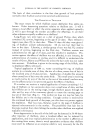
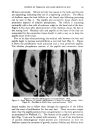
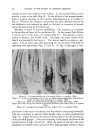
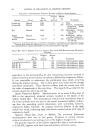
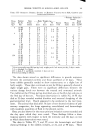
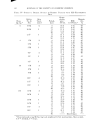
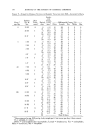
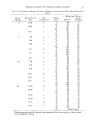
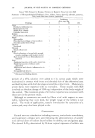
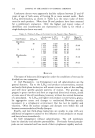
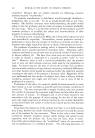
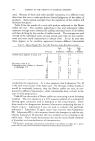
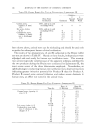
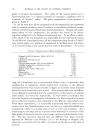
152 JOURNAL OF THE SOCIETY OF COSMETIC CHEMISTS Leukocyte donors were apparently healthy subjects between 25 and 45 years of age of both sexes, all having 24 or more natural teeth. Each L.D.50 determination, as shown in Table I, is the mean value of three tests for each product. More than 20 oral products have been screened for a preliminary evaluation. Only the highest and lowest values of dentifrices and mouthwashes are represented in Table I, for which a single leukocyte donor was used. TABLE I--TYPICAL L.D.•0,s or LEUKOCYTES FOR. VAKIOUS OR.AL PR.ODUCTS •--Leukocytes X 106• A -- B X Mean % Oral Product L.D.•0, • Part A Part B 100 A Difference Dentifrices H 18 L 0.2 Mouthwashes H 12 L 5 2.064 1.020 51.16 1.656 0.816 50.72 1.332 0.672 49.55 2.112 1.068 49.43 1.800 0.876 51.33 1,248 0,588 52.88 50.48 51.22 2.172 1.092 49.72 51.28 1.512 0,708 53.18 2.208 1,080 50.95 2.046 1,116 45.93 50.25 2.280 1,380 51,06 2.700 1.248 53.78 RESULTS The types of leukocyte disintegration under the conditions of test can be divided in to two categories: 1) Cell Plasmolysis. (a) Enlargement and cell spherulization are the general features. Up to the L.D.50 oral product concentrations, second- and early third-phase leukocytes will remain intact in spite of the swelling and still show specific granule patterns of motion. The granules ag- gregate in great numbers and form an organized directional stream, aimed at some area of the cell membrane, however, without the normal formation of a pseudopod. At L.D.50 and higher oral product concentrations, granu- lar aggregation ceases and changes to randomized BrownJan particle movement in a cytoplasmic environment that has lost its rigidity and viscosity. Often the nucleus enlarges and disrupts even before the cell becomes overextended and finally disrupts. Fourth- and late third-phase leukocytes are unable to cope with any additional enlargement caused by the influence of oral products on mucus and burst almost immediately. (b) Cell enlargement without spherulization. The cell membrane loses its elasticity and selective permeability. Previously formed pseudo- pods are not retracted and lose much of their cytop]asmic rigidity and vol-

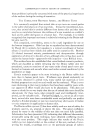
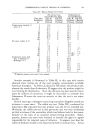
LEUKOCYTE DAMAGE BY ORAL PRODUCTS 153 ume. The refractive index approaches that of the surrounding mucus, and the cytoplasm becomes almost extinct. Severe degranulation occurs within minutes. The nucleus enlarges somewhat, losing much of its optical density. Final cell disintegration occurs in a slow, placid fashion. 2) Cell Fixation. Cytoplasmic coagulation, often with slight cell shrinkage, causes cell death. Most characteristic is the total absence of any granular movement. Final cell disintegration occurs by frag- mentation. A series of tests have been carried out to determine the L.D.50 of water because oral leukocytes disrupt instantly upon contact with water if not protected by mucus. When 4 ml. of distilled water was added to sample part B (instead of 4 mi. harvesting solution fortified with oral product), the count was only 8% lower than the control count. Even by changing the test procedure and adding distilled water directly to the mucus sedi- ment, an L.D.50 could not be reached at the 100% water concentration. For toothpaste the highest L.D.•0 was 18%. The lowest L.D.•0 found for all oral products tested was also a toothpaste at a concentration of 0.2%. This latter product, when tested at a 3% concentration, showed total leukocyte destruction with the leukocytic remnants difficult to find. At a 5% concentration changes started to occur in the exfoliated epithelial cells. Structural details of tonofibrils, cell organelles, inclusions and the nucleus disappear, and an empty ghostlike epithelial cell results. At a concentration of 18% the effect on exfoliated epithelial cells occurs so fast that the events could only be reconstructed with the aid of high speed cinematography. The cell membrane on one or more epithelial cell sur- faces is seen to be shriveling at the edges and rolled up in a scroll-like fashion. The L.D.•0 range of mouthwashes is not as large as that mentioned for toothpastes, the high L.D.50 at 12% and the low at 5% concentration. Epi- thelial cell destruction has not been observed. Occasionally a phenomenon, also seen with some toothpastes, is a marked activation of leukocyte membrane agitation at about 1/3 of the L.D.•0 concentration. Membrane motility is accelerated, which results in strong polarized locomotion for those leukocytes in the second phase of cytomorphosis. The pseudopod forma- tion is, however, atypical with respect to the distribution of the specific granules. The greatest accumulation of granules is not to be found in the most anterior part of the pseudopod, and the total number of granules is diminished. Under these conditions phagocytosis has not been observed. DISCUSSION AND CONCLUSION The method described offers an approach for the evaluation of the effect of an oral product on mammalian host cells. The wide variety of
Purchased for the exclusive use of nofirst nolast (unknown)
From: SCC Media Library & Resource Center (library.scconline.org)