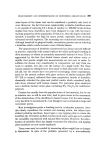
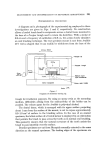
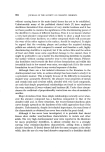
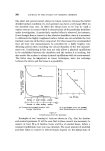
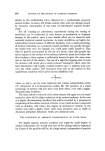
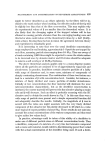
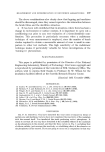
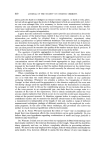
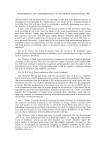
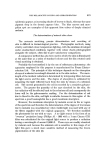
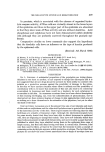
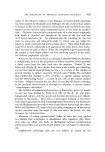
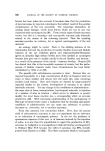
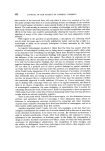
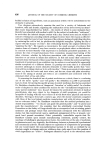
MEASUREMENT AND INTERPRETATION OF DENTIFRICE ABRASIVENESS 397 30- Dentifrice / •C • IO- / Tvory Dentine el 0 100 200 300 Hardness, kg/rnm 2 Relatlonsh[p between wear resistsnce snd test specimen. As it is not easy to control the hardness of dental tissues, such comparisons should always mention the actual hardness of the tissue used. Fortunately, many of the present-day dentifrices are largely based either upon calcium carbonate or on calcium phosphate and, since these two compounds do not differ greatly in hardness, slight variations in tissue hardness will not have a pronounced effect on the recorded comparative wear rates. However, the possible introduction of new dentifrice formu- lations, especially if their discriminating power varies with concentration, necessitates an awareness of the effect of tissue hardness. If the new dentifrice is to contain a mixture of abrasives having different hardnesses, the effect of concentration level must also be considered. EFFECT OF PREVIOUS HISTORY ON THE WEAR RATE OF A DENTAL TISSUE To avoid variations in conditions during the course of a test, the test period should be kept as short as possible, by employing a highly sensitive method of wear measurement. In this respect the radiotracer technique is greatly superior to many of the other methods employed. Full advantage of

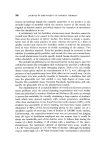
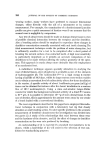
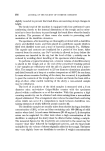
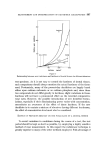
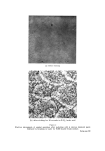
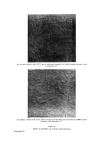
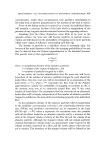
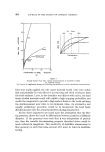
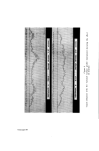
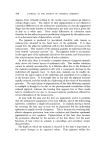
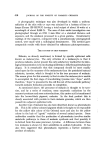
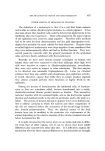
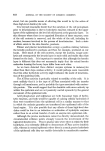
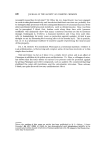
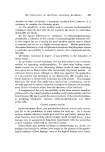
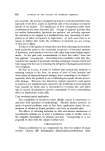
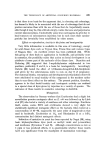
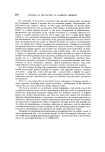
398 JOURNAL OF THE SOCIETY OF COSMETIC CHEMISTS this short test period cannot always be taken, however, because the initial detailed surface condition of a test specimen can have a very large effect on the recorded wear rate. In effect the tissues have to be 'run in' until a surface texture is created which is characteristic of the particular dentifrice under investigation. A particularly marked effect is observed, for instance, if one changes from a coarse to a fine abrasive dentifrice, since it is necessary to obliterate the highly roughened surface before one can establish the true intrinsic wear rate of the finer compound. For this reason it is recommended that all wear test measurements be preceded by a fairly lengthy con- ditioning period often exceeding the actual duration of the test measure- ment run. Conditioning in this way not only allows a physical equilibrium to be established between the dentifrice and the surface it is creating, but also assists the surface to attain chemical equilibrium with its environment. The latter may be important in tracer techniques, since ion exchange between the slurry and the tissue is a possibility. 2 (a) •a • 3 Dentine •: 2 Enamel -- I 2 3 4 5xlO • Number of brush sfrokes, enomel I 2 3 4 5 I0 3 Number of brush strokes, denfine (a) Dentine and enamel brushed with 'foreign' dentifrice 1 igure 4 (b) 'XexEnome I \ e\ I 2 log, Strokes (b) Logarithmic curve for enamel after decalcification in lactic acid Conditioning curves for specimen Examples of two 'running in' tests are shown in Fig. 4 (a) for dentine and enamel specimens. It will be seen that in these cases it was necessary to remove at least 50 g of dentine tissue and 8 g of enamel tissue, before a constant equilibrium wear rate was obtained. The exact amount of material and time taken to remove it will obviously depend on the initial state of
Purchased for the exclusive use of nofirst nolast (unknown)
From: SCC Media Library & Resource Center (library.scconline.org)