Facing page 409

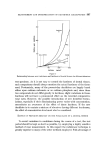
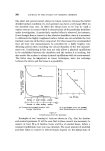
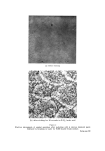
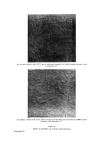
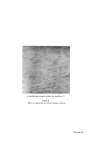
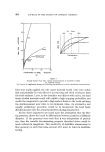
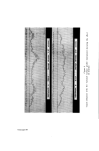
MEASUREMENT AND INTERPRETATION OF DENTIFRICE ABRASIVENESS z[09 mechanical action and partly by ion exchange, will always correspond to the amount that would have entered the slurry in the absence of ion exchange processes. MR. A. I. FREW: What is the effect of the viscosity of the toothpaste sample on the chances of trapping particles between brush fibre and tooth surface, and hence the degree of abrasion recorded? DR. WRmHT: The viscosity of the dentifrice slurry does probably play some part in determining the form of the wear-concentration curves, especially towards the higher concentration levels. In one case, a commercial dentifrice product was observed to show a marked falling off in the level of abrasiveness when the dentifrice slurry con- centration exceeded 80%. This, we believe, was due to the slurry being physically displaced from the dental tissue, thus reducing the concentration of abrasive matter. It is possible that the viscosity of the dentifrice has some effect at lower concentration levels of the dentifrice, but it might be necessary to make use of elastohydrodynamic theory to calculate the magnitude of the effect, since elastic deformation of the soft nylon fibres and the dental tissue cannot be neglected. MR. N. J. VaN ABBg: You have not mentioned the effect of hydration on the brush fibre, which can possibly have quite a marked effect, but on the other hand, you have stressed conditioning of the tooth surface. However, there is no sign that in vivo the equilibrium condition of abrasion on the tooth is ever reached hence it seems to me totally unrealistic to produce the equilibrium surface before testing. I would suggest that it is better to start with an optically flat surface on every brushing run and to resurface between brushings. Another factor that should be taken into account is the aggregate size within the dentifrice, rather than particle size of the polishing agent. I would like to stress that the tracer method in common with weight loss methods only measures average wear on the other hand, a profile method shows the detailed pattern of wear. In Fig. 8 wear is shown by the area under the curve. The average depth of abrasion due to dicalcium phosphate is nearly 50% more than that due to the chalk dentifrice but the primary texture is different and this may be the critical factor with regard to conditioning. If the specimens had been conditioned to equilibrium initially, the relative depths of abrasion might well have been reversed, but this would not necessarily correspond to the natural effects of tooth-brushing. You have mentioned the grittiness test using the nickel coin and glass slide I have tried to replicate some of your results but mine have differed considerably from yours it seems to me that there are nmnerous problems to solve before this test can be obtained as a grittiness standard. DR. WRmHT: We make no great claims for the coin and glass slide technique, although it is a very simple and yet sensitive method for detecting the presence of small concentrations of gritty matter in dentifrices. Despite the fact that it forms the basis of the U.S. Federal Standard Test for Dentifrice Abrasiveness, it is not a satis- factory way to measure the overall abrasivehess of a product. As a grittiness test it clearly works best whenever the gritty material is present as a few large particles, but as the particles diminish in size, it becomes more difficult to decide whether the glass slide has been scratched or finely polished. By its nature the test will be subjective. The present visual criterion meets the requirement that the
Purchased for the exclusive use of nofirst nolast (unknown)
From: SCC Media Library & Resource Center (library.scconline.org)