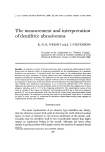
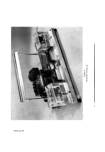
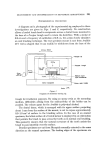
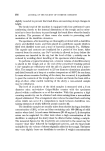
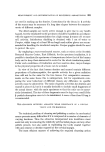
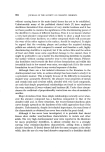
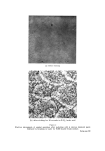
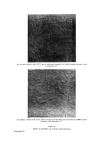
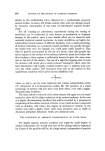
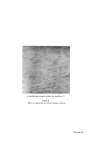
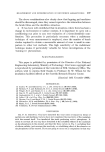
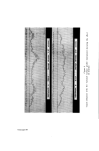
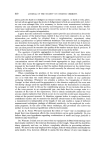
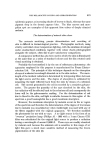
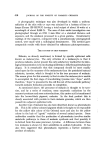
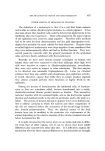
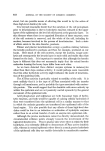
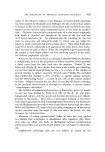
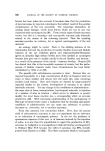
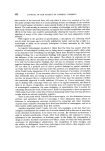
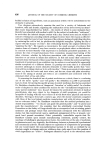
(a) surface etched with 2.5 •o lactic acid and brushed for 5,000 double strokes with dentifrice 'M' (b) surface etched with 2.5 • lactic acid for 10 seconds and brushed for strokes with dentifrice 'C' 5,000 double Figure 6 Effect of dentifrice on etched enamel surfaces Facing page 399

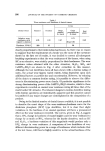
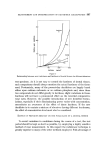
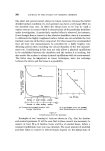
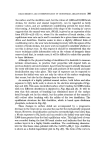
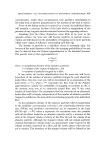
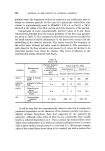
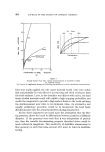
MEASUREMENT AND INTERPRETATION OF DENTIFRICE ABRASIVENESS 399 the surface and the dentifrice used, but the values of 1,000 and 10,000 brush strokes, for dentine and enamel respectively, can be regarded as fairly extreme values, and are satisfactory conditioning periods for most denti- frice testing. A detailed examination of the shape of the 'running in' curves suggests that the enamel wear rate, dW/dS, is given by an expression of the form dW/dS--a/(S+B)+c, where S is the number of brush strokes, c the equilibrium wear rate and a and b constants for a given tissue surface con- dition and dentifrice. Dentine seems to show a slightly different form of conditioning curve, the wear rate decreasing inversely with the square of the number of brush strokes, but more work is required to establish whether or not this is always true. In this respect it should be remembered that the tracer technique yields information only on the volume of inorganic tissue removed and that, in certain cases, it will be difficult to relate this quantity to layer thickness. Although in the physical testing of dentifrices it is desirable to measure intrinsic abrasiveness, in practice their properties will depend both on previous history and environment. Apart from the aspects already discussed the teeth will come into contact with acid products of the mouth and some decalcification may take place. This type of exposure can be expected to increase the initial wear rate not only by virtue of the surface roughening that occurs, but also by the damage done to deeper tissues. An example of a highly polished enamel surface, both before and after exposure to 2•% lactic acid, is shown in the electron micrographs of Figs. 5(a) and 5(b). This same decalcified surface after brushing for 5,000 strokes with two different dentifrices is depicted in Figs. 6(a)and (b). It will be seen that this amount of brushing has eliminated most of the surface detail brought out by the attack, but the prism structure of the enamel is still evident after brushing with the milder of the two dentifrices. The equilibrium structure for this dentifrice, which is based upon dicalcium phosphate, is shown in Fig. 6(c). These changes in surface detail are accompanied by a progressive decrease in the wear rate as was also the case for the mechanically prepared tissues. However, decalcification can lead to extremely high wear rates thus a 10 min exposure to 5% lactic acid can result in the initial wear rate being 2,500 times greater than the final equilibrium value. This high level of wear was recorded during the first 25 brush strokes and indicates that the top surface layer is in a highly friable condition. The conditioning character- istic for this tissue when polished with the CaHPO 4.2H20 type dentifrice is shown as a double logarithmic plot in Fig. 4(b). The form of the curve is
Purchased for the exclusive use of nofirst nolast (unknown)
From: SCC Media Library & Resource Center (library.scconline.org)