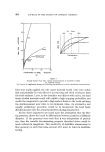
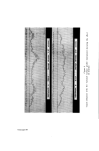
410 JOURNAL OF THE SOCIETY OF COSMETIC CHEMISTS gritty particles shall not disfigure an enamel surface (approx. as hard as soda glass), but not all are agreed upon the levels of disfigurement which are acceptable and, before we can even attempt this, it is necessary to devise some measurement technique whereby one can measure the severity and frequency of the scratch marks. Profilo- meter type instruments can be used to record the nature of the surface damage, but such traces still require interpretation. I agree that the radiotracer technique cannot provide any information about the surface texture of the dental tissue, indeed it has never been claimed to do so. Such information can readily be obtained from a supplementary experiment using either a profilometer or optical reflection technique. One assumes that in designing a new dentifrice formulation, the first requirement that must be met is that it does not cause undue damage to the main dental tissues. When this feature has been settled, one can then proceed to examine the quality of the surface texture that it produces. If both of these factors can be examined simultaneously so much the better. The question of particle aggregation is clearly important and must have some effect on the form of the wear-dentifrice concentration curves. In our theoretical model, the capture probability will now correspond to the aggregated particle size and not to the individual dimensions of the components. This will mean that the wear- concentration curves will tend towards those appropriate to large single particles. On the other hand, the aggregates will break up under the normal and sheer stresses imposed by the loaded fibres, so that the surface finish produced on the dental tissue is likely to be superior to that which would normally be observed with large single particles of abrasive. When considering the problem of the initial surface preparation of the dental tissues, one has to bear in mind that the range of surfaces likely to be encountered in vivo is so wide that one could always argue against the choice of any particular surfacing technique. Whenever one abrades a surface, the topography of which is 'foreign' to that which would be appropriate to the abrasive employed, the wear rate will slowly change until the equilibrium surface texture for that abrasive is obtained. In our paper we refer to this as the conditioning process. If one includes this portion of the wear process in an experimental run, one finds that the average wear is a function of the time of the experiment. This is clearly undesirable unless the wear process closely replicates that which occurs in vivo and this would seem impossible to attain at the present moment. It, therefore, appears better to employ an abrasively conditioned surface and to measure the intrinsic abrasivehess of the dentifrice. Such a measurement is independent of the length of test and enables a range of different measurement techniques, perhaps of different sensitivity, to be employed for evalu- ation purposes. In the case of the tracer technique, this procedure also allows the surface to reach chemical equilibrium with its environment. DR. B. 1•. Puo•: We have examined the effect of "vane" size on brushhead and found that vane dimension affects the concentration curves quite markedly. Do you believe that your hypothesis regarding combinations of small and large particles is therefore only theoretical? DR. WmGI•T: I think you are aware that our equipment is fitted with stirring vanes that closely conform to the internal dimensions of the trough. These stir the dentifrice slurry vigorously and are, we believe, completely effective in preventing sedimen- tation. We have so far only employed two designs, both of which yielded essentially the same results. It is, however, difficult to assess the true efficacy of any vane design as

MEASUREMENT AND INTERPRETATION OF DENTIFRICE ABRASIVENESS 411 this can really only be ascertained by carrying out the test with different periods of brushing and extrapolating the results back to zero brush strokes. If sedimentation is occurring then this will show itself by producing a gradually increasing wear rate as the number of brush strokes diminishes. I agree that if sedimentation of the abrasive solids in the dentifrice slurry had been occurring in our tests, then the shape of the wear-concentration curves would have been affected. Clearly large particles would 'tend to settle more rapidly than fine material, especially with the more highly diluted dentifrice slurries, and this would tend to produce differences in the wear-concentration curves of the type we have recorded. However, I repeat that we do not believe that sedimentation plays an important part in our experiments, not only because of our vane design, but because of the brief period of brushing which is necessary when a radiotracer technique is employed. DR. B. R. PUGH: We found in practice that the curves of all dentifrice type materials which we have examined are identical we do not get_any very large variation such as you have described. DR. WRmHT: I think your tests have been confined to the normal range of products currently on the market. We have increased the range of particle sizes considerably in a deliberate attempt to assess the magnitude of the problem, since the object of our experiments was to devise a test procedure that would be capable of assessing almost any type of dentifrice that might be marketed. DR. B. R. PUGH: Does irradiation affect tooth hardness? DR. WRmHT: We do not think that the irradiation dose of 5 hr at a therma 1 neutron flux level of 10•2 neutrons/cm2/s is likely to affect the hardness of the tissue. One must remember that the number of p32 atoms produced by such a dose will only amount to about 10-7% of all the phosphorus atoms present .However, it•is important to ensure that the temperature of the tissue does not rise, say above 100øC, since in such circumstances there may be a gross change in the structure of the tissue. In our experiments, the test tissues were always irradiated under water in a water moderated reactor, the temperature of which never exceeded 30øC. Hardness tests did not show any increase in hardness following irradiation and this result is in accord with the findings of Grabenstetter (5). MR. C. PUSH: It can be shown in studying the wear of mixers by toothpaste that the abrasion markedly decreases as the hardness of iscraper blades increases from very soft plastic to very hard plastic or metal. It seems likely that this is due to imbedding of particles in the blade, converting it to a sort of sandpaper structure. This may well be relevant to your determination of the sphere of influence of the bristles and also show differences between different bristle materials. DR. WRmHT: This is interesting since it clearly represents the two-dimensional case of the more general problem of a fibre tip contact. So long as the saturation levels of dentifrice wear have not been reached, one would certainly expect the softer blades to produce more wear than the harder materials. In practice, this might be accentuated by permanent trapping of abrasive particles in the softer grades of materials, but I rather doubt if the effect would be very large in the case of dentifrice abrasives.
Purchased for the exclusive use of nofirst nolast (unknown)
From: SCC Media Library & Resource Center (library.scconline.org)