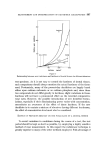
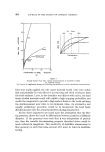
394 JOURNAL OF THE SOCIETY OF COSMETIC CHEMISTS without causinõ harm to the main dental tissues has yet to be established. Unfortunately many of the published clinical trials (7) have employed dentifrices formulated from abrasives of very similar hardness and it has not been possible to examine the siõnificance of the discriminatinõ power of the dentifrice to tissues of different hardness. Thus it is not known whether a very hard abrasive compound which is likely to show a small wear rate variation with tissue hardness, or a softer compound which will accentuate the wear of the softer reõions in the surface, should be employed. It miõht be argued that the overlyinõ plaque and perhaps the acquired staininõ pellicle are relatively soft compared to enamel and therefore a soft, hiõhly discriminating dentifrice is required but if the surface films and the action of food and drink cause some superficial damaõe to the enamel, then it might be preferable to use a harder less discriminatinõ dentifrice to repolish the surface without causinõ excessive wear to the softer tissues. Present- day dentifrices tend towards the first of these formulations and whilst this invariably leads to low enamel wear rates, one miõht ask if it is the correct formulation to use if there is any cervical exposure of dentine. Althouõh there are a few isolated references in the literature to the dentine/enamel wear ratio, no serious attempt has been made to study it in a systematic manner. This is larõely because of the dif•culty in measurinõ enamel wear accurately. However, the abrasive wear properties of metals and certain ionic and covalent solids, abraded with very hard compounds, are such that simple proportional relationships are found to exist between the wear resistance (I/wear volume) and hardness (8). Under these circum- stances the coef•cient of proportionality varies from one class of material to another. Maior deviations from these simple relationships naturally occur when- ever the abrasive compound has a hardness comparable to that of the abraded solid and, in these situations, the wear-resistance/hardness plots curve sharply upwards as the hardness of the solid approaches that of the abrasive. Unfortunately, despite its technical importance, the exact form of the characteristic so obtained has never been studied in õrear detail. Although it has never been investiõated, it is probable that dental tissues show similar wear/hardness characteristics to metals and other solids. The very high dentine/enamel wear ratio reported in the literature for many proprietary dentifrices, is almost certainly due to a stronõly curving wear resistance/hardness characteristic, arisinõ from a limited abrasive hardness. If dental tissues fall into the same cateõory as the other solids, then the use of a very hard abrasive compound in a dentifrice should

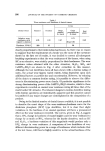
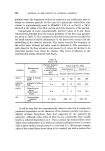
MEASUREMENT AND INTERPRETATION OF DENTIFRICE ABRASIVENESS 395 cause the wear resistance/hardness plot to reduce to the proportional relationship characteristic of many other materials. The distortion of the linear characteristic is a measure of the discriminating power of the denti- frice to abrade tissues of different hardness and is clearly a factor to con- sider in selecting an abrasive for dentifrice purposes. In order to study this problem in greater detail, a number of test slurries were prepared from a range of abrasives of different hardness. A particle size of approximately 101• diameter was chosen for the abrasive and the slurries were made up with a water-glycerine mixture to which a small amount of carboxymethylcellulose (CMC) was added to give a con- sistency similar to that of a diluted commercially available dentifrice. Testpieces of three dental tissues were prepared: Ivory, human dentine and human enamel. The ivory and human dentine specimens were given identical geometry, but the shape of the enamel testpiece differed from the others as it was considered advantageous to preserve the natural tooth contours. The possibility of a proportional relationship existing between the wear resistance and hardness of the dental tissues was first studied with the aid of a dilute slurry of SiC particles (5% w/w). The results of these experiments indicated a very slight upward curvature to the wear-resistance/hardness plots when suitable corrections for specific activity and nominal area of the specimens were taken into account. This curvature could not have arisen from any lack of hardness in the abrasive, but it could quite easily have arisen from the slight differences in specimen geometry. To investigate this point, additional experiments were made with a standard pin-on-disc machine employing a fixed abrasive cloth lubricated with water. The specimens consisted of small 2.5 mm pins machined from dental tissues and mounted so that the ends traversed the wet abrasive cloth in a spiral path. The change in length of the pins after passing over 3 m of cloth was measured with a micrometer and used to obtain the wear resistance of the tissue. With this machine, which is normally used for studying the abrasive wear of metals, the wear rates are higher than those usually recorded with a loose abrasive and brush loading. However, the load applied to the pins was adjusted so that the load on any abrasive particle was commensurate with that normally experienced with fibre loading. The results obtained from these experiments are shown in Table I. It will be seen that slight variations in the wear resistance of ivory arise with different orientations of the tissue, but if one accepts the mean value obtained for this material, then the wear resistances of the three tissues are
Purchased for the exclusive use of nofirst nolast (unknown)
From: SCC Media Library & Resource Center (library.scconline.org)