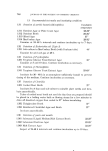
740 JOURNAL OF THE SOCIETY OF COSMETIC CHEMISTS 4.1.3. that appropriate procedures can be carried out when specialised operations, e.g. handling sterile or highly inflammable materials, etc., form part of the manufacturing or packaging process. 4.2 Handwashing facilities must be provided within easy access of all manufacturing and packaging areas. 4.$ All staff working in processing and packaging areas must wear suitable garments laundered at least once weekly. 4.$. 1. Food must not be brought into or consumed in areas where manu- facturing or packaging processes are carried out. 4.$.2. Smoking must not be allowed in areas in which manufacturing or packaging processes are carried out. 4.4. Facilities for quality control must be provided through a laboratory functionally independent of manufacturing and provided with sufficent equipment to carry out all necessary assays and tests which are required for compliance with this Code of Good Practice. 5. •UB-CONTRACTING 5.1. If a manufacturer sub-contracts any work covered by this Code of Good Practice, then the sub-contractor must comply with the provisions of this code. 6. EQUIPMENT 6.1. Equipment must be maintained in a clean condition. It must not be deleteriously reactive to materials being handled and must be constructed so as to be capable of easy efficient cleaning and if necessary sterilization. 6.2. In relation to the work being carried out, weighing and measuring equipment for raw materials and intermediates should be accurate enough to ensure that weighings or measurings will not vary outside the limits + 1.0% of the quantity being weighed or measured. Equipment should be subject to regular skilled testing, on at least an annual basis. 7. PROCEDURES 7.1. Systematic procedures must be established to control the identity and quality of each raw material, component and finished product at the appropriate stages of manufacture, filling, packaging and storage.

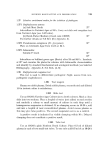
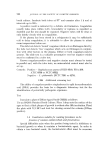
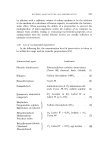
IIYGIENIC MANUFACTURE AND PRESERVATION 741 7.2. Each product, its raw materials and other components must be clearly identified at all stages of manufacture, storage and transportation. 7.3. Each product must have a recorded master formula which includes or appends the quality control parameters and processing details. Copies of the master formula required for working purposes shall be prepared in a manner which will miniraise the possibility of transcription errors. Deviation from standards must be authorised by a responsible person as specified in 3.1. 7.4. Records must be maintained which make it possible to ascertain the date of manufacture of any filled product. 7.5. All relevant records should be retained for a minimum of two years. 7.6. Stocks of approved raw materials and components must be differen- tiated from those untested. 7.7. Representative samples of raw materials and finished products should be retained for at least one year. 7.8. A procedure must be established for the issue of packaging matehals including labels to ensure that those issued correspond with the product being packed. Safeguards against issued packaging matehals becoming intermixed before and during use must be established. 7.9. A system of "first in first out" procedure of stock-keeping of all raw matehals and finished goods must be established. 7.10. Procedures must be established to ensure that packaging lines, tables and equipment are clean and free from any matehals and packs not relevant to the current operation. 8. RECOMMENDED STANDARDS AND TECHNIQUES Where control by regulation does not exist, the Standards and Tech- niques given in the schedules for (A) Hygiene-- Microbiological Safety (to follow) (B) Safety in Use-- Toxicological and Dermatological Safety (to follow) (C) Quality Standards-- Quality Control of Ingredients of Products (to follow) will apply.
Purchased for the exclusive use of nofirst nolast (unknown)
From: SCC Media Library & Resource Center (library.scconline.org)