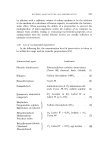
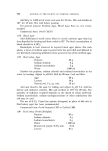
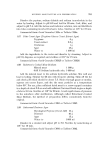
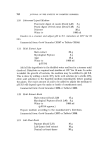
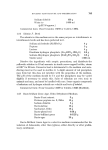
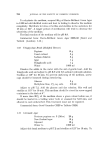
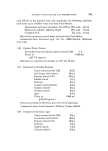
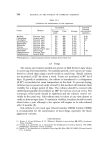
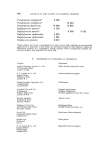
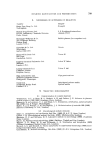
752 JOURNAL OF THE SOCIETY OF COSMETIC CHEMISTS Alcohol Chloroform Chlorbutol Phenol and derivatives Esters of p-hydroxy- benzoic acid Benzoic acid Sorbic acid Hydrogen peroxide Mercurials A general dilution of 1 part of sample to 100 parts of rec- overy medium Addition of poly- sorbate 20 or 80 (Tween) to a level of 10% is an add- itional safeguard (9) Catalase, sodium thiosulphate Sufficient thioglycolate present in Brewer's or U.S.P. medium i.e. 0.05-0.1% REFERENCES (1) Flett, L. H., Haring, R. C., Guiteras, A. F. and Shapiro, R. L. J. Bacteriol. 50 591 (1945). (2) Weber, G. R. and Levine, M. Amer. J. Publ. Health 84 719 (1944). (3) Lawrence, C. A. and Erlandson, A. L. J. Am. Pharm. Assoc. 42 352 (1953). (4) Nordgren, G. Acta. Path. Microbiol. Scan& 1 (Suppl. xl) (1939). (5) British Standard Specification 3286: 1960. (6) Acta. Pharm. Hung. 87 235 (1967). (7) Lowbury, E. J. L., Lilley, H. A. and Bull, J.P. Brit. Med. J. (2) 531 (1964). (8) Anderson, K. and Crompton, D. Lancet (2) 968 (1967). (9) Kohn, R. S., Gershenfeld, L. and Barr, M. J. Pharm. Sci. 52 967 (1963). GENERAL REFERENCE A guideline for the determination of adequacy of preservation of cosmetic and toiletry formulations. Toilet Goods Assoc. Cosmet. J. 2, 20 (Winter 1970). 1.5 Routine bacteriological testing of water supply The necessary scale of testing depends on the general quality of the mains supply and the condition of the storage tanks and pipe-lines. Monthly examination will suffice if the whole system is in good order but, when this is not so, daily examination should be made. Special care is required if the preservative capacity of the formulation is limited with respect to its ability to cope with large inocula of waterborne organisms. 1.51 Sampling A 250 ml sample is taken aseptically in a sterilized container at least once per month from the water inlet to each mixer in use. If samples are transmitted to a consultant for examination, they should be transported on ice with minimum delay. If the water to be examined contains, or is likely to contain, chlorine or chloramine, sufficient sodium thiosulphate to neutralize these substances should be added. The thiosulphate should be

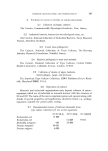
HYGIENIC MANUFACTURE AND PRESERVATION 753 added to the bottles before sterilization as a 3% solution to give a final concentration of 18 mg 1-1 in the water sample, the amount depending on the size of the bottle, e.g. 0.1 ml is required for a 170 ml bottle. Sodium thiosulphate (Na2S2035H20) at a concentration of 18 mg 1-1 has no significant effect on the coliform organisms and should neutralize up to 5 mg 1-• of residual chlorine. 1.52 Colony count Water may contain a variety of micro-organisms having different optimum temperatures of growth. Most bacteria capable of growth in water will, in laboratory media, grow better at 22 ø than at higher tempera- tures. Organisms which grow best at 37 ø usually grow less readily in water and are more likely to have gained access from external sources. Since these two groups of organisms differ in their significance, it is desirable to count them separately. For this reason two sets of plate counts are usually prepared, one of which is incubated at 20-22 ø and the colonies counted after three days, the other of which is incubated at 37 ø , the count being made after 24 h. The number of dilutions used may be varied in the light of experience with waters of which the bacterial content is known. Normally original sample and dilutions of 10-• and 10-2 are usually sufficient for this purpose. (Appendix B, Section 1.215 p. 746 for method of plating out). Details of special procedures relating to sampling, the membrane filter, the identification of E.coli (fermentation of lactose at 44 ø) and other appropriate biochemical tests, also special methods for the isolation of pathogens are described in the official report (1). 1.53 Reporting plate count results Report the colony count as the number of colonies developing per ml of the original water on Plate Count Agar after 24 h at 37 ø or 3 days at 20-22 ø as the case may be. REFERENCE (1) The bacteriological examination of water supplies. Report No. 71 (1969). (H.M. Stationery Office, London). 1.6 Microbiological status of atmospheric environment A high level of microbial contamination in the air of a cosmetic manu- facturing plant is obviously undesirable as it may lead to contamination of the product. Aerial counts of bacteria, moulds and yeasts are liable to fluctuate widely in relatively short periods of time, e.g. due to air currents, opening of packing cases and the movement of personnel. Respiratory
Purchased for the exclusive use of nofirst nolast (unknown)
From: SCC Media Library & Resource Center (library.scconline.org)