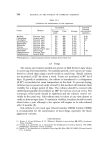
758 JOURNAL OF THE SOCIETY OF COSMETIC CHEMISTS bacteria if no effective preservative is present. Organisms responsible for shampoo spoilage consist largely of gram-negative, non-spore-beating rods. Moulds and yeasts are rarely encountered. When contamination occurs, a sediment or "ropiness" may become visible but not always the aroma may alter noticeably and also there may be a potential risk to the user. To avoid these undesirable consequences, it is theoretically possible either to employ sterile raw matehals and handle them aseptically so as to avoid extraneous contamination altogether, or alternatively, to operate with a reasonably high standard of cleanliness and include a bactericide. Thorough aseptic technique would be unduly expensive and elaborate for shampoo manufacture and it is therefore customary to adopt the second course. 3.22 Testing the preservative Before adding the preservative to the shampoo, set aside about 400 ml of the unpreserved product. Store at about 4 ø until ready for use as a control. After the preservative has been added to the shampoo, allow the product to stand at room temperature for at least 48 h. The length of time that should be allowed for chemical interaction between shampoo and preservative will largely depend on the stability of the preservative under test, e.g. formalin disappears very quickly from some formulations, but products containing less reactive preservatives should be retained before testing for at least 5-10 days. It is obviously best to allow a prolonged interaction time to be sure that the preservative will be stable in the shampoo formulation. 3.23 Test inoculum The test inoculum should comprise representative strains of aerobic non-sporing gram-negative bacteria initially isolated from factory plant, spoilt shampoo, and contaminated detergent preparations. The inoculum should include a selection of Pseudomonas species. The organisms should be recent isolates and capable of vigorous growth in detergent solutions. The test bacteria should be grown on slopes of Nutrient Agar containing 5% of the unpreserved shampoo, for 18-24 h (see methods oe.1oe1 and •.1oe•, p. 756). Experimental inoculation of the shampoo should be carried out in duplicate using a washed suspension of micro-organisms suitably diluted in sterile water. For test purposes a suitable inoculum of viable organisms is between 107 and 109 ml-1. To each 100 ml sample of shampoo add 1 ml of the standard bacterial suspension. Mix thoroughly but avoiding excessive froth. After inoculation, incubate the samples at 22 ø and 30 ø. Estimate bacterial counts in Tryptone

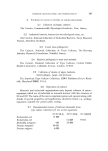
HYGIENIC MANUFACTURE AND PRESERVATION 759 Glucose Yeast Extract Agar by plating out on the day of inoculation and after 1, 2, 3 and 4 weeks' incubation. To obtain more detailed information on bactericidal activity, viable counts can be performed more frequently. The following schedule may be used: viable counts are made on control and test samples immediately after inoculation, after 1 h, 6 h, and 24 h, then at daily intervals up to one week. If at any time there is an immediate decrease to a zero count which is maintained for two consecutive weeks, a second challenging inoculum should be added with further periodic culturing. This provides information on the sustained ability of the preservative to protect the product. The following controls should be included: 3.231 Test shampoo manufactured without preservative. This sample is not inoculated. 3.232 Shampoo manufactured as above, heated in a water-bath for 1 h at 65 ø, allowed to cool and inoculated with 1 ml of standard suspension. {The heat treatment is usually sufficient to destroy extraneous contaminants but before experimental inoculation the sample should be checked for viable bacteria). 3.233 Another shampoo formulation, known to be definitely self-sterilizing. Inoculated with 1 ml of standard suspension. Findings on these controls should be interpreted thus: $.251 Since this sample was not inoculated, the recovery of viable organ- isms will confirm the need for an antibacterial preservative. $.252 The inoculated sample without preservative should normally demon- strate a colony count of at least 106 organisms ml-1 throughout the test period and thus serves as a check on the viability of the test inoculum. $.255 Following experimental inoculation, the shampoo should normally demonstrate a self-sterilizing action within 7 days. 3.24 Acceptance of shampoo preservative systems Incubation of the shampoo should proceed at 22 ø and 30 ø for at least one month. Plate count and sterility tests should be carried out during this time to ensure that the product remains sterile. An effective shampoo preservative should be bactericidal in action so that, following experimental inoculation, the product becomes virtually sterile within 1-7 days. Although rapid bactericidal action is highly desir- able, a slow-acting but stable preservative is, however, equally acceptable it is most important that the preservative should not only yield a sterile
Purchased for the exclusive use of nofirst nolast (unknown)
From: SCC Media Library & Resource Center (library.scconline.org)