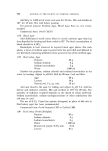
760 JOURNAL OF THE SOCIETY OF COSMETIC CHEMISTS product but should continue to retain its activity within the product in order to cope with any subsequent contamination. 3.25 Bacteriological examination of shampoo production (bulk samples.) Transfer a requisite amount of shampoo to a sterile bottle suitably calibrated, e.g. 30 g of shampoo made up to 300 ml with sterile diluent will give an initial dilution of 1:10. If the shampoo is highly contaminated it may be necessary to prepare a number of 10-fold serial dilutions by aseptic- ally transferring 1 ml to 9 ml of Peptone Water Diluent. From each dilution remove 1 ml and add to separate sterile 20 X 100 mm Petri dishes. Add 15 ml of sterile liquefied Plate Count Agar which has been cooled to 45 ø- 47 ø. Swirl the agar and allow to harden. Invert the Petri dishes and place in a 30ø incubator for 48 h. Remove and count colonies. In favourable circumstances, bulk shampoo will prove to be sterile. However, since the action of the preservative is not instantaneous, a finite time will be required for sterilization of shampoo initially bearing a reason- able level of contamination. The product will only fail to become sterile within 48 h if the initial contamination is exceptionally heavy or if resistant strains are encountered. 3.26 Bacteriological tests on shampoo packs The schedule of testing given below should be regarded as a minimum requirement. The conduct of further studies from time to time will help to ensure that standards of hygiene are not falling below safe levels for example, it is useful to keep a proportion of packed stock up to one month before testing to make certain that growth does not occur. In conducting tests for sterility, aseptic precautions should be taken throughout all procedures. Testing should not be conducted under direct exposure to ultraviolet light or in areas under disinfectant aerosol treatment. Suitable environmental control tests, including plate counts, should be performed at regular intervals. Test each lot of culture medium for sterility and for its growth-promoting properties. The medium must be appro- priately modified or precautions taken to neutralize the activity of any antimicrobial in the preparation tested (see 1.41). Wide-bore pipettes are suitable for the transference of viscous liquids, e.g.H.J. Elliott Ltd. E-mil 1 ml disposable serological pipettes (Cat. No. D.P. 1010, in sterile packs). 3.261 Broth sterility test 3.2611 Take two bottles or sachets for each half-day's filling from each filling line. Reserve one of these samples as a duplicate for examination only

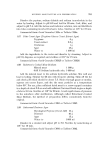
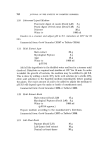
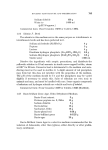
HYGIENIC MANUFACTURE AND PRESERVATION 761 if the first sample fails to satisfy the test. Take two separate 1 ml aliquots from the pack to be examined and dilute each aseptically with 9 ml Nutrient Broth in a 30 ml (1 oz) Macartney bottle. Incubate at 30 ø for at least 24 h. When taking aliquots from a bottle pack, invert the bottle several times and transfer the sample aseptically, flaming the mouth of the bottle each time it is opened the transference should actually be carried out in close proximity to the burner. To take an aliquot from a sachet, snip the corner using a pair of scissors, flamed by dipping in alcohol and burning away the excess cutting should be carried out while the scissors are still hot. Transfer aseptically as in the case of bottle packs. If growth in the broth culture is difficult to detect owing to turbidity of the product, sub-culture a loopful onto Nutrient Agar, or use method $.$5. 3.2612 If the 24 h reading is negative (no visible turbidity), the batch may be passed provisionally. Tests should be continued, however, for at least a further 48 h for information. If the reading is positive (any degree of turbidity indicating bacterial growth), the tests should be repeated on the duplicate sample and on further aliquots taken from the same sample which will have stood at room temperature for 24 h. After 24 h incubation, negative cultures may be taken to show that contamination has died out and the batch would then be accepted as satisfactory. Material failing to pass the test under these conditions should be discarded, except that there would be no objection to repeated sampling after several days' storage to ascertain whether the contamination has eventually died out. 3.262 Membrane filtration methods for shampoo testing Tests for coliforms, total counts, and sterility may be carried out by means of membrane filter techniques. Ability to filter the product (usually employing a membrane having a pore size of 0.45 gm) is only restricted by the amount of gross suspended matter present. The membrane filter tech- nique offers certain advantages over the conventional methods of testing: Larger volumes of fluid may be sampled than are conveniently handled with conventional plating techniques. Small numbers of organisms can be detected, which might be missed with conventional counting methods. Counts can be carried out in a shorter time. To eliminate the effect of preservative or antimicrobial, the membrane can be washed free from inhibitory substance. In principle, procedures similar to those used in water bacteriology may
Purchased for the exclusive use of nofirst nolast (unknown)
From: SCC Media Library & Resource Center (library.scconline.org)