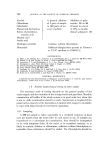
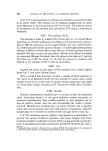
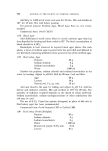
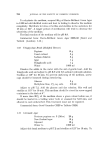
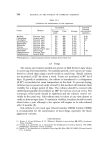
764 JOURNAL OF THE SOCIETY OF COSMETIC CHEMISTS N.B. TTC is photosensitive in solution and should be stored in the dark in an amber bottle. The solution can be sterilized satisfactorily by mem- brane filtration or by autoclaving at 121 o for 15 min. The solution cannot be incorporated in the medium and autoclaved. This'causes a reduction to formazan. 3.351 Test medium (TCA) The medium is made by adding 0.3% Oxoid Agar no. 1 to Oxoid Blood Agar Base no. 2 before making up according to the manufacturer's instruc- tions in 200 ml amounts in screw-capped bottles. For use, add 0.5 ml of a 1% freshly prepared sterile aqueous solution of 2:3:5-triphenyltetrazolium chloride to 200 ml of Oxoid Blood Agar Base no. 2 which has been suitably liquefied. Mix the contents and pour plates. Allocate about 20 ml of medium to a standard 100 mm Petri dish. Store the plates in the dark at 4 ø and dry off before use at 37 ø for about 1 h. If only five plates are required, add 0.25 ml of 1 •/o solution of TTC to 100 ml of medium. 3.352 Test Imprint 5-6 circles in each plate of TCA medium with a sterile, lightly flamed no. 7 cork borer (10 mm diam.). With a sterile 5 mm wire loop, transfer a sample of liquid emulsion to the centre of an imprinted circle. For the transfer of creams, take a small sample, about 0.1 g, on the end of a sterile wooden applicator* and apply to a fresh circle of agar. Incubate at 37 o. Read tests within 18 h of incuba- tion. 3.353 Results Heavily contaminated emulsions give a red spot within the imprinted circle. Increasing density of red spots indicates various intensities of bacterial contamination. Fine reddish granules or dots (stipples) can be seen in positive creams. Also the area surrounding the cream is deeply coloured. Bacteria-free emulsions give no colour reaction, but a negative result does not necessarily mean the total absence of organisms. Negative samples may be re-checked in nutrient broth and agar in the usual way. N.B. W/o emulsions tend to 'splutter' when heated in a naked flame. To prevent the spread of infected particles, wire loops charged with these materials should be sterilized in a burner which is equipped with a protective hood. A Kampff pattern micro-incinerator (Arnold R. Howell Ltd.) with a *Obtainable from Arnold R. Horwell Ltd., London, N.W.6. The sticks should be autoclaved at 121 ø for 15 min before use and afterwards destroyed by incineration.

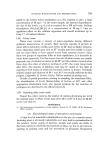
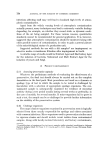
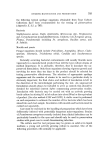
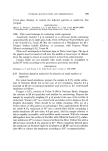
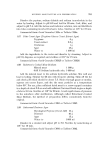
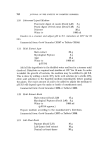
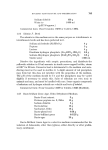
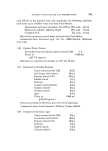
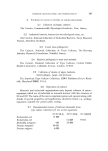
HYGIENIC MANUFACTURE AND PRESERVATION ?65 Pyrex glass chimney to contain the infected particles is useful for this purpose. REFERENCES Hill, E. C., Davies, I., Pritchard, J. A. V. and Byron, D. J. Inst. Petrol. õ3 275 (1067). "Tetrazolium salts" publication by British Drug Houses Ltd., Poole, Dorset. 3.36 Plate count technique for esti•nating viable organisms Aseptically transfer 1 g of emulsion to a universal bottle containing approximately six to eight glass bails, 8 ml of Peptone Water Diluent and 1 ml of sterile 1% Tween 80. Mix the contents on a Whirlimixer for 10 s. Prepare further tenfold dilutions, as necessary, with Peptone Water Diluent containing 0.1% Tween 80. Plate out 1 ml aliquots in Nutrient Agar or Plate Count Agar. The tip of the pipette must be inserted well into the middle or lower layer of diluent when the sample is drawn to ensure that it is free from solid material. Creams which are not miscible with water should be emulsified in Lubrol W broth according to the procedures previously described. REFERENCE Dunnigan, A. P. and Evans, J. R. Toilet Goods Assoc. Cosmet. J. • 38 (1969). 3.37 Membrane filtration method for the detection of small numbers of organisms For water-based emulsions, prepare the sample in 0.1% sterile surfac- tant in Nutrient Broth but in the case of w/o emulsions, dissolve 0.1 g material in 25 ml of isopropyl myristate and proceed as for water-based emulsions as follows: Prepare a 0.1% solution of Triton X-100 in Nutrient Broth. Dispense the solution in 25 ml quantities and sterilize by autoclaving. Prepare the sample by aseptically weighing 0.1 g of product into one of the bottles of surfactant. Warm to 47 ø on a water bath and shake well to disperse the oil droplets thoroughly. There should be no visible clumping. (The use of a Vortex mixer at this point is an advantage.) Pour approximately 50 ml of the sterile 0.1% surfactant at 47 ø into a sterile filter holder containing a sterile membrane (47 mm diam. 0.5 I•m pore). Add the sample solution to this as rapidly as possible, swirl and filter under vacuum. With the vacuum still applied, rinse the surface of the filter with 100 ml of sterile 0.1% surfac- rant solution at 47 ø to remove traces of oil from the filter. Follow this with a 100 ml rinse of sterile 0.1% peptone at 47 ø. When completely filtered place the membrane on Nutrient Agar for incubation at 28-32 ø and count colonies after 48 h or culture the membrane according to B.P. recommendations.
Purchased for the exclusive use of nofirst nolast (unknown)
From: SCC Media Library & Resource Center (library.scconline.org)