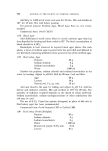
766 JOURNAL OF THE SOCIETY OF COSMETIC CHEMISTS 3.371 Materials Millipore Sterifil Filtration System. Cat. No. XX1104700 Oxoid Membrane Filters Size 47 mm. Code No. MF47 or Millipore Filter Discs 47 mm Cat. No. HAEG047AO, 0.45 Triton X-100. Nonionic wetting agent: Lennig Chemicals Ltd., 2 Mason's Avenue, Croydon, Surrey. REFERENCE Sterility testing of ointments and creams. Booldet published by Millipore U.K. Ltd., 109 Wembley Hill Road, Wembley, Middx. 3.4 Powders Powders, derived from natural earths, should be examined for yeasts and fungi as well as for aerobic and anaerobic bacteria with special refer- ence to pathogenic Clostridia. Talcs claiming deodorant or antiperspirant properties usually contain hexachlorophane, aluminium chlorhydrate or other antimicrobial compounds having a bacteria-inhibiting effect a suitable inactivating agent must then be included in the test media. 3.41 Detection of aerobic bacteria (qualitative) Using an aseptic technique shake 10 g of powder into 90 ml of Peptone Water Diluent. Plate out 0.1 ml aliquots on duplicate plates of Blood Agar, Nutrient Agar, and Malt Extract Agar. Spread the inoculum with a wire loop to obtain separate colonies. Incubate at 22 ø and 37 ø. Examine the Blood Agar and Nutrient Agar plates for sporing and non-sporing bacteria after 48 h incubation. Examine the Malt Extract Agar plates for moulds, yeasts and fungi at 24 h intervals up to seven days. 3.42 Detection of Clostridia (qualitative) Plate out 0.1 ml of a peptone water suspension (as in $.41) on the surface of overdried Blood Agar, Nutrient Agar and Reinforced Clostridial Agar. Inoculate freshly prepared Thioglycolate Medium and Cooked Meat Broth with 1 ml of the peptone water suspension introducing the inoculum well into the meat layer. Inoculate further samples of Cooked Meat Broth and heat at 80 ø for 10 min in a water-bath to kill non-sporing organisms. Incubate all samples for anaerobic culture at 37 ø . Examine after 3-4 days' incubation. Sub-culture broth medium to Blood Agar. Check that isolates will not grow under aerobic conditions. 3.43 Aerobic count Using a sterile E-mil weighing scoop, transfer 1 g of powder into 99 ml of Peptone Water Diluent. From this suspension (1:100) prepare a number

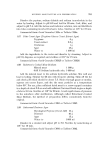
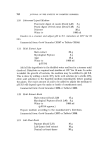
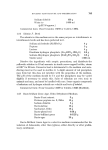
HYGIENIC MANUFACTURE AND PRESERVATION 767 of tenfold serial dilutions by aseptically transferring 1 ml to 9 ml of Peptone Water Diluent. From each dilution remove 1 ml and add to separate sterile 15 X 00 mm Petri dishes. Plate out each dilution in triplicate. Add 15 ml of liquefied Plate Count Agar which has been cooled to 45-50 ø. Mix the agar and allow to harden. If necessary to prevent the swarming of bacteria, add a 5 ml overlay of Nutrient Agar and allow to harden (1). Invert the Petri dishes and incubate at 30 ø for 48 h. Remove plates and count colonies. Plate out as above in acidified Malt Extract Agar for the enumeration of yeasts and fungi. 3.44 Anaerobic counts. Method 1 Prepare dilutions as above but use Reinforced Clostridial Medium as a diluent. Plate out 1 ml aliquots in Reinforced Clostridial Agar and Plate Count Agar. Incubate for anaerobic culture at 30 ø and 37 ø. Count colonies after 48-72 h. On ordinary agar the colonies of most Clostridia are large and spreading, but their size may be minimised by over-drying the plates or separate colonies ensured by plating out on Charcoal Agar (2). Concentrated agar e.g. 2.5-3% may also be used to prevent the spread of colonies. 3.45 Anaerobic counts, Method 2 If isolations are not being made and only counts are required, the following method may be used. Transfer 1 ml aliquots from serial tenfold dilutions of the suspension into sterilized, plugged Miller-Prickett tubes*. Cool freshly prepared reinforced Clostridial Agar to approximately 50 ø and, without shaking, add about 25 ml to each tube. Seal immediately with melted sterile paraffin wax and allow to set in a water-bath at about 15 ø. Incubate at 37 ø and count colonies after 48-72 h. Run at least one blank to detect contaminants occurring during the procedure. This method provides a simple means of culturing anaerobic bacteria without recourse to the use of an anaerobic jar (3,4). REFERENCES (1) White, M., Bowman, F. W. and Kirshbaum, A. J. Pharm. Sci. 57 1061 (1968). (2) Alwen, J. and Smith, D. G. J. Appl. Bacteriol 30 389 (1967). (3) Miller, N.J., Garrett, C. W. and Prickerr, P.S. Food Research 4 (5) 447 (1939). (4) Oxoid Manual 3rd edn. 222 (1965). 3.5 Eye cosmetics: Solid, semi-solid and liquid preparations 3.51 Examination of samples in current production A representative number of samples should be examined for bacteria '*Miller-Prickett Anaerobic tubes may be obtained from Astell Laboratory Service Co. Ltd., London, S.E.6.
Purchased for the exclusive use of nofirst nolast (unknown)
From: SCC Media Library & Resource Center (library.scconline.org)