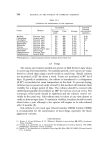
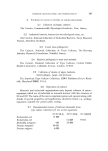
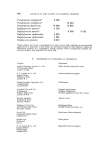
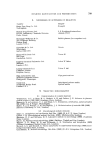
772 JOURNAL OF THE SOCIETY OF COSMETIC CHEMISTS necessary to inhibit or destroy anticipated levels of microbial contamination. The problem of product spoilage may be exacerbated by using antimi- crobial agents which are themselves susceptible to contamination. Disin- fectants and antiseptic solutions are sometimes metabolised by opportunist bacteria. This situation can result in an unexpected public health hazard instances have, in fact, been recorded where clinical infections have been caused by a contaminated solution of an antibacterial. Given the opportun- ity, bacteria will often show a remarkable ability to adapt to a hostile environment. Antimicrobial compounds used in industry today offer varying degrees of preservative action, depending upon such factors as pH, type of emulsi- fier, micellar solubilization, ease of migration into the oil phase of an emulsion system. There is still an unsatisfied need for the ideal antimicro- bial agent that will remain in the aqueous phase of such systems, where microbial contamination is most likely to reach significant levels, con- tinuing to exert biological activity over a broad pH range and throughout prolonged storage. The antimicrobial agent should be effective against a broad spectrum of micro-organisms, especially against the gram-negative bacteria which are most frequently involved in bacterial spoilage problems. Highly potent antimicrobial agents have sometimes proved to be ineffective as cosmetic preservatives whereas compounds with much weaker inherent antimicrobial properties have been quite effective in these compositions. Certain preservatives with good antimicrobial activity are liable to cause irreversible physical or chemical changes in a product and are therefore useless in practice. Choice of a suitable preservative in adequate but non-toxic concen- tration can usually be made only after considerable experimental work. Consideration of preservatives should therefore be regarded as an integral facet of the initial formulation activity. Decisions should preferably be reached after close collaboration between the formulation chemist, packag- ing technologist, physical chemist, pharmacologist, and microbiologist. Safety, compatibility, effectiveness and cost are the over-riding factors influencing the choice of a particular preservative. If the preservative is a new one or used in unusually high concentrations, data to confirm safety- in-use will be required the risk of sensitizing the skin must also be taken into account. 4.3 List of preservatives This glossary discusses some of the more important antimicrobials which

HYGIENIC MANUFACTURE AND PRESERVATION 773 have found general acceptance in the preservation of cosmetic preparations. The recommended level of preservative should be taken only as a general guide. The precise concentration required will depend largely on the type of preparation and the likely levels of exposure to micro-organisms. Each new formulation must be individually studied and the preservative rigorously evaluated by the appropriate method in the final pack. 4.31 Hydroxybenzoates Methyl, ethyl, propyl and butyl esters of p-hydroxybenzoic acid (often referred to as 'parabens') and their salts are widely used as preservatives in many preparations. 4.311 Properties Sparingly soluble in water, the esters are tasteless, odourless, stable on storage and of low toxicity. Each ester is most active against a different range of organisms. Activity increases with increasing chain-length and water solubility decreases in the same direction. The higher esters are more effective against moulds and yeasts. Combinations of esters are likely to be more effective than a single ester. The parabens are active over a relatively wide pH range although their effect on specific types of micro-organisms varies with pH. They are usually well tolerated on the skin, compatible with most cosmetics containing proteinaceous ingredients, and unlikely to cause significant discoloration of the formulation. 4.312 Disadvantages The parabens have low aqueous solubility they have inhibitory activity but are not usually bactericidal or fungicidal, and quite often they need to be supplemented with an additional preservative. Activity may also be reduced in the presence of oils and nonionic emulsifiers (e.g. Tweens). An increase of paraben concentration above the level of inactivation is necessary for achieving efficient preservation. A reconsideration of the type of non- ionic employed in the product may, however, prove beneficial. Tween 80 has the least damaging effect followed by Tween 60. Tween 80 will reduce antimicrobial efficiency to the greatest extent. Skin sensitization due to the parabens has been reported, although it seems to be comparatively rare. 4.313 Uses The methyl ester, which has the highest solubility in water, is commonly employed in concentrations of 0.1-0.3% while the higher esters are used in near-saturated solutions (0.01-0.025%). Combinations of the methyl, propyl and butyl esters are commonly employed (some of which are avail-
Purchased for the exclusive use of nofirst nolast (unknown)
From: SCC Media Library & Resource Center (library.scconline.org)