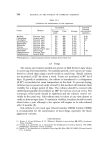
774 JOURNAL OF THE SOCIETY OF COSMETIC CHEMISTS able as proprietary preparations). The esters are usually incorporated in the preparation as a solution in boiling water, but in non-aqueous prepara- tions may be dissolved in acetone, alcohol, melted fats and oils, glycerine and triethanolamine, or incorporated in the emulsifier. The sodium salts of the parabens may be used to increase aqueous solubility. The soluble derivatives are suitable for preparing more concentrated solutions than is possible with esters but the solutions are strongly alkaline they cannot therefore be used in preparations with an acid reaction, since the less soluble ester would be precipitated. In nonionic systems, propylene glycol is reputed to form synergistic mixtures with p-hydroxybenzoic acid. Formaldehyde used at a relatively low level is claimed to be a useful supplement for the parabens and will in- crease activity generally. 4.314 Proprietary preparations based on p-hydroxybenzoates The following blends are supplied by Nipa Laboratories Ltd.: Nipasept. A mixture of the methyl, ethyl and propyl esters of p-hydroxy- benzoic acid. Use up to 0.$%. Nipasept Sodium. A water soluble form of Nipasept. Nipastat. A mixture of the methyl, ethyl, propyl and butyl esters of p-hydroxybenzoic acid. Use up to 0.$%. 4.32 Bronopol (2-bromo-2-nitro propane 1,$-diol) 4.321 Properties Colourless, odourless, crystalline solid, highly soluble in water, only slightly soluble in oil. A good bactericidal agent unusually active against Pseudomonads. Bactericidal activity is not affected by nonionic surfactants. 4.322 Disadvantages The compound is unstable to light, though it is stable in acid solution if protected from light. It is unstable in alkaline solution with formation of formaldehyde. 4.323 Uses Bronopol should be used either in acid solution protected from light or in alkaline solution as a bactericide to achieve a rapid effect. In alkaline solution it may sometimes be used to greater advantage in conj unction with a more stable preservative. It is recommended particularly as a preserv- ative for shampoos and may be used at concentrations of 0.01-0.02%. Dye fading or darkening may result if Bronopol is used at higher levels.

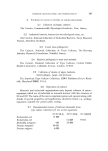
HYGIENIC MANUFACTURE AND PRESERVATION 775 4.33 For•naldehyde 4.331 Properties Freely miscible with water and alcohol. A powerful antibacterial and antifungal agent. Formalin solution contains 40% of formaldehyde. 4.332 Disadvantages Formaldehyde is a volatile compound with a pungent odour and is liable to form insoluble polymers. It is highly reactive chemically and is irritant to the skin. It should only be used as a preservative in relatively low concentrations, and it is incompatible with ammonia, gelatin and other proteinaceous materials, phenols and oxidizing agents. 4.333 Uses Despite the above disadvantages and the fact that sterilizing activity in the product is of short duration due to its chemical instability, formalin is used quite extensively as a preservative in shampoos. It is recognized generally that formaldehyde up to 0.05% is an acceptable preservative in such products from the toxicological standpoint (1). 4.34 Organic mercurial compounds The relevant compounds comprise the phenylmercuric salts, such as the nitrate, borate and acetate. 4.341 Properties These are colourless, odorless, crystalline powders, sparingly soluble in water (1:500 to 1:1 500). They are efficient antifungal and antibacterial agents. 4.342 Disadvantages The phenylmercuric salts are potentially toxic and may sensitize the skin. Activity may be reduced in the presence of nonionic and anionic emulsifying and suspending agents, protein, and compounds having -SH groupings. They are precipitated in the presence of chloride. Some loss of activity may be experienced at high pH values and also through absorption by closure materials. 4.343 Uses The phenylmercuric salts are specially exempted in the Third Schedule to the Poisons Rules {United Kingdom) provided that they are used {as preservatives) in cosmetic preparations containing not more than 0.01%. Local regulations vary from country to country and should be consulted when necessary. From the toxicological standpoint, the phenylmercuric salts are recommended for use in preparations, such as shampoos which
Purchased for the exclusive use of nofirst nolast (unknown)
From: SCC Media Library & Resource Center (library.scconline.org)