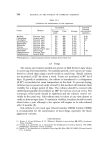
790 JOURNAL OF THE SOCIETY OF COSMETIC CHEMISTS 2.1 Dry heat Dry heat, employed in the form of hot air treatment or with super- heated steam, is an effective sterilizing agent when properly applied. To ensure sterility by this means, it is essential to see that all the surfaces or materials concerned are maintained at 160 ø for at least 60 min or 180 ø for at least 20 min. Dry heat does not have good penetrating properties, and the requirement that the whole of the material to be sterilized should reach the stated temperature for the full period of heating is a stringent one, which cannot be relaxed without serious risk. Equipment that will not be damaged by the prolonged high temper- atures required may be sterilized by a dry heat technique. Raw materials may sometimes be sterilized in this way if decomposition will not occur to ensure that the whole bulk reaches the correct temperature throughout the requisite time, powders should be spread in shallow layers. Dry heat sterilization may, for example, be used to sterilize talc, kaolin and other mineral earth constituents. 2.2 A utoclaving A more practical method of achieving sterility is often to utilize the properties of saturated steam, usually as steam in the presence of water at the same temperature and pressure. When saturated steam comes in con- tact with the material to be sterilized, which is initially at a lower temper- ature, the steam condenses and gives up its latent heat of evaporation. Thus, the heat transfer to the material being sterilized is far greater than that achieved by dry heat treatment and the ability to destroy all micro- organisms including spores, is much superior. A pressure of saturated steam 69 kN m-2 above atmospheric yields a temperature of 115 ø and will effectively sterilize in 30 min. At 103 kN m-2 above atmospheric pressure, the corresponding temperature will be 121 o and sterilization will normally be achieved in 15 min. Saturated steam penetrates well, but manufacturing plant and some other items may take a substantial time to attain the full sterilizing conditions whenever possible, it is therefore recommended to operate at 103 kN m-2 excess pressure for at least 30 min. In some systems for pressurized steam sterilizing or autoclaving, it is desirable to avoid leaving materials in a moist state after sterilization, and t[,is can be avoided by the subsequent evacuation of the sterilizer. A preliminary evacuation of the autoclave before the admission of steam will also be helpful, by ensuring

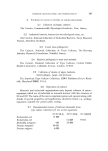
HYGIENIC MANUFACTURE AND PRESERVATION 791 that the correct conditions of steam saturation are rapidly achieved where such evacuation cannot be arranged, thorough venting is essential for the first few minutes during which steam is being admitted to the equipment. Some models are now fitted with an automatic air purge which allows entrapped air to be displaced during the run-up and subsequently. Com- ponents of glass or metal being steam-sterilized may be wrapped in Kraft paper, so that they remain sterile after removal from the autoclave, until they are needed for use. Heat-stable, water-insoluble powders may be sterilized effectively by autoclaving, preferably with subsequent evacuation of the sterilizer to avoid a high residual moisture-content in the powder. Contaminated glassware and discarded laboratory cultures should be sterilized by autoclaving at 138 kN m-2 (126 ø) for 20 min. 2.3 Ultraviolet irradiation The most effective bactericidal range of ultraviolet radiation lies between 280 nm and 240 nm. Whilst a radiation intensity of the order of 5 mW cm-2 may achieve a virtually 100% kill of micro-organisms in a few seconds, the exact requirements for a practical sterilization procedure always need to be established empirically. Specialist equipment suppliers should be consulted for apparatus of suitable design for the purpose envisaged they will take into account, for example, whether an air-gap has to be irradiated above a conveyor belt or whether the irradiation can be arranged in the form of a continuous pipe-line system for clear liquids. UV transmission is probably the most important variable factor involved for example, an arrangement capable of giving excellent results when newly-installed, may soon fail to achieve sterilization if the surfaces are not kept thoroughly clean. Even slight turbidity will markedly reduce sterilizing efficiency. UV irradiation is seldom used as the sole and final means of achieving sterilization, but it may be a useful adjunct to other procedures. However, monitoring by periodic microbiological tests is necessary to ensure that sterilizing efficiency is being maintained. 2.4 Ethylene oxide treatment Ethylene oxide is highly toxic by inhalation at levels undetectable by smell, and is explosive unless mixed with carbon dioxide or nitrogen. It is, therefore, only suitable as a sterilant under strictly controlled operating conditions. A further complication is that ethylene oxide is a skin irritant
Purchased for the exclusive use of nofirst nolast (unknown)
From: SCC Media Library & Resource Center (library.scconline.org)