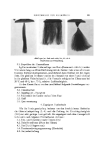
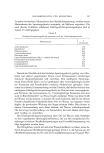
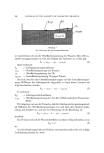
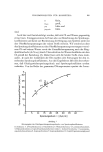
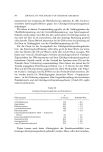
jr. Soc. Cosmetic Chemists 22, 287-302 (1971) Objektive und subjektive Methoden zur Beurteilung von Haarsprays G. A. ERLEMANN* l/orgetragen am 22. September I970 an/iiJ•/ich des L F. 3'. C. C.-Kongresses in Barcelona Synopsis-Test methods for the evaluations of hair sprays. Various methods for testing of hair- spray polymers have been developed. Such techniques are required for the objective assessment of hairsprays and polymers and are quite apart from a subjective evaluation. A series of known test methods for lacquer and adhesives were considered for their applicability, but since hairspray films are softer than lacquer films, these methods had to be modified to obtain significant measure- ments. The following methods have been examined and found to be suitable: 1. film testing on metal plates and glass 1.1 film forming and measuring of thickness 1.2 drying time 1.3 tackiness 1.4 cross-cut adhesion 1.5 pendulum hardness 2. film testing on flexible foils and tissues 2.1 coating of test strips 2.2 resistance to mandrel bending test 2.3 tensile shear strength 2.4 extensibility test 3. film testing on hair 3.1 spraying of a strand of hair 3.2 ease in combing 3.3 yield 3.4 flaking 3.5 touch 3.6 cross linking 3.2-3.6 have been judged subjectively 4. unsuitable test methods 4.1 abrasive and scratch hardness according to Clemen Keye * Panteen Forschungs- und Entwicklungslaboratorien CH-4002 Basel (Schweiz) 287

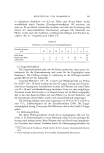
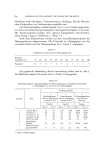
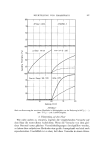
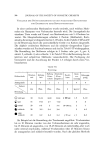
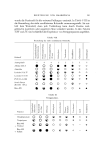
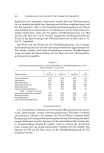
288 JOURNAl. OF THE SOCIETY OF COSMETIC CHEMISTS 4.2 pencil hardness test 4.3 total bending test 4.4 torsional vibration (elasticity) 5. Comparison of test results with practical results determination of an evaluation systems: A thorough market survey was carried out in order to define the characteristics by which consumers judge a hairspray. The objectively measured values and the subjectively found characteristics were each awarded points. The importance of the individual tests, which correspond to the results of the market survey, was weighted with 1 to 4 points. The major requirements (hold, flaking) were given 4 points, while the less important requirements received 1 to 3 points. Each of these characteristics was rated on a scale from 1 to 5 (very good - 5, good - 4, medium - 3, bad - 2, very bad - 1), c.g.: drying time up to 10 minutes = 5 points 15 minutes = 4 points 20 minutes = 3 points 30 minutes = 2 points 60 minutes = 1 point The establishment of limiting values and their relation to the grading from 1 to 5 were made in the consumer test. Thus, a drying time from 10 to 15 minutes was judged to be very good or good by the consumers, 15 to 20 minutes as medium but not objectionable, but a drying time in excess of 25 minutes was considered unacceptable. The same approach was used for judging the other charac- teristics. Based on the results of the market survey, the drying time was given a weight of 2 (the same as the weight in the laboratory evaluation). A hairspray with a drying time of below 10 minutes would thus have been given a total of 10 points in the final evaluation. Two hairsprays (R and S) were extensively tested on 400 consumers in France. Consumers evalua- ted the sprays for tackiness, flaking, hold, etc., and the following preference was expressed: 51 •0 preferred hairspray R 43.5% preferred hairspray S 5.5% no preference Actually the opposite result had been expected on the basis of the evaluation by laboratory me- thods: 55% for hairspray S 45% for hairspray R These results prove that data obtained from a general evaluation in a consumer test are more im- portant than those from an evaluation based on laboratory methods. The methods described are suitable for product development work, especially for the choice of high molecular weigth compounds and their modification. At the same time, these reproducible me- thods are useful for establishing specifications for hairsprays, such as tackiness, drying time, etc. and for monitoring the progress of experimental development work. Zur Beurteilung von Haarsprays und den in Haarsprays eingesetzten Polymeren wurde bisher eine Reihe von Methoden erarbeitet (1). Ziel der im folgenden n•iher beschriebenen Untersuchungen war es, Standardmetho- den auszuarbeiten, die neben der subjektiven Charakterisierung eine objek- rive Beurteilung einzelner Eigenschaften der Haarsprays und der verwende- ten Polymeren gestatten. Aus diesem Grund wurde eine Reihe bekannter Lack- und Klebstoffprtif- methoden auf ihre Eignung zur Beurteilung von Haarsprays untersucht.
Purchased for the exclusive use of nofirst nolast (unknown)
From: SCC Media Library & Resource Center (library.scconline.org)