J. Soc. Cosmet. Chem., 24, 357-362 (May 23, 1973) The Evaluation of Chemical Binders and Their Effect on Pressed Powders MITCHELL L. SCHLOSSMAN, B.S., and ADRIAN J. FELDMAN, B.S.* Presented May 26, 1972, Seminar, Los Angeles, Calif. Synopsis-Factors affecting the quality of finished PRESSED POWDERS are to some extent dependent on the PHYSICAL-CHEMICAL PROPERTIES of the various BIND- ING AGENTS used. Several chemical groups were studied by their incorporation into standardized pressed powder formulations. Effects on tablet pressures, cosmetic properties, and pressing qualities were correlated to binder selection. INTRODUCTION Binding is a special property inherent to a pressed po•vder formulation. Most po•vder constituents found in formulations are not "binding" in them- selves and therefore other agents must be added to insure proper adhesion (1). The inability to hold a shape after compression may vary •vith the chemical origin of the binding agent and the percentage utilized in the particular pressed po•vder formulation (2). Chemical constituents such as cellulose gums, fatty alcohols and esters, emulsifiers, natural gums, hydrocarbons, lano- lin and its derivatives, polyols, vegetable oils, synthetic polymers, and inor- ganic colloidal silicates have been used as binding agents. The following investigation is an attempt to demonstrate the effects which different groups of chemical binders have on properties such as consistency, tablet creaminess, skin feel, and pay-off. Finally, the relationship of the per- centage binder used with its chemical composition, in two standard pressed po•vder formulations, is compared. '* Prince Industries Ltd., 350 Cantor Ave., Linden, N.J. 07036. 357

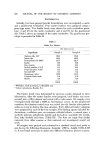
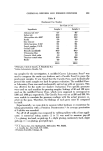
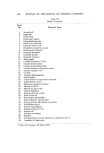
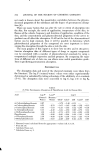
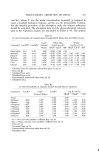
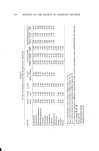
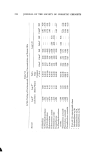
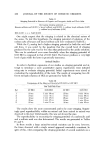
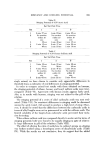
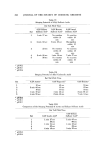
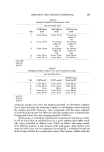
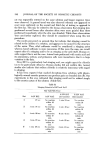
358 JOURNAL OF THE SOCIETY OF COSMETIC CHEMISTS EXPERIMENTAL Initially, two basic pressed powder formulations were investigated-a matte and a peadescent eyeshadow. Four master batches were prepared using a pony-type mixer. Two binder levels were chosen for each eyeshadow proto- type: 3 and 4% for the matte eyeshadow and 4 and 5% for the peadescent one. Table I shows an example of the matte eyeshadow. The peadescent pro- totype is presented in Table II. Table I Matte Eye Shadow Per Cent (w/w) Ingredients Sample 1 Sample 2 Alabama talc 141 • 15.0 15.0 Italian .talc 40.0 40.0 Metropolitan talc 4601 • 23.7 22.7 Kaolin 5.0 5.0 Zinc stearate 2.0 2.0 Methyl paraben, U.S.P. 0.1 0.1 Propyl paraben, U.S.P. 0.1 0.1 Germall 115 •0.1 0.1 Manganese violet 10.0 10.0 Cosmetic black oxide 1.0 1.0 Binder 3.0 4.0 100.0 100.0 Whittaker, Clark & Daniels, S. Plainfield, N.J. Sutton Laboratories, Roselie, N.J. The binder levels were determined by previous results obtained in these laboratories. After the master batches were prepared, each binder was incor- porated into a 100-g aliquot and mixed with a cake-mixer. All samples were micropulverized through a 0.027-in. herringbone screen. In the pearlescent variations the titanium-coated mica was mixed into the batches after pulveri- zation so as not to destroy the mica structure. Forty different binder variations xvere prepared for each of the four samples. The binding agents included hy- drocarbons, a cellulose gum, an inorganic colloidal silicate, a natural gum, a synthetic polymer, polyglycols, lanolin and derivatives, vegetable oils, emulsi- fiers, fatty alcohols and esters (Table III). This does not imply that similar materials from other sources or that materials not investigated would not work. All samples were pressed and evaluated in a standard round steel godet or pan having the following dimensions: diameter, 1.050 in. height, 0.150-0.155 in. It was found necessary to utilize two different laboratory presses in press-
Purchased for the exclusive use of nofirst nolast (unknown)
From: SCC Media Library & Resource Center (library.scconline.org)