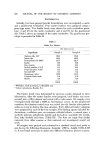
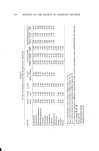
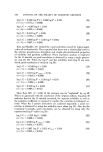
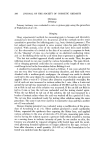
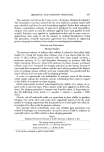
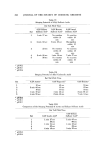
IRRITANCY AND STINGING POTENTIAL 387 The material was left on for 5 min or less (if intense stinging developed). The formulation was then washed off, the area bathed in isotonic saline until pain subsided, and then the next formulation applied. Rather than attempt to obtain a quantitative estimate of pain level produced by each formulation, subjects were asked to rank the solutions applied from most painful to least painful. Solutions were applied in randomized orders and in some cases re- applications were made to aid the subjects in ranking formulations. Using this procedure, virtually unanimous agreement was obtained in separating potent stinging formulations from modest or nonstinging formulations. RESULTS AND DISCUSSION Ituman Studies The primary irritancy of sodium alkyl sulfates is related to their alkyl chain length (5). Using the trypan blue irritancy test, it was shown that the irri- tancy of alkyl sulfonic acids increased with their chain length reaching a maximum irritancy at C•2 and thereafter decreasing in irritancy with the higher homologs. However, when 0.3N solutions of ethane, hexane, and lauryl sulfonic acids were evaluated for stinging potential on the human forearm it was found that compared to ethane sulfonic acid, which produced the highest level of stinging, hexane sulfonic acid was considerably less painful and the lauryl sulfonic acid was quite mild in stinging potential. A series of experiments was undertaken to examine some of the factors which might explain the structure activity relationship that exists in regard to the ability of materials to cause stinging. Initial experiments involved intercomparing the ability of a variety of or- ganic acids to generate pain. When organic acids were applied (as 0.3N solu- tions), the stinging potential in humans was found to show, in decreasing or- der, the following: citric, acetic aconitic tartaric ascorbic 0.9% NaC1. Clearly, not all carboxylic acids are equivalent in their ability to produce stinging. Two acids, citric and acetic, have repeatedly proven to be the most painful in stinging experiments but frequently have scored quite low when in- tercompared to other acids for primary irritancy. One question which immediately arose was whether pain generation was related to hydrogen ion concentration. As can be seen in Table I, solutions at equal pH values can differ widely in their stinging potential. Table I Stinging Potential in Humans of Acidic Solutions as Related to pH Decreasing stinging potential -- Citric acid pH 3.5 • • • g]uconic acid pH 3.5" Acetic acid (0.3N) • • H•PO• (0.3N) • 0.3N solutions adjusted to pH 3.5 with NaOH.

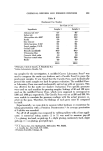
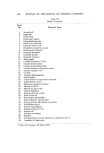
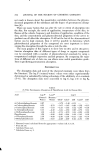
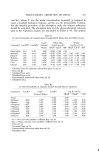
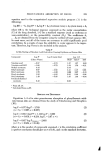
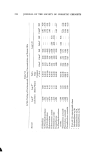
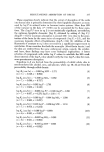
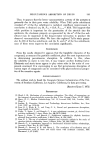
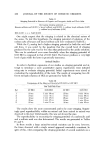
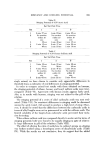
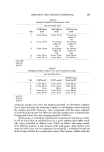
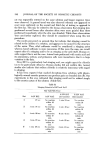
388 JOURNAL OF THE SOCIETY OF COSMETIC CHEMISTS Table II Stinging Potential in Humans of Organic and Inorganic Acids and Their Salts Decreasing stinging potential -- Hexane sulfonic acid (0.3N) lauryl sulfonic acid (0.3N) sodium hexyl sulfonate (0.3N) sodium lauryl sulfonate (0.3N) HCl (0.3N) NaC1 (0.3N) One might suspect that the stinging is related to the chemical nature of the anion. To test this hypothesis, the stinging potential of solutions of the sodium salts of hexane and lauryl sulfonic acid were evaluated (Table II ). While the Co analog had a higher stinging potential in both the acid and salt form, it was noted by the panelists that the overall level of stinging produced by the salts was far less than that produced by the acidic solutions. This can be reinforced even more forcefully when the stinging potential of 0.3N HC1 is compared to that of 0.3N NaC1. The former produces a very high level of pain while the latter is practically innocuous. Animal Studies In order to facilitate expansion of our studies on stinging potential and at- tempt to introduce a more quantitative aspect, experiments were initiated using rats to evaluate stinging potential. Initial experiments were aimed at evaluating the reproducibility of the tests. The results of comparing two dif- ferent strength solutions of HC1 are presented in Table III. Table III Comparison of the Stinging Potent. al of 3N HC1 to 0.3N HC1 Rat Tail Flick Time Rat 3N HC1 0.3N HC1 3N HCI 0.3N HC1 1 23 see 1 min 36 sec 23 see 3 min 16 sec 2 24 see 3 rain ( 0 scc 19 sec 2 min 55 sec 3 12 see 1 min 15 sec 25 see i min 05 sec 4 35 sec i min 45 sec 12 see i min 35 sec 5 12 sec 1 min C9 sec 10 sec 1 min 05 sec The results show the more concentrated acid to be more stinging. Surpris- ingly good reproducibility within an animal and from animal to animal was observed in this test. Unfortunately, this was not always the case. The reproducibility in measuring the stinging potential of a carboxylic acid and a sulfonic acid was also determined. The results are presented in Tables IV and V. In these results a large animal-to-animal variation can be seen however, the times observed with a single animal appeared reasonably consistent. In spite of this, when comparing the stinging potential of several materials on a
Purchased for the exclusive use of nofirst nolast (unknown)
From: SCC Media Library & Resource Center (library.scconline.org)