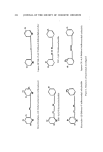
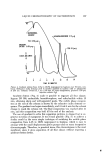
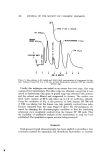
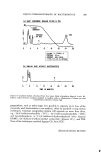
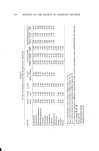
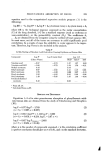
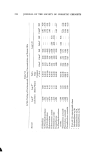
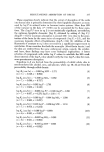
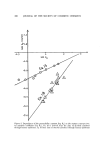
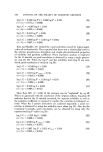
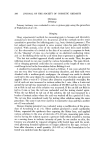
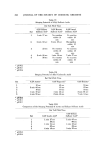
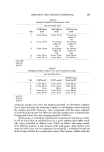
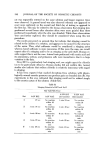
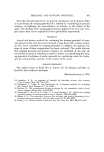
LIQUID CHROMATOGRAPHY OF BACTERIOSTATS 369 (a} SOAP CONTAINING IRGASAN DP300 6 TBS COLUMN: Im CORASIL :U: PRESSURE= 150 psi GRADIENT = NON-LINEAR, 0.4%-12% IPA IN HEPTANE (b) SIMILAR SOAP WITHOUT BACTERIOSTATS 6 ' •, ' • ' h ' • ' io ' TIME IN MINUTES Figure 6. Gradient elution of extract from two soaps. Start of gradient delayed 4 min. Re- tractive index detector monitors gradient in tandem with uv photometer. Column: at room temperature injection volume: 5/xl preparations, such as toilet soaps. It is possible to separate up to four of the commonly used bacteriostats in one analysis, either by gradient or step elution techniques. Constant composition elution will separate no more than three, e.g., 3,4,4'-trichlorocarbanilide (TCC), 3,4',5-tribromosalicylanilide (TBS), and hexachlorophene or g,',4,4'-trichloro-g-hydroxydiphenyl ether (Irgasan DP300), 4,4'-dichloro-3-tritluoromethyl carban •lide (Irgasan CF3), and TBS. None of the techniques resolved Irgasan CFa from TCC. (Received October 26, 1972)

370 JOURNAL OF THE SOCIETY OF COSMETIC CHEMISTS REFERENCES (1) Graber, M. B., Domsky, I. I., and Cinn, M. E., A TLC method for identification of germicides in personal care products, JAOCS, 46, 529-31 (1969). (2) Bravo, R., Ordenes, H., and Hern•mdez, F., Paper and plate chromatographic methods for the determination of dichlorophene and hexachlorophene when present together, J. Chromatogr., 7, 60 (1962). (3) Schwartz, H., Zur Analyse antimikrobiell wirksamer Waschmittelzusiitze, Fette, Seifen, Anstrichm., 71, 223-6 (1969). (4) K6nig, H., Trennung und Identifizierung yon Bactericiden auf der Basis yon halo- genierten Aromaten durch Diinnschicht-Chromatographie, Z. Anal. Chem., 246, 247-51 (1969). (5) Kadeskind, Valmalle, C., and Wolff, J.P., Identification et dosage des bact.•ricides dans les savons de toilette, Rev. Ft. Corps Gras, 19, 297-306 (1972). (6) Felton, H., Performance of components of a high-pressure liquid chromatography sys- tem, J. Chrornatogr. Sci., 7, 13-6 (1969).
Purchased for the exclusive use of nofirst nolast (unknown)
From: SCC Media Library & Resource Center (library.scconline.org)