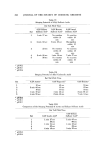
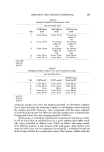
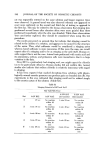
396 JOURNAL OF THE SOCIETY OF COSMETIC CHEMISTS On a use level, the most desirable properties of an antidandruff preparation are the removal of the scurf and suppression of reo.ccurence of the scale until the next use of the product. This is the basis for use of the wide variety of medicated shampoos, which include antimicrobial agents to suppress the growth of organisms, particularly the yeast, Pityrosporum ovale (4-10). When the microbial flora of the scalp is reduced there is significant time lag before the reappearance of scale (1, 8). However, it appears filat antimicro- bial and antidandruff properties are only causally related and antidandruff agents owe their success to further qualities than only antimicrobial properties (7, 10). Nevertheless, the only widely used preclinical screen is the 'in vitro' antimicrobial inhibition test. ANIMAL AND CLINICAL TRLqLS A major obstacle to definitive investigation of dandruff products has been the lack of a meaningful animal model. Recently, a promising system for the production of a dandruff-like syndrome in guinea pigs has appeared (11). The method depends on inducing a sloughing reaction by use of a buffered suspension of commonly occurring scalp organisms contained in a simulated sebmn mixture. The scaling is possibly due to the liberation of free fatty acids resulting h'om the lipolytie activity of the microbes. Relatively simple methods to weigh the amounts of scurf have been used to follow the progress of treatment (4, 5, 12). Finkelstein and Laden (12) used vigorous brushing of the head over a sheet of poIyvinyl acetate and weighed the loose scurf before and after treatment with a test product. An advantage is that each subject serves as his own control. A hand vacuum cleaner can be used containing a removable tared bag (4, 5). The eoIleetion of 30--40 mg of scurf usualIy indicates visible dandruff 40-60 mg is considered "moderate " 60-70 nag "heavy " and greater than 70 mg is classified as "severe." It is diffl- cult to correlate these with clinical evaluations (13). A major soume of vari- ability appears to be thc degree of pressure applied during vacuuming which can, by itself, act as a source of irritation to the sealp(13). The final verdict of the value of a potential antidandruff product eaIls for a well-diseiplined clinical trial (13, 14-17). Of necessity, elinieaI trials involve subjective assessments of progress with significant observer error and bias. AII studies should be "double blinds," with plaeebos virtually identical to the treatment and the exanfiner unaware of whether the subject is receiving or not receiving treat•nent. To ensure that the identity of the test and eonh'ol material is unknown to both the subject and observer, it is desirable to assign several different code Ietters to the test and eontroI products and to random- ize them. This helps avoid the comparing of notes by subjects (14). A further desirable procedure is to use a "cross-over technique," wherein one panel starts with the control or placebo product and the other panel uses the two products in reverse order. Care should be exerted as to the choice of subjects

EVALUATION OF ANTIDANDRUFF PREPARATIONS 397 (14). Obviously, a subject should suffer from some degree of dandruff. For purposes of testing, the subjects should be divided into groups with mild, ,noderate, or severe dandruff. No subject is allowed to use any dandruff preparation for at least a 2-week period preceding the initial exa,nination. The difficulties of ,nisinterpretation of "nor,nal" and "abnormal" sealing can be avoided, to stone degree, by use of a sizeable panel so that purely randran effects ,nay be canceled out (14). The minimum number of subjects should be in the range of 45-50 for each product to be evaluated. The varied test emnplexities ,nake it highly desirable that a statistician be consulted at the clinical planning stages to ensure that the data are collected in a form suitable for statistical analysis. The progress of treatment versus controls is shown to great advantage by use of ternary or triangular plots (14). Greif (18) has described the use of computers to process the results of large studies. "Half-head" techniques are valuable, particularly for salon studies prior to clinical evaluations. These are done after toxicology tests attest to the safety of the products. In clinical evaluations, the scalp can be subdivided into sym- ,netrieally arranged areas (15, 19) and the scale esti,nated for each area. The values for particular sections can be added to yield a reasonable dandruff in- dex for the whole scalp. The use of visual grading can also be employed for assessing the effect of test products on scalp oiliness. A convenient method for loeahzing areas of the head is to use a fencing ,nask with holes cut in as many places as desired for examination (19). This ensures exa,nination of the same areas. CONCLUSION Dandruff represents an accelerated turnover of scalp cells. Methods are re- viewed to measure the reduced transit ti,nes of the eelIs through the epider- mal layer. Antimicrobial inhibition tests remain the major preelinieal screen. A guinea pig test model offers predictive promise. Glinieal trial techniques, necessary to judge the value of antidandruff preparations, are described. ( Received December 22, 1972) REFERENCES (1) Piewig, G., and Kligman, A.M., The effect of selenium sulfide on epidermal turnover of normal and dandruff scalps, J. Soc. Cosmet. Chem., 20, 765 (1969). (9.) McGinley, K. J., Marples, R. R., and Piewig, G., A method for visualizing and quan- titating the desquamating portion of the human stratum corneum, J. Invest. Derma- tol., 53, 107 (1969). (3) Laden, K., Comparative chemical study of dandruff flakes, skin scrapings and callus, J. Soc. Cosmet. Chem., 16, 491 (1965). (4) VanderWyk, R. W., and Roia, F. C., Jr., The relationship between dandruff and microbial flora of the human scalp, Ibid., 15, 761 (1964).
Purchased for the exclusive use of nofirst nolast (unknown)
From: SCC Media Library & Resource Center (library.scconline.org)