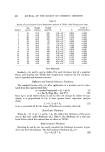
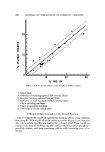
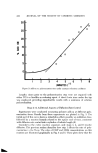
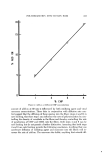
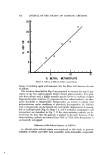
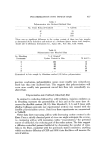
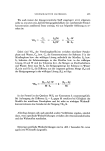
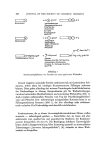
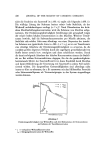
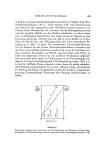
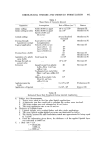
402 JOURNAL OF THE SOCIETY OF COSMETIC CHEMISTS Table II Results of Least Squares Linear Regression Analysis of TEML-Skin Temperature Data Age Height Weight Index of Subject (years) (inches) (pounds) k• k.o Determination l 18 67.0 100 3.56 x 10 -•ø 0.064 --0.992 2 21 64.0 105 2.35 x 10 --aø 0.219 --0.991 3 28 63.8 122 1.25 x 10 -• 0.176 --0.991 4 28 65.5 160 1.63 x 10 -•1 0.075 --0.992 5 29 60.0 110 2.82 x 10 .... 0.029 --0.990 6 29 62.0 140 1.14 x 10 -ø• 0.016 --0.989 7 30 66.0 157 1.84 x 10 -1.5 0.104 --0.992 8 31 58.5 125 8.91 X 10 --"• 1.980 --0.985 9 32 66.5 125 1.27 X 10 .... 0.012 --0.993 10 35 65.0 128 8.34 X 10 .... 0.015 --0.983 11 46 63.5 124 8.38 X 10 -•a 0.083 --0.990 12 50 64.0 121 1.42 X 10 -n 0.075 --0.990 13 55 63.0 159 6.30 X 10 -•'-' 0.153 --0.991 14 57 64.0 200 2.49 X lO -"• 0.164 --0.991 15 58 65.0 150 6.12 X 10 -•7 0.116 --0.991 16 58 64.0 151 6.01 X 10 -• 0.115 --0.992 Test Materials Similarly, a k,• and k4 can be defined for each thickness test of a material. These will describe the TEML-skin temperature response for the combina- tion of material and stratum corneum. Diffusion and Topical Substance Thickness The residual fraction of 1• (-) after application of a product can be calcu- lated from the experimental data: . = treated/untreated = (jr• + p)/IS (9) . = Exp - k)/Ts] (10) Since Lp is much thicker than Ls and Ls does not change by orders of mag- nitude, . is proportional to Lp. A least squares linear regression analysis shows L = ka (1/.) f k• (11) to be arcasonable fit for the range of thicknesses normally observed. Zero Order Thickness When k• = O, (1/,) = 1 and L = ks. We define this thickness of the prod- uct as the zero order thickness (L•). This is the thickness of a test ma- terial below which the material has no effect on TEML. Hal• Occlusive Thickness Knowing ks and k• one can easily calculate the thickness necessary to pro- duce any level of occlusion. The half occ]usive thickness (L0.•) i.•' Lo.. = (2) f

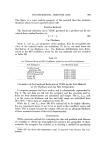
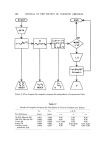
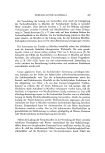
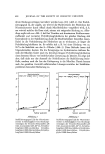
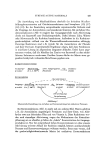
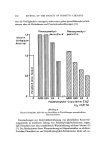
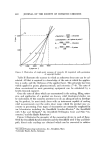
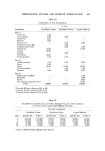
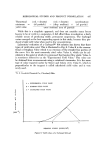
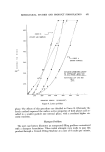
TRANSEPIDERMAL MOISTURE LOSS 403 This figure is a ,note realistic property of the material than the occlusive thickness which we have reported earlier (19). Fraction Reduced The fractional reduction (•) in TEML produced by a product can be cal- culated from residual fraction (a). y = 1 - a (13) Use Thickness While L: and Lo.5 are properties of the product, they do not predict the effect of the material under use conditions. To do so, we must know the distribution of use thickness (Lu). Use thickness distributions were deter- m/ned at the 95% confidence levels for the test materials and are recorded in Table III. Table III Use Thickness Mean and 95% Confidence Limits for Several Test Substances Test Substances Use Thickness (mm) Vaseline brand petroleum ielly 0.029 ñ 0.011 180 SUS Mineral Oil 0.010 ___ 0.009 70 SUS Mineral Oil 0.015 ñ 0.002 Cream 88 0.030 ___ 0.010 Lotion 78 0.025 ñ 0.008 Calculation o[ the Fractional Reduction o[ TEML by the Test Material at Use Thickness and Any Skin Temperature A computer program has been written and is schematically represented in Fig. 2. The raw data are fed into the computer and the constants and in- dexes for their determination are calculated and output. The L•., Lo.5, and y at the mean use thickness and low and high range are calculated from 30 to 35øC. * These data are displayed in Table IV. While the L• and Lo.• show 180 SUS mineral oil to be highly effective, the use experiment shows it not to be as good as the emollient cream and lotion. This is mainly because the subject will not use an adequate thickness of these materials because of their feel characteristics. CONCLUSIONS While numerous methods for evaluating the skin and products used thereon are available to obtain the transepidermal moisture loss properties of these materials, the computer has enabled us to develop a method for predicting *Malin (28) has shown this temperature range to represent volar forearm skin tem- perature.
Purchased for the exclusive use of nofirst nolast (unknown)
From: SCC Media Library & Resource Center (library.scconline.org)