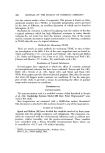
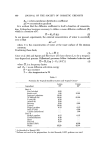
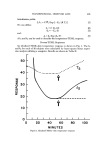
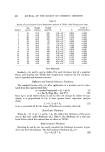
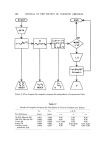
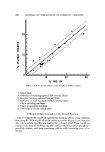
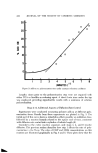
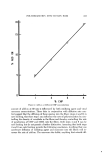
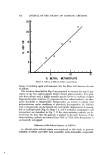
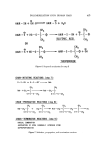
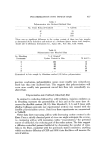
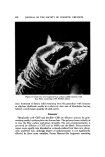
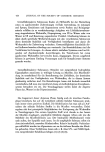
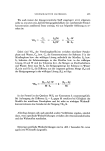
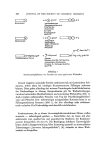
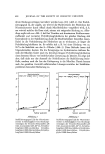
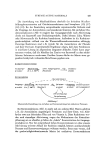
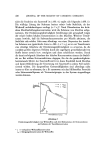
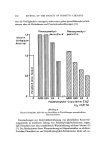
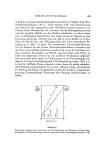
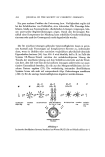
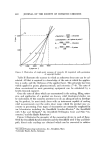
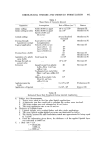
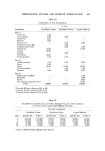
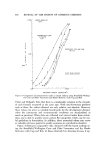
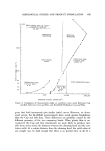
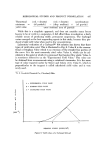
404 JOUBNAL OF THE SOCIETY OF COSMETIC CHEMISTS ( START• J = k I e (k2/T) L- ks(l/.) I k 6 / INDEX X / INDEX ( END NO Lo. sat • = O. 5 25 to 35øcl "• Y t 25 to •5 for eoch L I Figure 2. Flow diagram for computer program for manipulation of experimental data Table IV Results of Computer Program for Calculation of Various Constants and Indexes L• L0.• 7 at Lv Test Substance (ram) (mm) --s x -q-$ 70 SUS Mineral Oil 0.014 0.021 0.00 0.10 0.28 180 SUS Mineral Oil 0.004 0.024 0.00 0.22 0.36 Cream 88 0.017 0.046 0.11-0.09 0.32 0.45 Lotion 78 0.009 0.021 0.46 0.62-0.55 0.71-0.63 Vaseline brand 0.010 0.017 0.56 0.76 0.85-0.84 petroleum jelly

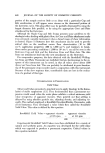
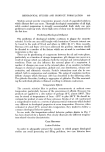
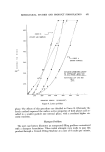
TRANSEPIDERMAL MOISTURE LOSS 405 how these materials would perform under actual use conditions. Utilizing the thickness (use thickness) which a subject will use of a cosmetic material and the thickness-temperature variability matrix for transepidermal moisture loss rates, the fractional reduction in transepidermal moisture loss can be predicted under actual use conditions. Experiments which we have carried out with Vaseline brand petrolatum, 180 SUS Mineral Oil, 70 SUS Mineral Oil, and a typical emollient cream and lotion have shown that the materials such as mineral oil with the highest occlusivity may not be used for psychorheological reasons at a thickness which will provide advantageous fractional reductions in transepidermal moisture less. Conversely, emollient creams and lotions, while less occlusive in nature, have desirable psychorheological properties and will be used at use thick- nesses which will provide a significant reduction in transepidermal moisture loss rate. (Received May 3, 1973) REFERENCES (1) Blank, I. H., Factors which influence the water content of the skin, J. Invest. Derma- tol., 18, 433-40 (1952). (2) Blank, I. H., Further observations on factors which influence the water content ot the stratum comeurn, Ibid., 21, 259-69 (1953). (3) Blank, I. H., Mechanism of the action of agents used for the relief of dry skin, Proc. Sci. Sect. Toilet Goods Ass., 23, 19-23 (1955). (4) Blank, I. H., Action of emollient creams and their additives, J. Amer. Med. Ass., 164, 412-5 (1957). (5) Blank, I. H., Cosmetic versus topical therapeutic agents, J. Soc. Cosmet. Chem., 14, 433-41 (1963). (6) Gaul, L. E., and Underwood, G. B., Relation of dew point and barometric pressure to chapping of normal skin, J. Invest. Dermatol., 19, 9-19 (1952). (7) Gaul, L. E., Relation of dew point and barometric pressure to horny layer hydra- tion, Proc. Sci. Sect. Toilet Goods Ass., 40, 1-7 (1963). (8) Flesch, P., Chemical basis of emollient function in horny layers, Ibid., 40, 12-6 (1963). (9) Scheuplein, R. J., Mechanism of percutaneous absorption. II. Transient diffusion and the relative importance of various routes of skin penetration, J. Invest. Derma- tol., 48, 79-88 (1967). (10) Scheuplein. R. J., Properties ok the Skin as a Membrane, in Montagna, W., Pharma- cology and the Skin, Vol. XII, Advances in the Biology ok Skin, Appleton-Century Crofts Educational Div./Meredith Corp., New York, 1972, pp. 125-52. (11) Thiele, F. A. J., and Schutter, K., A new micro method for measuring the water- balance of the human skin. Salt crystal method. I. Apparatus, J. Invest. Dermatol, 39, 95-103 (1962). (12) van Cosselt, H. R. M., and Vierhaut, R. R., Registration of the insensible perspiration of small quantities of sweat, Dermatologica, 127, 255-8 (1963). (13) Spruit, D., and Malten, K. E., Epidermal water-barrier formation after stripping of normal skin, J. Invest. Dermatol., 45, 6-14 (1965). (14) Baker, H., and Kligman, A.M., Measurement of transepidermal water loss by elec- trical hygrometry. Instrumentation and responses to physical and chemical insults, Arch. Dermatol., 96, 441-52 (1967).
Purchased for the exclusive use of nofirst nolast (unknown)
From: SCC Media Library & Resource Center (library.scconline.org)