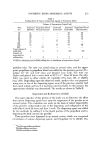
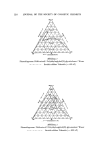
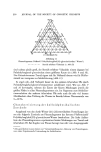
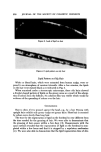
216 JOURNAL OF THE SOCIETY OF COSMETIC CHEMISTS 0 30 60 90 120 150 180 210 240 TIME,seconds Figure 4. Talcum with dispersing agent (for code see Fig. 1) Additional samples were prepared by placing 4 g each of the appropriate fluid and powder in a mortar. The mixture was thoroughly mixed and poured into a compatibility tube. Propellant 11 was used to rinse the mortar, and the rinsings were added to the compatibility tube. A total of 35 ml of Propellant 12 was added to bring the final volume to exactly 80 ml. The samples were placed into a water bath and treated as was previously indicated. Since no differences were noted between the results obtained when the dispersing agent was dissolved in the propellant or when they were dispersed directly onto the powder, the results shown in Figs. 2-4 are representative of the re- suits obtained by both methods of mixing. Dispersibility of Powders-Additional samples were prepared exactly as was previously indicated. After the contents of each compatibility tube had attained a temperature of 25 ø C - 1 ø and the volume had been brought to exactly 80 ml, the tubes were inverted serveral times to disperse the powder. The tubes were then stored upright, and the number of inversions required to fully disperse the powders after they had been standing 24 hours and then af- ter they had been standing 1 week were recorded. Table III indicates the re- sults that were obtained when the dispersing agents were added directly to the propellant, while Table IV gives the results when the dispersing agents were mixed directly with the solid.

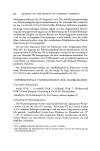
SYNTHETIC ESTER DISPERSING AGENTS 217 Table III Effect of Dispersing Agent/Propellant Mixture Upon the Redispersion of Solids • Dispersing Agent Aluminum Chlorhydrate Starch Talcum 24 hours 1week 24 hours 1week 24 hours 1week Isopropyl myristate 5 5 oe 2 5 5 Hexadecyl alcohol 4 4 2 2 6 6 Propylene glycol dipelargonate 3 3 2 2 3 3 2-ethy]hexy] pelargonate 2 2 2 3 5 6 Methyl myristate 5 5 2 3 5 5 Propylene glycol monoisostearate 12 30 2 2 4 4 Isopropyl isostearate 3 3 2 2 5 6 Propylene glycol monoisostearate (90 per cent) 14 30 2 2 4 4 •Resu]ts given as number of inversions required for complete redispersion of solid. Table IV Effect of Dispersing Agent/Solid Mixture Upon the Redispersion of Solids • Dispersing Agent Aluminum Chlorhydrate Starch Talcum 24 hours 1 week 24 hours 1 week 24 hours 1 week Isopropyl myristate 5 4 5 5 6 6 Hexadecyl alcohol 5 5 3 3 4 5 Propy]ene glycol dipelargonate 5 6 5 5 4 4 2-ethylhexyl pelargonate 2 2 6 6 7 8 Methyl myristate 2 3 12 15 4 4 Propylene glycol monoisostearate 18 30 15 15 4 5 Isopropyl isostearate 4 4 15 20 3 3 Propylene glycol monoisostearate (90 per cent) 20 30 15 20 7 7 _ 2Results given as number of inversions required for complete redispersion of solid. Discussion, o[ Results The nonpressurized method, which was used to evaluate several dispersing agents proved to be successful. While petroleum ether was used in this study, other nonpolar solvents such as carbon tetrachloride and methylene chloride could also have been used. The measurement of the settling rate by this meth- od showed four of the five materials to exhibit similar performances, with only the propylene glycol monoisostearate showing a significantly slower rate of settling. Isopropyl myristate showed a slightly faster rate of settling than the others.
Purchased for the exclusive use of nofirst nolast (unknown)
From: SCC Media Library & Resource Center (library.scconline.org)