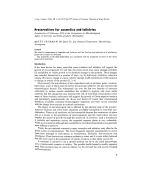
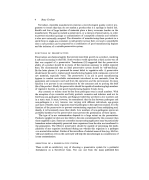
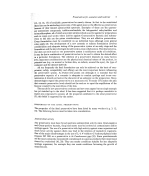
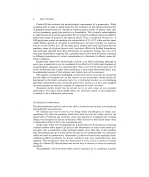
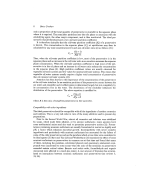
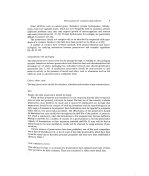
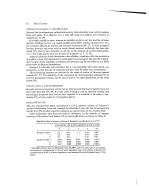
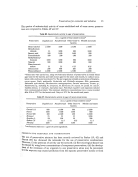
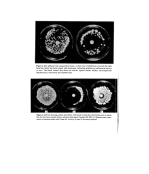
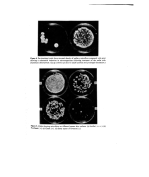
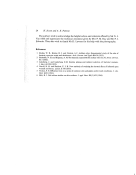
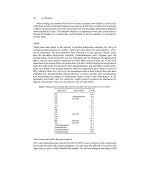
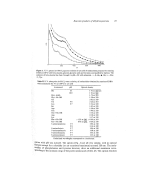
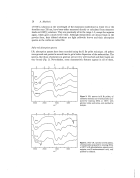
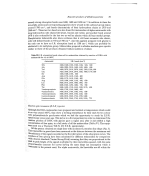
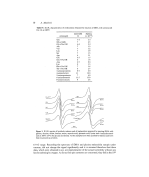
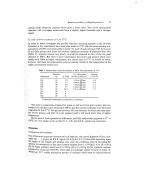
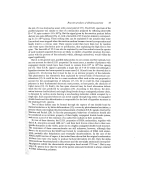
Figure 4. Pre-treatment print shows normal density of axillary microflora compared with print showing a substantial reduction in microorganisms following treatment of the axi!la with aluminium chlorhydrate. (Large colonies are due to small numbers and prolonged incubation.) Figure 5. Prints showing microflora on different human skin surfaces. (a) Axilla (+ + +). (b) Forehead (+). (c) Cheek (+). (d) Inner aspect of forearm (+).

Bacteriological skin sampler 23 perspirants, deodorants, medicated soaps) have not been recently used by the subject undergoing the test. Bland soap only should be used for a period of 2 to 3 weeks before testing. The following protocol is intended only as a guideline and may be suitably modified as required. Control pre-treatment samples to provide a base-line are obtained with the velvet Replipad at 24 and 48 h intervals, after which the test material is applied as in normal use once or twice daily for 3-6 days. Prints are taken 18 h after final application (Fig. 4). To follow duration of effect further prints may be taken at 24-h intervals. The effect of the antimicrobial may be assessed in terms of reduction in numbers of microorganisms (marked, moderate, slight reduction of surface bacteria):Changes in the ratio of member species (staphylococci, micrococci and diphtheroids) and introduction of new species or strains (Gram negative bacteria) may also be recorded. A suitable scoring system for the grading of growth is as follows: Growth Scoring System + + ++ +++ Colonies too Heavy 30 colonies 30-200 colonies numerous confluent to count growth Discussion For test purposes the axilla offers a rich source of microorganisms and the velvet Replipad technique currently described provides a simple, rapid and convenient method of sampl- ing this area of the skin. The fact that the test organisms represent the natural flora of the skin makes for a realistic method and one which is specially relevant to the testing of deodorant products. Useful information concerning residual activity can be obtained by taking prints for several days after treatment has ceased, since duration of antimicrobial effect may be short-lived or prolonged, depending on potency, skin substantivity and compatibility of the active ingredient. The sampler may be used for investigating other skin sites, for example the scalp, forehead, face and hands it will provide interesting information regarding the distri- !. :.•:'.::?• :bution, density and bacterial species colonizing the skin surface (Jig. 5). The Replipad sampler may be used to monitor ecological changes in the skin micro- :5'?•.': :.: i flora resulting from the application of cosmetic and toiletry products, skin antiseptics, ':..!?:i:,,:i:!':i.occlusive dressings, etc. It may also be used as a replicating system to evaluate the sensitivity/resistance of resident microorganisms or clinical isolates, to antibiotics and • other antimicrobial agents. Main advantage of the print technique is that the microflora of the stratum cornebro are probably less disturbed and therefore more realistically represented in terms of ratio of member species. These can be more easily differentiated on the agar plate than by swabbing, or other methods where aggregates of cells are subsequently broken up. :..::i (:!5 .:.: A relatively large area of skin can be investigated with good reproducibility. In- •.:::.•:.::¾!:, accessible areas of skin such as the axillary vault are easily sampled. A sufficient number i":•?ii :: iii•i of organisms may be picked up on the velvet pad to obtain four to six successive ino- :::•iiii'.11•/'i"culations on plates of selective media. _ . . . !:}?11ii?::.'!: Finally, when conducting a trial involving a large number of subjects not least m .i.:!:.i:!:i!!:i::11ii•: •:mportance is the approval and acceptance of the sampling techniques by the participants ?:!:.•i•i::::: ::xpenence has shown that the velvet Replipad technique admirably suits this purpose.
Purchased for the exclusive use of nofirst nolast (unknown)
From: SCC Media Library & Resource Center (library.scconline.org)