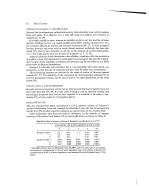
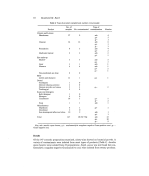
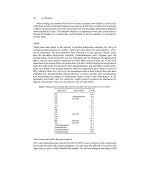
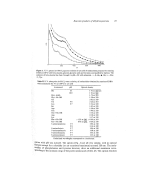
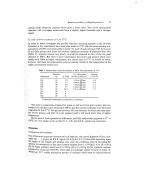
26 A. Meybeck After cooling, the resultant dark brown viscous mixtures were diluted to about four times their volume and dialysed against tap water for at least 48 h. All the lower molecular weight coloured products were thus eliminated and only the highly polymerized pigments were retained for study. The dialysed solutions or suspensions were then evaporated to dryness by heating on a steam bath, and the black or brown residues were ground to powder form. Yields Yields have been taken as the amount of purified melanoidin collected, for 100 g of starting material (aminoacid + DHA). Table I gives the values thus calculated for a num- ber of aminoacids. The best yields have been obtained for lysine, glycine, alanine, serine and the non-alpha aminoacids, especially 6-aminohexanoic acid. Arginine gave the poorest yield, a result which does not very well agree with the finding by Wittgenstein (4) that it was the most reactive aminoacid towards DHA and probably one of the most important in its tanning effect on human skin. It is also worth noticing that for glycine at least, less melanoidin was produced when triethanolamine and especially sodium hydro- xyde, was added to the reaction medium. Only two aminoacids gave values in excess of 20• which is rather low, but it is to be remembered that at least some of the acids have probably been decarboxylated with production of carbon dioxide, that condensations and polymerizations leading to melanoidins imply at least some dehydration of the molecules, and finally that low molecular weight reaction products are eliminated by dialysis, all processes which can account for loss of solid matter. Table I. Melanoidins recovered after reaction of DHA with aminoacids for 4 h at 100øC Aminoacid Alkali added • Yield Gly 16-4 Gly triethanolamine 9'9 Gly Na OH 5-8 Ala 12-3 Val 9.5 Leu 6.5 Set 12.2 Asp 2-3 Glu 3.0 Glu Na OH 5-2 Arg 1.7 Lys 29.7 Phe Na OH 10'7 Tyr Na Olt 2'4 3-aminopropionic 11.7 4-aminobutyric 14.3 5-aminopentanoic 10.8 6-aminohexanoic 23.0 Ultra-violet and visible absorption spectra U.V. and visible absorption spectra of 0-005 or 0.01 •o water solutions of the melanoidins have been recorded with regular equipment. In some cases the pH had to be raised with ammonia in order to fully solubilize the samples. No obvious change in the shape of the

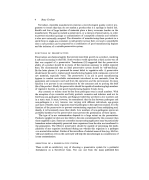
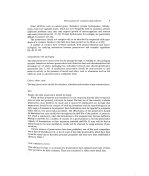
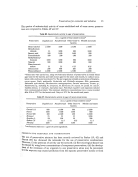
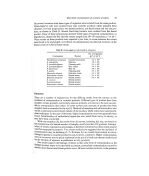
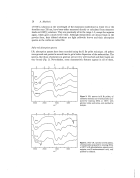
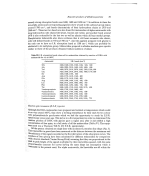
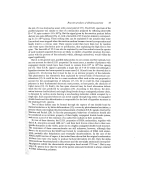
Reaction products of dihydroxyacetone •X\x,x ß I • 'xß'l•'ß• 'X x x_X.x,xx • - ' •+•+ 0 I I 3OO 4OO 5• nm Fig•e 1. U.V. spectra in 0.005 • aqueous solution (1 cm cell) of melanoidins prepared by reacting DHA at 100oC with beta-alanine, glycine, glutamic acid and tyrosine, and purified by dialysis. The solution of beta-alanine has been brought to phi9.8 with ammonia. x, • Ala •, GIy +, Glu O, Tyr. 27 Table II. U.V. absorption in 0.01 •o water solution, of melanoidins obtained by reaction of DHA with aminoacids for 4 h at 100øC (1 cm cell) Aminoacid pH Optical density Gly 6-1 1'91 at 310 nm 10-0 1 '81 at 310 Gly+ trieth 1-72 at 310 Gly+ Na OH 1.28 at 320 Ala 2'02 at 320 Val 9.8 2-24 at 310 Leu 9-7 1'54 at 320 Ser 1'82 at 320 Asp 1-20 at 320 Glu 1.40 at 320 Glu+ Na OH 1.36 at 320 Arg 0.38 at 320 Lys 1.17 at 330 Phe+ Na OH 1.25 at 260, 0,99 at 310 Tyr+Na OH 0.86 at 270, 0.64 at 330 3-aminopropionic 5.9 1.86 at 310 9.8 2-14 at 320 4-aminobutyric 9'7 1.84 at 320 5-aminopentanoic 9.7 1.68 at 320 6-aminohexanoic 9-7 1.63 at 320 8-aminooctanoic 9'7 1.35 at 310 Underlined wavelengths correspond to a maximum. curves with pH was noticed. The spectra (Fig. I) are all very similar, with no special features except for a shoulder (or an occasional maximum) around 320 nm. The mela- noidins of phenylalanine and tyrosine however, show an additional maximum corre- sponding to the aromatic rings of the parent aminoacids (Table H). The optical densities
Purchased for the exclusive use of nofirst nolast (unknown)
From: SCC Media Library & Resource Center (library.scconline.org)