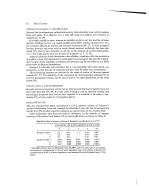
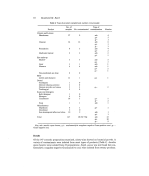
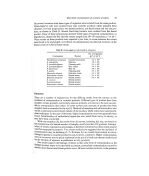
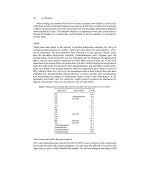
_Preservatives for cosmetics and toiletries 9 Other additives such as natural gums, thickeners, protein hydrolysates, carbohy- drates, fruit and vegetable juices, which are now frequently used in cosmetics, present additional problems since they may support growth of microorganisms and interact with some preservatives (34, 35, 36). Protein hydrolysates, for example, are particularly difficult to preserve (37, 38). The preservative should not complex with or be adsorbed by suspended solid ingre- dients of a cosmetic. Studies in this field have been carried out by Horn et al (39). A number of workers have reviewed methods, both physico-chemical and micro- biological, for studying interactions between preservatives and cosmetic ingredients (34, 40, 41, 42). Compatibility with packaging The ideal preservative must not be lost by passage through, or binding to, the packaging material. Interaction between preservatives and rubber has been well documented and the increasing use of plastic packaging has stimulated research into plastics/preservative interactions (see 3, 36). A satisfactory preservative should be non-corrosive to and retain its activity in the presence of metals and alloys such as aluminium and tin foil which are used as cap liners and in collapsible tubes. Colour, odour, taste The ideal preservative should be colourless, od0urless and tasteless at use concentrations. Cost ,. ß Finally, the ideal preservative should be cheap. When all these properties are considered it is not surprising that the ideal compound does not exist and probably will never be found. The best use of the currently available preservatives must therefore be made and it cannot be emphasized too strongly that preservation should be the concern of both the formulator and the microbiologist at an early stage in formulation development. Each formulation must be regarded as a separate entity with its own preservation problems. The effectiveness of the preservative should ::...be determined not only initially but throughout the shelf-life of the product. A preserva- tive which is satisfactory when the formulation is first prepared may become ineffective 'during its shelf-life for a number of reasons. It is good practice to test the preservative ..capacity of formulations at their maximum intended shelf-life. It may well be that in many instances the most satisfactory results will be obtained by using mixtures of pre- servatives. Various reviews of preservatives have been published, one of the most comprehen- sive is that of Gucklhorn (13). A list of some of the older preservatives which have been in use for some time so that their principal properties and uses have been established is shown in Table I. NEW PRESERVATIVES Over the last 10 years or so several new preservatives have appeared and some of these have yet still to be fully evaluated. These are considered in rather more detail here.

10 .Betty Croshaw
Purchased for the exclusive use of nofirst nolast (unknown)
From: SCC Media Library & Resource Center (library.scconline.org)