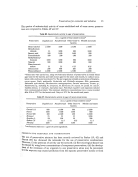
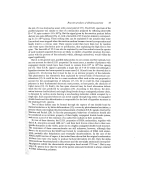
Preservatives for cosmetics and toiletries 11 6-Acetoxy-2, 4-dimethyl-m-dioxane (Dioxin) Dioxin has broad spectrum activity of a fairly low order (625 gg/ml) so that its recommended use concentration is up to 0.2 •o. It is reported to be effective over a wide pH range and is not inactivated by nonionic surfactants (13, 19, 43, 44). The compound is a water soluble Iiquid which is also miscible with oils, and there is a danger that it will migrate into the oil phase. In aqueous systems the ester group hydro- lyses to produce acetic acid which results in a slight lowering of the pH. It is claimed to be non-irritant and non-sensitizing at 1.0• concentration although, as already men- tioned, there is some more recent evidence that Dioxin may be a sensitizer (24). The main disadvantage of Dioxin is its strong odour which may affect the fragrance of the cos- metic product. Dioxin, at concentrations of 0.1-0.2 •o, was one of the compounds recom- mended for the preservation of anionic and nonionic lotions by Jacobs et al (45). Cis isomer of 1-(3-chloroallyl)-3, 5, 7-triaza-l-azonia-adamantane chloride (Dowicil 200) Dowicil 200, a type of quaternary ammonium compound, has broad spectrum (13) activity being rather more effective against bacteria (m.i.c. of 50-500 gg/ml) than against :': fungi and yeasts. Parker has found some fungi to be more tolerant of this preservative (46). It has very high water solubility and low oil solubility the oil/water partition coefficient for all the oils tested was 1.0 (47). It is unaffected by pH, nonionic and anionic snrfactants and is said to be non-irritant and non-sensitizing at concentrations up to 2-0 •o. Solutions of Dowicil 200 should not be held at high temperatures. It releases .i formaldehyde in aqueous solution (48), a factor which explains its broad spectrum activity over a wide pH range and its retention of activity in the presence of surfactants. •i'•.,'-• However, the possibility of irritancy and sensitization due to the release of formaldehyde ?.•' cannot be overlooked. ß •" :,:• Dowicil 200 is used for the preservation of shampoos (5) and at 0-1 •o was found to ?"':! be relatively effective against bacteria in a test cream, suspension and solution but . ::':,•:: ":ineffective against yeasts in the Barnes and Denton capacity test (49). It is recom- .:!i:'. :: mended as an effective preservative at 0' 1 • for an anionic and a nonionic lotion although some discoloration occurred in the anionic lotion (45). Dowicil 200 has been used :::•:?•i': . satisfactorily in Germany for the preservation of cosmetic creams, lotions and hair care ß :11:'•' iii:'Preparations because of its wide pH range and good protein compatibility (50). ß lmidazolidinyl urea compound (Germall 115) ß ,': Germall 115 is more active against bacteria than against fungi and yeasts. It is effective ,. :::: :?' over a wide pH range and is claimed to demonstrate its maximum preservation potency .: ? i .? not in screening experiments but in tests with formulations it often shows synergism •with other antibacterial preservatives (28, 51). Germall 115 is very soluble in water and :'i::::i:i.• ' almost insoluble in oils so that it remains in the aqueous phase. It is colourless, odourless, :•.::' tasteless, stable and retains its activity in the presence of proteins and surfactants. It is - said to be non-toxic, non-irritating and non-sensitizing. , A key property of Germall 115 is probably its ability to act effectively with other preservatives (51). This was confirmed by Jacobs et al (45) who found that Germall 115 ' •'with parabens preserved their nonionic and anionic lotions whereas Germall on its own i:ii-• did not. .?

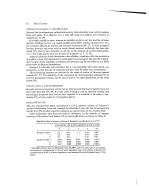
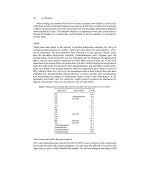
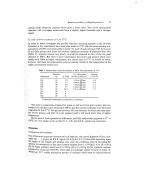
12 Betty Croshaw 2-Bromo-2-nitropropane-1, 3-diol (Bronopol) Bronopol has broadspectrum antibacterial activity with somewhat lower activity against fungi and yeasts. It is effective over a wide pH range and inhibits most bacteria at 25gg/ml (52, 53, 54). It is highly soluble in water, whereas its solubility in oils is very low and the oil/water partition coefficient is low e.g. liquid paraffin/water 0.043 arachis oil/water 0-11. It is not adversely affected by anionic and nonionic surfactants (44, 52, 55) and synergism between Bronopol and some octyl or nonyl phenol nonionic surfactants has been des- cribed (55). Since it also maintains its activity in the presence of protein hydrolysates, it is a very useful preservative for all types of shampoos (5, 7, 37, 56). Aqueous solutions slowly decompose when alkaline, sometimes with the production of a yellow colour. Decomposition is accelerated by increasing the pH and the tempera- ture. In spite of this instability at alkaline pH, BronopoI can be very effective as a labile preservative in alkaline formulations. Bronopol is odourless and colourless but it is incompatible with some metals, e.g. aluminium, so that the type of container and liner must be taken into consideration. Thiol-containing enzymes are involved in the mode of action of Bronopol against bacteria (52, 57). The selectivity of the compound for microorganisms indicated by its very low mammalian toxicity, may be due in part to its rapid metabolism by the body tissues (58). 5-Bromo-5-nitro-1, 3-dioxan (Bronidox) Bronidox has broad spectrum activity but its physical and chemical properties have not been fully described (59, 60). It is still under evaluation and its chemical stability and toxicological properties have not yet been reported. It is available as Bronidox L con- taining 10 •o of active agent in 1-2 propylene glycol. Kathon 886 (or CG) This new antimicrobial agent, consisting of a 12.8 • aqueous solution of 5~chloro-2- methyl-4-isothiazolin-3-one and 2-methyl-4-isothiazolin-3-one, also has broad spectrum activity (61). The product requires evaluation as a preservative in the cosmetic field. Some preliminary data from the author's laboratory on the stability of aqueous solutions of Bronidox L and Kathon CG at various pH levels are shown in Table II. TaMe 1I. Stability of aqueous solutions of Bronidox L and Kathon CG at 37øC * Concentration (•) of active ingredient at time in weeks 0 1 2 4 14 Bronidox L pH 4 0-2 0.14 --•' 0'14 0'09 6 0-2 0-16 -- 0'14 0-09 8 0'2 0.14 -- 0.12 0.05 Kathon CG pH 4 0'011 0'011 0'011 0'011 0'011 6 0'011 0'010 0'010 0'009 0.007 8 0'011 0-008 0'0075 0'005 0-0011 * The buffer solution used was McIlvaine's 0.2td NaaHPOa and 0'Dn citric acid. A 2• solution of Bronidox L, corresponding to 0-2 •o of active ingredient, and a 1 •o solution of Kathon CG, corresponding to 0.011 •o of active ingredients, were examined by microbiological assay. 1' Not tested.
Purchased for the exclusive use of nofirst nolast (unknown)
From: SCC Media Library & Resource Center (library.scconline.org)