J. $oc. Cosmet. Chem. 28 367-375 (1977)¸ 1977 Society of Cosmetic Chemists of Great Britain The influence of perfumes on the sensitising potential of cosmetic bases II. The sensitising potential of perfumes and cosmetic bases A. ROCHAS*, J.P. GUILLOT?, M. C. MARTINIt. and J. COTTEr. Received 4 January 1977 Synopsis A scnsitisation test was used to test a series of cosmetic formulations with and without the addition of perfumes. The reactions obtained were examined and compared with those caused by benzylideneaeetone, a reference sensitiser, which was added to the excipients at the same concentration as the perfumes. INTRODUCTION The development of an animal test technique for evaluating scnsitising potential in the guinea-pig was described in Part I of this paper. The test was devised for use with finished cosmetic preparations for which the Magnusson-Kligman test is not entirely suitable. This section of the paper considers the influence of the addition of several perfumes to typical cosmetic bases. A test substance which has a known allergenic activity was used for comparative purposes. OBJECTIVE Under certain conditions and in certain individuals most substances are potentially allergenic. The chances of any substance being allergenic increases with the complexity of the preparation. With this in mind the research had two aims: to test the eventual sensitising potential of several cosmetic preparations to determine whether the addition of a perfume (of which the sensitising potential was inferior to threshold detection) to a non-sensitising base was likely to lead to a finished product which was a sensitiser and to examine if this phenomenon was related to the cosmetic form used. * Laboratoire de Physiologie B, 8 ave. Rockefeller, 69008 Lyon, France. • Institut Franqais de Recherches et Essais Biologiques, Centre de Lyon, Les Oncins, 69210 L'Arbresle, France. $ Institut de Pharmacie Industrielle, Cosm6tologie, 8 ave. Rockefeller, 69008 Lyon, France. 367

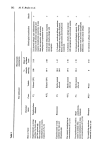
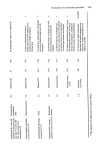
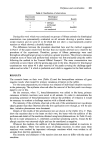
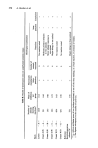
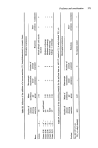
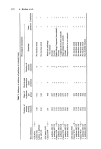
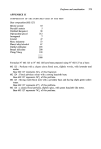
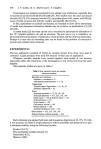
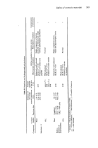
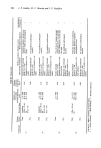
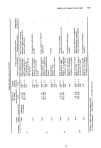
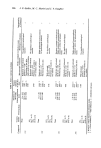
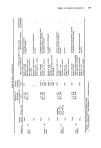
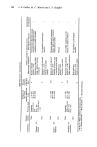
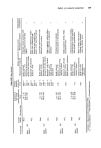
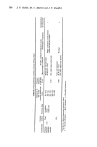
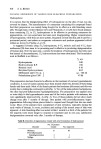
368 A. Rochas et al. PROCEDURE TEST SUBSTANCES Cosmetic bases The following bases were used: a water-based lotion three oil in water emulsions which differed in the proportion of the oil phase and in the type of fats used, and in the pro- portion of surfactant emulsifier two water in oil emulsions differing in the mixture of fats used, in the emulsifier used, and in the preservative. All the raw materials used and the finished products were submitted to physico- chemical analyses and bacteriological control. Perfumes (see Appendix) The following were incorporated at 1 •o into the cosmetic bases: a reference substance: benzylideacetone (3) an aromatic base perfume preparations containing 34•o, 54•o, 67•o or 74•o of the aromatic base mentioned above. METHOD Details of the methods used can be found in the first part of this paper (1). An outline of the principle of the method is as follows: Sensitisation in the guinea-pig is induced by intradermal injections of Freund's adjuvant and by topical applications of test substances under occlusive dressings. After a rest period of 12 days a single challenge application of the test substance, again under an occlusive dressing, provokes the appearance of a sensitisation reaction. Readings were conducted immediately after the removal of the patch in order to eliminate errors due to subsequent scratching, etc. and then, one hour, 24 h and 48 h after removal of the patch. The last reading at 48 h was accompanied if necessary by a skin biopsy for eventual histological examination. It is however, preferable to perform the biopsy 7 h after the removal of the patch, as explained in Part I. The erythema was scored from 0 to 4 and any other anomalies (papules, vesicles, exfoliations) or a reactivation of the induction site were noted. The number of animals showing an evident reaction (equal to or greater than 2) at any of the readings was calculated and the mean erythema value for the whole group was also determined. The aim of the histological examination was to determine the allergic character- istics of the reaction. In fact when the macroscopic examination was positive, a histo- logical examination was also conducted. When this examination was positive, sensitization was confirmed. If this examination was negative, for instance, if the reaction noted was of primary irritation, then the overall result was said to be negative. When the macro- scopic examination was negative, the histological examination was not conducted. The test was called 'doubtful' when the macroscopic examination was positive and the histological examination was unable to determine the type of reaction present. The interpretation of the results can therefore be summarized in Table I.
Purchased for the exclusive use of nofirst nolast (unknown)
From: SCC Media Library & Resource Center (library.scconline.org)