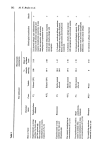
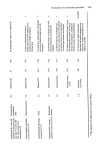
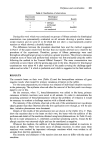
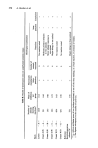
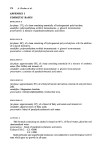
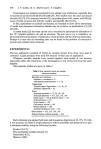
378 J. P. Guillot, M. C. Martini and J. ¾. Giauffret Toxicologists are primarly concerned by the allergic type intolerance, especially that to lanolin (1) (2) (3) (5) (6) (8) (9) (16) (20) (29). Also studied were the cetyl and stearyl alcohols (9) (12) (31), isopropyl alcohol (21), propylene glycol (14), stearic acid (24) (6), waxes (5) (30), propane diol (24) (6), vaseline and paraffin (30) (7) (31). In fact, experiments on animals and humans are intended to show all the phenomena of ocular and cutaneous intolerance whether they be irritation or sensitisation (13) (19) (26) (28). A recent study (25) has been carried out to examine the percutaneous absorption of five x4C- labelled synthetic oils and an emulsion. The aim was to try to establish a re- lationship between the degree of penetration of the product and the observed intolerance. Perhaps it is here that an interesting start can be found to the problem of tolerance to natural and synthetic fatty materials. EXPERIMENTAL The test substances consisted of twenty-six samples chosen from those most used in cosmetics. Liquid products were tried first because of their ease of application. Whenever possible, samples from several suppliers were tested. It was however impossible within the constraints of the investigation to test several lots from the same supplier. The materials studied are given in Table I. Table I. Raw materials tested and sample reference numbers Squalane and substitute squalane = substance n ø/1/ hydrogenated polyisobutene = n ø/2/ Triglycerides Caprylic/capric triglycerides =/3/,/4/,/5/ Synthetic triglyceride =/6/ Esters Isopropyl myristate =/7/,/8/,/9/,/10/ Isopropyl palmitate =/11[,/12/,/13/,/14/ Decyl oleate .=/15/& Isodecyl oleate =/16/ Octyl palmitate =/17/ Octyl stearate =/18/ Ceto-stearyl octoate =/19/ Stearyl heptoate =/20/ Arachidyl propionate ester =/21/ Oleyl alcohol =/22/,/23/,/24/,/25/ Polyoxyethylene sorbitan stearate =/26/ Each substance was applied both pure and in aqueous dispersion at 10-15•o. For this it was necessary to obtain a simple suspension with an emulsifier and preservative to give a minimum stability, using the following formula: Product 10-15•o Polyoxyethylene sorbitan stearate 3•o Preservative 0'2•o Water to 100•o

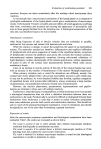
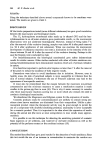
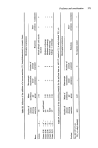
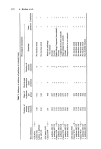
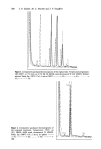
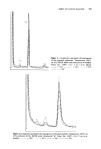
Safety of cosmetic materials 379 TEST CONDITIONS The experimental conditions were rigorously standardized: A physico-chemical analysis was carried out on each sample followed by gas chromatography and a determination of peroxide index to show any chemical deterioration or the presence of impurities. The safety evaluation was conducted using the following tests: Determination of the ocular irritation index (O.I.I.) Determination of primary cutaneous irritation index after one occlusive application (P.I.I.) Determination of cumulative cutaneous irritation index after repeated exposures The test procedure is described in the 'Journal Officiel de la R•publique Fran• aise' of 21.4.71 and 5.6.73 (15) but the following additions or modifications have been made Ocular irritation test: Reading after 1 h, in addition to those of 24 h, 2d, 3d, 4d and 7d Photomotor reflex study Use of strips of sterile paper impregnated with fluorescein to help to demonstrate the presence of corneal opacification and to evaluate the extent of surface attack A qualitative evaluation of any ulceration or granulation Use of an ophthalmoscope and a retinograph Interpretation of the results using an evaluation scale from 0 to 100. Primary cutaneous irritation test: Use of occlusive patches 'Neodermotest' Fixing of the patches using absorbent gauze held in place by adhesive tape Housing in individual cages (600 x 540 x 315 mm) Modification of the evaluation scoring: non irritant, less than 0.5, slightly irritant 0-5 to 2 (cf. Journal Officiel non irritant-----0 and slightly irritant from 0 to 2). Cumulative cutaneous irritation test: Reduction of the length of treatment: from 3 months to 8 weeks Wiping off the excess of substance with gauze Daily readings expressed as a weekly average Qualitative evaluation of thickening and drying of the skin After 8 weeks of treatment systematic histological examination of two samples of skin A study of recovery from cutaneous injuries, by stopping application for 7 days and examining the skin after this rest Challenge assay to determine whether the reactions observed have irritant or allergic origin. RESULTS Chemical study In checking through specifications and analytical records, one must consider that the materials correspond to those regularly used in the industry. A qualitative selection was purposely not made as it was desirable to study those readily available on the market.
Purchased for the exclusive use of nofirst nolast (unknown)
From: SCC Media Library & Resource Center (library.scconline.org)