390 J. P. Gulllot, M. C. Martini and J. Y. Giauffret

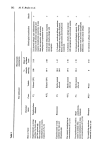
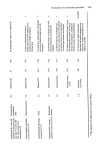
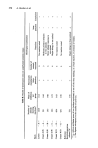
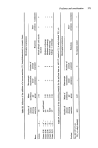
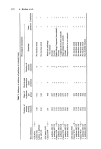
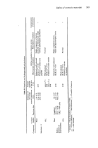
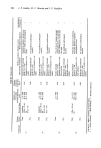
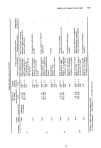
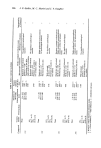
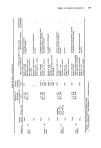
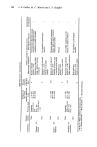
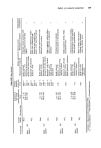
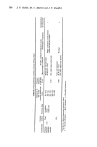
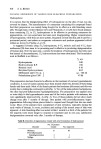
Safety of cosmetic materials 391 presence of vesicles is an allergic reaction in the human, it would appear that this is not applicable to the rabbit, because in this event 60-705/0 of cosmetics would appear to contain allergy-inducers. It appears that this is due to an occlusive film formed by the remaining material, in spite of all the precautions taken to remove the excess of product. The pores in the skin of the rabbit are more dilated than those of human skin and materials tend to accumulate in these cavities. Furthermore, these products when applied under the same conditions to hairless or normal rats, rarely provoke the appearance of vesicles. To ensure a proper evaluation of skin irritancy it is necessary that macroscopic observations show comparable results on all the animals involved because primary irritation reactions give a collective response contrary to sensitisation. It is important, also, that reactions are observed over the total epidermis tested and not just at localized points. Finally, the histological examinations carried out on two biopsies for each rabbit should confirm the macroscopic observations. Because the rabbit skin is more responsive than human skin, this procedure is neces- sary to eliminate individual or local reactions and to take into consideration only the pathological lesions. DISCUSSION None of the materials tested provoked pathological lesions of the ocular mucous mem- brane (such as cornea1 opacification, ulccration...) The observed anomalies are benign, probably of mechanical origin and correspond mainly to congestion of the iris, con- junctival enanthcma, and a slight discharge and/or chcmosis. The highest ocular index was 8-17 (slightly irritant) for polyox¾cthylcnc sorbitan stearate/26/ceto-stearyl octoate/19/. All the indices of primary skin irritation were less than 2 the maximum index of 1-75 (slightly irritant) was found with the oleyl alcohol n ø/23/tested undiluted. The summarized data shows that the four oleyl alcohols gave adverse reactions when applied pure without rinsing (mean score= 1.55/s=0.17) two isopropyl myristates/7/ and/8/, and one isopropyl palmitate/12/have a score in the region of 1 (slightly irritant). All these results were confirmed by two assays. The other products show a good toler- ance particularly when studied as 10-15•o solutions without rinsing, as did the diluted oleyl alcohols (average score: 0.28). It was noted that for eleven of the twenty-six raw materials no adverse reactions were obtained after daily application to rabbit epidermis of the undiluted chemical. These are: Squalane/1/and the substitute polyisobutylene/2/ Two samples of caprylic/capric triglycerides/3/and/4/ The four samples of isopropyl palmitate/11/to/14/ (a skin thickening was noted macroscopically but the histological examination did not reveal any pathological effect.) Stearyl heptoate/20/ Arachidyl propionate/21/ Polyoxyethylene sorbitan stearate/26/
Purchased for the exclusive use of nofirst nolast (unknown)
From: SCC Media Library & Resource Center (library.scconline.org)