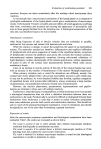
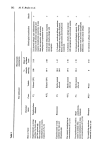
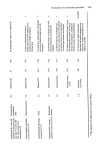
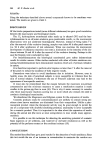
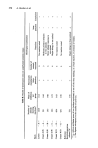
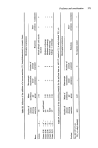
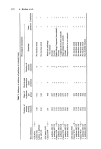
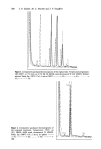
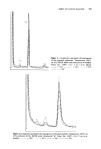
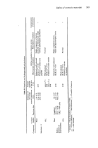
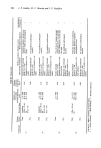
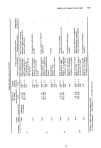
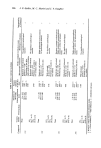
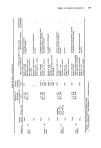
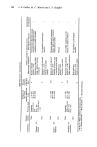
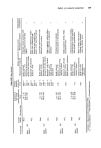
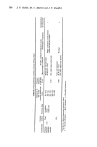
392 J. P. Gulllot, M. C. Martini and J. Y. Giauffret On the contrary, eight products were harmful: The four samples of oleyl alcohol/22/to/25/ The four samples of isopropyl myristate/7/to/10/ Of the remaining seven products, two give uncertain results (capric/caprylic triglyceride /5/and octyl palmitate/17/) and for the others the irritation level was moderate (syn- thetic triglyceride/6/, decyl oleate/15/, isodecyl oleate/16/, octyl stearate/18/and ceto- stearyl octoate/19/). On the whole, the products were well tolerated when diluted to 10-15•, a figure which corresponds to the concentration found generally. In particular, the histological examina- tion was negative. It should be noted, however, that the four samples of I.P.M. provoke the appearance of numerous vesicles. This oil, used for many years and even at high levels in many cosmetic preparations, gave a high irritation potential. It can induce an acan- thosis and an oedematous degeneration of collagen fibres when applied under an occlusive patch to the rabbit for 24 h (25). Nevertheless, experiments conducted on miniature pigs do not show adverse results. The macroscopic observations are characteristic of primary irritant reactions with a degree of erythema and sometimes thickening or drying of the skin. The mean results of the weekly average show a maximum for I.P.M. n ø /7/ (1.67) and oleyl alcohols n ø /23/,/24/,/25/(1.50). These counts are relatively low (maximum rate=8) but this is due to the fact that they are calculated taking into account the measurements of erythema and oedema. However, oedema, rarely evident in histology, was never observed macro- scopically. On the other hand, secondary reactions such as vesicles, papules, maculae and/or erythematous zones were frequently noted. Furthermore, when intense aggravation occurs, 'fissures' can form and give rise to eschars which can be infectious. The microscopic findings confirm generally the macroscopic scores. Unfortunately, in cases of too severe intolerance, histology cannot serve to distinguish the irritant reactions from the allergies. It should be noted that the challenge assay, carried out after a rest period, revealed no real allergen (this was predictible considering the nature of the products studied). The analytical investigations cannot explain, for the time being, the origin of the phenomena observed. There is, however, a possible relation between tolerance and purity for I.P.M. It is hoped these experimental results can be of use to the cosmetic investigator, in spite of the fact that extrapolation to the human response is delicate. ACKNOWLEDGMENTS All the histologica1 examinations were performed and interpreted by Dr J. Guilaine, Dermatologist. The authors also gratefully acknowledge the assistance of: J. Y. Guyot, J.P. Petit, G. Blanc, J. Charroy, B. Audenaerde, J. Evans, F. Gaubert, D. Thiry and L. Ferrero. REFERENCES 1 Baer, R. L., Ramsey, D. L. and Biondi, E. The most contact a11ergens 1968-1970. Arch. Dermatol. 108 74-78 (1973).

Safety of cosmetic materials 393 2 Bandmann, H. J. and Breit, R. Chemically induced allergic contact dermatitis. Intermist (Berlin) 15 (1) 47-51 (1974). 3 Breit, R., Bandmann, H. J. Contact dermatitis XXII. Dermatitis from Lanolin. Brit. J. Dermatol. 88 (4) 414-416 (1973). 4 Brulos, M. F., Gulllot, J.P., Martini, M. C. and Cotte, J. Mise au point d'une m•thode d'•valuation du pouvoir sensibilisant, par applications topiques, chez le cobaye. Comptes rendues des s•ances de la Soci•t6 de Biologic et de ses filiales. Communication prOsentre • la 1 le semaine internationale de Dermocosm•tologie (18 janvier 1977/t Lyon). A parattre dans J. Cosmet. Chem. 5 Cronin, E. Contact dermatitis from cosmetics. J. Soc. Cosmet. Chem. 18 681-691 (1967). 6 Epstein, E. The detection of lanolin allergy. Arch. Dermatol. 106 (5) 678-681 (1972). 7 Fallon, P. Dermatitis litigation. Proc. R. Soc. Med. 65 (12) 1071-1078 (1972). 8 Feuerman, E. Editorial: allergic skin reaction to lanolin. Harefuah, 86 (7) 380-381 (1974). 9 Fischer, A. The use of patch-test series. In: Contact Dermatitis, 2nd Ed. Lea & Febiger, Phila- delphia (1973). 10 Foussereau, J. La multiplication actuelle des substances nocives en dermato-allergie. Strasbourg Med. 15 704-715 (1964). 11 Foussereau, J. and Basset, A. La sensibilisation aux excipients et conservateurs de pommades. Coneours Med. 11 1063-1068 (1967). 12 Gaul, L. E. Dermatitis from stearyl and cetyl alcohols. Arch. Derre. 99 598 (1969). 13 Hardy, J. Allergy, hypersensitivity and cosmetics. J. Soc. Costa. Chem. 24 423-468 (1973). 14 Huriez, C., Martin, P. and Vanowerschelde, M. L'allergie au propyl•ne glycol. Bull. Soc. Franc. Derre. Syphl. 73 263-267 (1966). 15 Journal Officiel de la R•publique Fran•aise du 21/4/71, •dition Lois et D•crets, et du 5/6/73, ed. Documents administratifs--M6thodes officielles d'Analyse des cosm6tiques et produits de beautY. 16 Kinmont, P. D.C. Skin reactions to cosmetic preparations. J. Soc. Cosmet. Chem. 15 3-32 (1964). 17 Martini, M. C1. Les produits cosm•tiques. Toxicologie clinique et analytique L•gislation. III: les produits de beaut• et les parfums. Lyon-Pharmaceutique 25 (3) 279-303 (1974). 18 Marzulli, F. N. and Ruggles, D. I. Rabbit eye irritation rest: collaborative study. J. of the AOAC. 56 (4) 905-914 (1973). 19 Marzulli, F. N. and Maibach, H. A. The rabbit as a model for evaluating skin irritants: a comparison of results obtained on animals and man using repeated skin exposures. Food Costa. ToMcol. 13 553-540 (1975). 20 Masters, E. J. Allergies to cosmetic Products--Symposium cosmetic allergy, N.Y.N.Y. State J. Med. 1934-1940 (1960) 21 Meneghini, C. L., Rantuccio, F. and Lomuto, M. Additives, vehicles and active drugs of topical medicament as causes of delayed type allergic dermatitis. Dermatologica 143 137-147 (1971). 22 Phillips, L., Steinberg, M. and Maibach, H. I. A comparison of rabbit and human skin response to certain irritants. ToMcol. & Appl. Pharm. 21 369-382 (1972). 23 Schorr, W. F. Contact dermatitis. Office diagnosis and management. Minn. Med. 57 (10) 831-837 (1974). 24 Shore, R. N. and Shelley, W. B. Contact dermatitis from stearyl alcohol and propylene glycol in fluocinonide cream. Arch. Derrnatol. 109 (3) 397-399 (1974) 25 Suzuki, M. et al. Autoradiographic study on percutaneous absorption of several oils in cosmetic field. I.F.S.C.C. (1976). 26 Thomas, M. J. and Majors, P. A. Animal, human and microbiological safety testing of cosmetic products. J. Soc. Cosmet. Chem. 24 135-146 (1973). 27 Van Abbe, N.J. Eye irritation: studies relating to responses in man and laboratory animals. J. Soc. Cosmet. Chem. 24 685-692 (1973). 28 Van Abbe, N.J., Nicholas, P. and Boon, E. Exaggerated exposure in topical irritancy and sensitiza- tion testing, J'. Soc. Cosmet. Chem. 26 173-187 (1975). 29 Van Hecke, E. A case of dichromate dermatitis. Arch. Belg. Dermatol. Syoehi. 28 (4) 405-408 (1972). 30 Wollmann, C., Meyer, F. U. Schwerke, W. Animal experiments studies on the effect of various ointment bases on the epidermis. II: Studies on the effect of vaselinum flavum and various batches of cera liquida on the epidermis width and mitosis. Dtsch Gesundheitsw 27 (33) 1571-1575 (1972). 31 Zina, G. and Bonu, G. Importance des divers composants des excipients dans l'allergie de contact aux topiques utilis6s en m6decine. La Revue de la Mddecine 28 1639-1644 (1970).
Purchased for the exclusive use of nofirst nolast (unknown)
From: SCC Media Library & Resource Center (library.scconline.org)