406 Rodney P. R. Dawber 'Non-specific' side effects such as nausea, vomiting, insommia, nervousness, fatigue and drowsiness have been reported from psoralens. However, a double-blind trial by Fitz- patrick (recorded by E1 Mofty, 1) found a slightly higher incidence of such complaints in the placebo-treated group! E1 Mofty (1) reported no untoward side effects in patients receiving up to 50 mgs Methoxsalen daily whilst Tucker (12) gave'70 mgs Methoxsalen daily to two patients with no clinical or laboratory evidence of toxicity. Elliott (13) described abnormal cephalic-cholesterol levels in three out of 27 patients receiving Methoxsalen. Since that report virtually all the clinical studies in the literature have outlined results of regular liver and renal function tests and full blood counts, none having proved abnormal whatever the psoralen used. Cloud et al. (14) induced cataract formation in mice following intra-peritoneal administration of Methoxsalen in doses 100 times higher than the normal therapeutic range. Cataracts have not been reported in humans but it still remains normal practice to recommend the wearing of protective goggles or sun glasses during treatment. Caucasian skin has a greater tendency to develop pre-neoplastic keratosis and epi- theliomata after many years of sun exposure, as exemplified by the high incidence of such changes in Europeans long resident in Africa or Australia. The theoretical fear that psoralens might accelerate the appearance of epitheliomatous skin changes has for- tunately not been realized in practice. Contra-indications to psoralens are few but it seems reasonable to exclude pregnant women, patients with diseases known to be associated with photosensitivity, e.g. pro- phyria and lupus erythematosus, and those with known heptaic or renal impairment. REFERENCES 1 El Mofty, A.M. In Vitiligo and Psoralens. 1st Edition, p. 107, Pergamon Press, Oxford. 2 Pathak, M. A., Daniels, F., Hopkins, C. E. and Fitzpatrick, T. B. Ultraviolet carcinogenesis in albino & pigmented mice receiving furocoumarins: psoralen and 8-methoxypsoralen. Nature 183 728 (1959). 3 Pathak, M. A., Fellman, J. H. and Kaufman, K. D. The effect of structural alteration on the ery- thema activity of furocoumarins: psoralens. J. Invest. Derrn. 35 165-183 (1960). 4 Oginky, E. L., Green, G. S., Griffiths, D. G. and Fowlks, W. L. Lethal photosensifization of bacteria with 8-MOP to longwave U.V.R.J. Bact. 78 821 (1959). 5 Fahmy, I. R. and Abu-Shady, H. A. A. Ammini majus Linn: Pharmacognostical study and isolation of crystalline constituent, ammoidin. Quart. J. Pharrn. Pharmacol. 20 281-291 (1947). 6 Arnold, H. L. Jr. Effect of methoxsalen on inability to tan. J. Invest. Derrn. 32 341-342 (1959). 7 Hoekenga, M. A. Experiences with methoxsalen in the American Tropics. J. Invest. Derre. 32 351- 353 (1959). 8 Hopkins, C. E. Psoralen prophylaxis against skin cancer: process of field trials. J. Invest. Derre. 32 383-386 (1959). 9 Imbrie, J. D., Bergeron, L. and Fitzpatrick, T. B. Follow-up study effect of oral methoxsalen (8- methoxypsoralen) on sunburn & suntan. Arch. Derrn. 82 617-620 (1960). 11 Kenney, J. A. Jr. Vitiligo treated by psoralens. Arch. Derrn. 103 475-480 (1971). 12 Tucker, H. A. Clinical and laboratory tolerance studies in volunteers given oral methoxsalen. J. Invest. Derre. 32 277-80 (1959). 13 Elliot, J. A. Jr. Clinical experience with methoxsalen in the treatment of vitiligo. J. Invest. Dertn. 32 311-313 (1959). 14 Cloud, T. M., Hakim, R. and Griffin, A.G. Fertile sensitization of the eye with methoxsalen. Part 2: Chronic effects. Arch. Ophthal. 66 689 (1961).

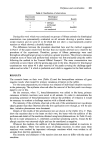
J. Soc. Cosmet. Chem. 28 407-412 (1977)¸ 1977 Society of Cosmetic Chemists of Great Britain Skin bleaching preparations S. S. BLEEHEN Sub-Department of Dermatology, Hallamshire Hospital, University of Sheffield, Sheffield SlO 2JF Presented at the Joint Symposium with the Pharmaceutical Society of Great Britain "Cosmetic and Pharmacological Aspects of Colour" 9-11 November 1976, at Stratford upon Avon. Synopsis A brief review is given of the search for an effective and safe depigmenting compound and the screening of topically applied chemicals. The possible modes of action of these compounds in producing cutaneous depigmentation are discussed. The results of treatment using several skin bleaching preparations including a new formulation of hydroquinone and 4-isopropylcatechol cream in the therapy of various hyper- melanotic disorders in man are stated. INTRODUCTION Hyperpigmentation of the skin in man can be the cause of much mental distress and hypermelanotic areas, particularly on the face, can result in a marked cosmetic disability. For a long time, there has been a search for a reliable effective and safe depigmenting compound that when topically applied will bleach away the excess pigment. The com- pounds that are currently used in the commercially available skin bleaching creams (Table/) are variable in their depigmenting effect and frequently irritate the skin, parti- cularly when used in high concentrations. These compounds are occasionally sensitisers and can produce an allergic contact dermatitis. However, in spite of these drawbacks, skin bleaching creams have a considerable world wide sale and vast amounts are pur- chased, particularly in the United States, Africa and in Asia, mostly over the counter without a doctor's prescription. Table I. Compounds used in skin bleaching preparations Hydroquinone Monobenzyl ether of hydroquinone Monomethyl ether of hydroquinone Ammoniated mercury Ascorbic acid Peroxides This paper gives the historical background of the search for an effective depigmenting compound and describes the screening of potent chemicals and their modes of action in producing depigmentation, particularly their melanocytotoxic effect. The clinical 4O7
Purchased for the exclusive use of nofirst nolast (unknown)
From: SCC Media Library & Resource Center (library.scconline.org)