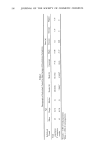
228 JOURNAL OF THE SOCIETY OF COSMETIC CHEMISTS Twenty positive samples were obtained from the 11 subjects who carried P. aeruginosa. Finger web samples were consistently negative for P. aeruginosa, but the organism was detected in six instances of sampling from the axilla and six from the groin (6 to 20 samples 30%). Eight of the 20 positive samplings were from the toe web (40%). In only three instances did the subjects carry P. aeruginosa at more than one site on any given day (subject #3, trial 5 #10, trial 4 #11, trial 1). P. aeruginosa could not be recovered from the eyelids of subjects wearing contact lenses (either hard or soft). Our interest in Pseudomonas aeruginosa as a contaminant of cosmetic products is due to its pathogenicity and high environmental resiliency. This investigation was the first in which a large population of human subjects (hospital and non-hospital personnel) were examined specifically for the presence of cutaneous P. aeruginosa. Most of the earlier studies were concerned with the spread of Pseudomonas in hospital burn units (4,5). We examined intertrigenous areas because gram negative bacteria colonize in mainly warm, moist areas and are extremely sensitive to desiccation (6). Our study demonstrates that P. aeruginosa is not part of the usual microbial flora of the skin, particularly the axilla, groin, finger web and toe web. However, the bacteria may be a transient resident. Although P. aeruginosa is ubiquitous in nature, when it is experimentally applied to normal skin, its number is significantly reduced within a few hours (7). This reduction can be attributed to the inherent ability of skin to destroy certain exogenous microbes. Pseudomonal infections, related to contaminated masca- ra, probably originate from external sources rather than from skin sites. If human skin is involved, it would serve as a vehicle rather than a reservoir of this organism. This investigation was supported by a research contract from the Food and Drug Administration. REFERENCES (1) L. A. Wilson, and D. G. Ahearn, Pseudomonas induced corneal ulcers associated with contaminated eye mascaras, Am.J. Ophthalmol., 84, 112-119 (1977). (2) L. A. Wilson, A.J. Lulian, and D. G. Abeam, The survival and growth of microorganisms in mascaras during use, Am.J. Ophthalmol. 79, 596-599 (1975). (3) R. Aly and H. I. Maibach, Clinical Skin Microbiology, (C.C. Thomas, Springfield, Illinois, 1978), pp 2o-29. (4) E.J.L. Lowbury and J. Fox, The epidemiology of infection with Pseudomonas pyocyanea in a burn unit, J. Hyg. 52,403 (1954). (5) T. Rosenbury, Microorganisms Indigenous to Man, (McGraw-Hill Book Co., New York, 1962) p 126. (6) R. Aly and H. I. Maibach, Aerobic microbial flora of intertrigenous skin, Appl. Environ. Microbiol, 33, 97-100 (1977). (7) R. Aly and H. I. Maibach, In vivo methods for testing topical antimicrobial agents,J. $oc. Cosmet Chem., 32, 317-323 (1981).

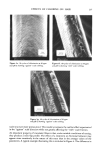
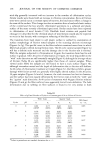
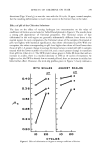
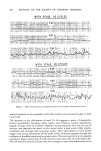
j. Soc. Cosmet. them., 33, 229-242 (August 1982) Effects of chlorine on friction and morphology of human hair NANCY FAIR and B. S. GUPTA, School of Textiles, North Carolina State University, Raleigh, NC 27650. Received January 8, 1982. Presented at the Society of Cosmetic Chemists' Annual Technical Meeting, December 1 O, 1981. Synopsis Chlorine-hair interaction was investigated through a study of hair surface properties. Treatment variables included chlorine concentration, number of chlorination cycles, and the pH level of the chlorine solution. Inter-hair friction was measured by the twist method, and scanning electron microscopy was used for studying the effects of treatments on surface morphology. In general, the effect of chlorination was to increase the value of the coefficient of friction and decrease the differential frictional effect. Greater change was observed in the nature of the tension profiles produced by the friction tests this reflected a change in surface morphology which was confirmed with SEM analysis. INTRODUCTION The adverse effects of exposure to swimming pool water on the appearance and tactile properties of human hair are well recognized. These effects are speculatively attributed to the sorption of chlorine from the pool water. While there is much technical literature on the reaction of wool with active chlorine, little has been published on the nature of the chlorine-hair interaction. An experimental investigation is reported in this paper which examines several aspects of this interaction. The main variables of the study were the chlorine concentration, the number of chlorination cycles, and the pH level of the chlorine solution. The effect of these variables was examined on inter-hair friction. Hair measurements were made under loads which were of the same order of magnitude as those imposed "in use," such as in combing. Also examined was the change in morphology resulting from the chlorina- tion treatment. Of particular interest was the nature of any change or damage resulting to the hair surface along the path where fibers had rubbed during frictional measurements. Examination of this damage provided useful information about the condition of the cuticle and the expected response of hair fibers to physical handling. INTER-HAIR FRICTION In classical physics, frictional force is independent of the area of contact between two surfaces and is proportional to the normal force, leading to the relationship: 229
Purchased for the exclusive use of nofirst nolast (unknown)
From: SCC Media Library & Resource Center (library.scconline.org)