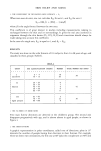
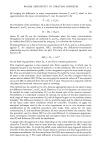
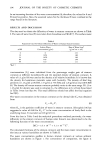
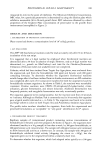
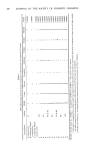
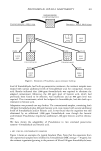
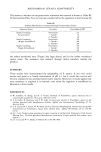
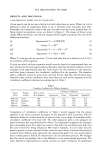
J. Soc. Cosmet. Chem., 34, 205-212 (July 1983) Set relaxation of human hair PENELOPE DIAZ and MICHAEL Y. M. WONG, Ph.D., Clairol Incorporated, Stamford, CT 06922. Received November 3, 1982. Presented at the SCC Annual Scientific Meeting, New York, NY, December 2-3, 1982. Synopsis Although hair can be effectively set by water, heat, or both, such temporary sets do relax over time. It has been found that the set relaxation process can be adequately described, over a wide range of humidity, by the following expression: Y = AT B, where Y is the amount of set remaining after exposure to humidity for a period of time T, with A and B being constants. These constants, which are characteristic of the set relaxation process, are readily calculated from least square analysis of experimental data. The integrated form of the equation, defined as holding power (Hp), and the "half-life" time constant (T50) are shown to be useful parameters for evaluation of setting efficacy. INTRODUCTION Hair styling frequently requires that the hair fibers be set or shaped into a new configuration. Of the several techniques available for such a purpose, heat and water setting are most widely used. Their main appeal is convenience, even though hair set this way tends to relax fast if not assisted by a hair spray. While there have been several reports (1-4) dealing with various aspects of the methodology of set impartation, little or no quantitative information is available regarding the pattern of set decay. The purpose of this paper is to evaluate the behavior of set hair and to suggest some useful approaches for a general quantification of the data. EXPERIMENTAL SETTING OF HAIR SWATCHES Swatches were prepared from Caucasian brown hair purchased from DeMeo Brothers of New York City. Each hair swatch, crimped at the root end, weighed 2g and measured 6 inches long. Before setting, the hair samples were shampooed and thoroughly rinsed. In water setting, the hair was first wet with water and then wound onto a Teflon roller having a diameter of 1.5 cm. While still on the roller, the hair was dried at 50øC for 90 205

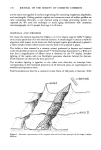
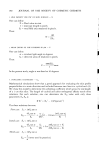
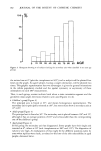
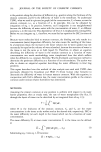
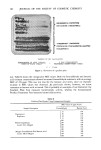
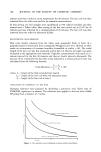
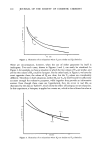
206 JOURNAL OF THE SOCIETY OF COSMETIC CHEMISTS minutes and then cooled at room temperature for 30 minutes. The hair curl was then removed from the roller and used for set retention measurements. In heat setting, the hair samples were equilibrated at 65% relative humidity and then wound onto a Teflon roller. Heat setting of the hair was carried out at 115øC for 20 minutes and was followed by a cooling period of 20 minutes. The hair curl was then removed from the roller for relaxation studies. SET-RETENTION MEASUREMENTS Hair curls, freshly removed from the roller, were suspended freely in front of a graduated panel (constructed from transparent Plexiglass) and were allowed to relax under an environment of constant humidity (controlled to within +_2%). The initial length of the hair curl was first measured, and as the curl relaxed, its length was again measured at the appropriate time intervals. Typically, measurements were made at a 5 minute interval for the first 30 minutes and then at hourly intervals afterwards. The amount of set retained by the hair after it has relaxed for a certain period of time was calculated from the following formula: L -- Lt % Set Retention - -- x 100 L -- L 0 where L = length of the fully extended hair swatch L0 = length of the hair curl when the relaxation starts Lt = length of the hair curl at time t. APPLICATION OF HAIRSPRAY TO THE HAIR Hairspray solutions were prepared by dissolving a polymeric resin (Ethyl ester of PVM/MA copolymer) in ethanol. The solutions were applied to the hair with a Mark II © pump from a distance of 7 inches. LATIVE HUMIDITY HEAT SET AT 90% RELATIVE HUMIDITY 0.5 1.0 TIME (HRS.) Figure 1. Set retention curves obtained at shown relative humidities.
Purchased for the exclusive use of nofirst nolast (unknown)
From: SCC Media Library & Resource Center (library.scconline.org)