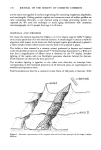
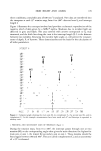
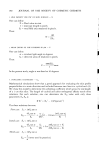
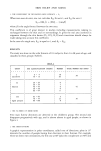
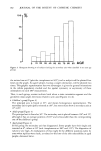
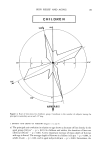
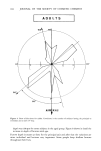
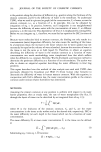
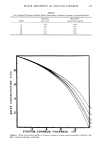
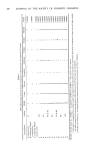
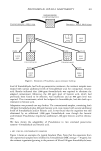
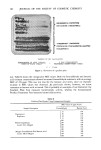
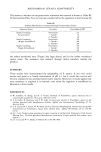
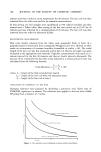
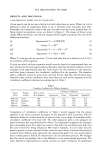
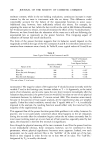
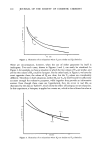
202 JOURNAL OF THE SOCIETY OF COSMETIC CHEMISTS UNPRESERVED PROTOTYPE CONTAINING PSEUDOMONAS "PRESERVED" PROTOTYPE CONTAINING FORMALDEHYDE-ADAPTED PSoeUDOMONAS EXAMPLE OF MIC CALCULATION FORMALDEHYDE IN AGAR (100ppm) WIDTH OF PLATE (90mm) X (MIC FORMALDEHYDE) MEASURABLE GROWTH FRONT (40mm) X = 44ppm Figure 2. Illustration of a gradient plate. not. Table II shows the comparative MIC values. Both the formaldehyde and benzoic acid resistant contaminants showed increased formaldehyde resistance with an average MIC of 270 ppm. This was not true for the benzoic acid series, since no dramatic increase in MIC values was observed. As previously shown, however, we know resistance to benzoic acid occurred. This i• probably an example of test limitation: the Gradient Plate Test measures bacteriostatic activity, whereas the Contaminated Product Treatment Test measures bactericidal activity. Table II Gradient Plate Results Using Contaminated Samples Sample Description MIC Values In ppm Active Formaldehyde Benzoic Acid Unpreserved Replicates With Formaldehyde Levels: 50 to 100 ppm 100 ppm Formaldehyde Plus Benzoic Acid Levels: 300 to 600 ppm 25 3O 44 21 250 280 1.320 250 [150 [360 150 100 110 150 140 130 160 130 110 200 110 250

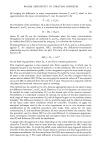
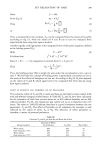
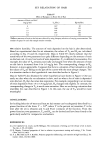
PSEUDOMONAS CEPACIA ADAPTABILITY 203 The answer to whether or not preservative resistance was retained is shown in Table III. In this Gradient Plate Test, the inocula consisted of(a) the organisms in the formula, (b) Table III Gradient Plate Results: Contaminated Sample Versus Isolated Culture Organism Source Inoculum Formaldehyde MIC Sample Containing Formulation 125 No preservative 1 Transfer 92 12 Transfers 90 Sample Containing Formulation 220 100 ppm formaldehyde 1 Transfer 290 12 Transfers 290 Sample Containing Formulation 330 50 ppm formaldehyde 1 Transfer 320 12 Transfers 320 the isolate transferred once (Tryptic Soy Agar slants), and (c) the isolate transferred twelve items. The resistance was retained through twelve transfers outside the product. SUMMARY These studies have demonstrated the adaptability of P. cepacia. It not only could survive and grow in a hostile environment of pH 3.2, but it could also survive and become resistant to two unrelated preservative systems. Moreover, it would appear that once resistance is acquired it is retained, even when the organism is transferred to laboratory culture media. REFERENCES (1) W. Schaffner, G. Reisig, and R. A. Verrall, Outbreak of Pseudomonas cepacia infection due to contaminated anaesthetics, The Lancet, 1050-1051 (1973). (2) S. G. Geftic, H. Heymann, and F. W. Adair, Fourteen-year survival of Pseudomonas cepacia in salt solution preserved with benzalkonium chloride, Applied and Environmental Microbiology, 37 (3), 505-510 (1979). (3) L. A. Carson, M. S. Favero, W. W. Bond, and N.J. Petersen, Morphological, biochemical, and growth characteristics of Pseudomonas cepacia from distilled water, Applied Microbiology, 25 (3), 476-483 (1973). (4) J. C. Curry, Gradient plate procedure for rapid screening of antibacterials. Presented at 52nd Annual Meeting Proc., Chemical Specialties Manufacturers Association. (Copies available from author, upon request.) (5) J. C. Curry and W. V. Dudley, [IS Patent No. 3,455,788 (1969).
Purchased for the exclusive use of nofirst nolast (unknown)
From: SCC Media Library & Resource Center (library.scconline.org)