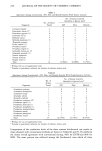
COMPARISON OF BACTERIAL IDENTIFICATION SYSTEMS 255 The N/F-Screens and Uni-N/F-Tek plates were inoculated simultaneously, and incu- bated according to the manufacturer's instructions. Microorganisms were identified by accepting the first choice of the Flow N/F System computer code book. (3) Minitek (BBL, Cockeysville, Md.). Both MT systems use disks that have been im- pregnated with the substrates to be tested. Numerous other substrate disks are available however, the disks chosen for this study were those required by the manufacturer for the Enterobacteriaceae II and Nonfermenter numerical identification system. Inocula- tions, incubations, and interpretations were performed according to the manufacturer's instructions. CONVENTIONAL MEDIA Each culture was identified by conventional biochemical tests (5,6). The tests performed on ENTB included reactions on triple sugar iron agar (H2S production) oxidase from blood (BBL) agar lysine and ornithine decarboxylase (LDC, ODC) arginine dihydrolase (ADH) citrate DNase esculin gelatin malonate methyl-red Voges-Proskauer (VP) nitrate reduction O-nitrophenyl-B-D-galactopyranoside (ONPG) phenylalanine reac- tions in SIM medium (H2S and indole production motility) Christensen urea agar and production of acid in phenol red adonitol, arabinose, cellobiose, dulcitol, glucose, glycerol, inositol, lactose, maltose, mannitol, melibiose, raffanose, rhamnose, salicin, sorbitol, trehalose, and xylose. The tests performed on NFB included reactions on triple sugar iron agar (H•S production) oxidase from blood (BBL) agar acetamide LDC and ODC ADH Cetrimide (Difco, Detroit, MI) citrate DNase escuiin gelatin growth in Trypticase soy broth (BBL) at 42øC lecithinase MacConkey agar nitrate and nitrate reduction ONPG penicillin and polymyxin B susceptibility phenylalanine Pseudo- monas F (Difco) agar Pseudomonas P (Difco) agar Pseudosel (BBL) agar reactions in SIM medium 6.5% NaCI SS agar starch 10% lactose (purple agar base) Tween 80 hydrolysis Christensen urea agar VP and oxidation of OF basal medium of fructose, galactose, glucose, lactose, maltose, mannitol, sucrose, and xylose. All media inocu- lated from the bacterial lawn were incubated at 35øC except where indicated. Oxidase tests were performed using Cepti-Seal (Marion Scientific, Kansas City, Mo.) oxidase reagent at 24 h. The reagents for indole, nitrate reduction, and phenylalanine tests were added after 24 h of incubation. After 48 h of incubation, reagents were added for DNase, methyl red, VP, and starch hydrolysis. Reactions negative after 24 h were observed for a maximum of 7 days with the exception of gelatin, which was observed for up to 30 days. RESULTS IDENTIFICATION AGREEMENT AMONG METHODS The agreements among the conventional and rapid systems for the identification of ENTB and NFB are shown in Tables I and II. Among ENTB (Table I), FL correctly identified 36 of the 41 microorganisms tested (88% accuracy level), the highest of the three systems. API and MT exhibited 80% and 76% accuracy levels, respectively, for ENTB. Closer levels of identification accuracy were observed for NFB (Table II). API and FL correctly identified 42 of the 53 microorganisms tested (79% accuracy). MT was slightly lower, exhibiting a 75% level of accuracy.

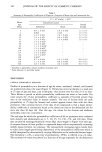
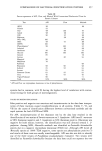
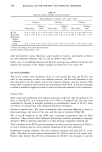
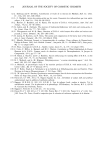
256 JOURNAL OF THE SOCIETY OF COSMETIC CHEMISTS Table I Agreement Among Conventional, API, Flow and Minitek Systems With Enteric Cultures No. of Strains Correctly Identified to Species Level a No. of Strains Organism Tested API Flow Minitek C itrobacter freundii 4 4 4 4 Enterobacter cloacae (1) •' 4 4 2 2 Enterobacter gergoviae (1) 8 3 6 4 Escherichia coli (2) 2 2 1 2 Klebsiella oxytoca 4 4 4 2 KlebsMla pneumoniae (1) 6 5 6 6 Morganella morganii 1 1 1 1 Proteus vulgaris (1) 1 1 1 1 Providencia stuartii 1 1 1 1 Providencia rettgeri (1) 2 2 2 1 Salmonella cholerae-suis (1) 1 1 1 1 Salmonella enteritidis (1) 1 1 1 1 Serratia liquefaciens 2 2 2 2 Serratia marcescens 3 1 3 3 Shigella sonnei (1) 1 1 1 0 Total 41 33 (80%) 36 (88%) 31 (76%) Without the use of supplemental tests. Number in parenthesis indicates the number of reference strains used. Table II Agreement Among Conventional, API, Flow, and Minitek Systems With Nonfermentative Cultures No. of Strains Correctly No. of Identified to Species Level a Strains Organism Tested API Flow Minitek A cinetobacter anitratus 1 0 1 0 Acinetobacter haemolyticus 1 0 0 0 Acinetobacter lwofjS' 1 1 1 1 Alcaligenes odorans 1 1 1 1 Moraxella urethraIls 1 0 0 0 Pseudomonas aeruginosa (2) •' 7 7 7 5 Pseudomonas cepacia (1) 15 15 15 15 Pseudomonas fluorescens (1) 6 6 6 5 Pseudomonas maltophilia (1) 4 3 1 3 Pseudomonas pseudoalcaligenes 3 0 0 0 Pseudomonas putida 7 7 5 5 Pseudomonas putrefaciens 2 1 1 1 Pseudomonas stutzeri 4 1 4 4 Total 53 42 (79%) 42 (79%) 40 (75%) Without the use of supplemental tests. Number in parenthesis indicates the number of reference strains used. Comparisons of the correlation levels of the three systems biochemical test results to those obtained with conventional methods are shown in Tables III and IV. FL exhibited the closest overall agreement with conventional testing, 96% for ENTB and 90% for NFB. The same pattern was reflected among the biochemical tests which all three
Purchased for the exclusive use of nofirst nolast (unknown)
From: SCC Media Library & Resource Center (library.scconline.org)