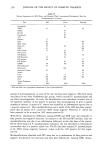
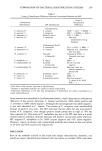
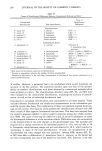
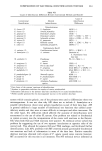
COMPARISON OF BACTERIAL IDENTIFICATION SYSTEMS 263 accurately identify both ENTB and NFB, which caused us to favor FL and MT. It was believed that due to the low viability of many industrial isolates, and their inability to grow well on artificial media, the system of choice should be one offering the best possible opportunity for microbial survival and optimal expression of biochemical char- acteristics. This study illustrated that the two FL systems provided excellent levels of biochemical correlation with conventional methodology. We believe that this was due to the utilization of conventional media as the basis for developing biochemical reac- tions. The use of solid media, as compared to dehydrated substrates, allowed for the optimal biochemical expression of the microorganisms, thus obtaining the most accurate identification possible. Therefore, it is the opinion of the authors that the FL systems are the most suitable single systems for quality control and research testing. It is our hope that this information will stimulate a re-evaluaion of the microbial identification systems now in use in industrial laboratories. REFERENCES (1) J. Barnishan and L. W. Ayers, Rapid identification of nonfermentative gram-negative rods by the Corning N/F system, J. Clin. Microbiol., 9, 239-243 (1979). (2) B. Chester and T. J. Cleary, Evaluation of the Minitek system for identification of nonfermentative and nonenteric fermentative gram-negative bacilli, J. Clin. Microbial., 12, 509-516 (1980). (3) A. O. Esaias, D. L. Rhoden, and P. B. Smith, Evaluation of the Enteric-Tek system for identifying Enterobacteriaceae, J. Clin. Microbial. , 15, 419-424 (1982). (4) L. S. Guthertz and R. L. Okoluk, Comparison of miniaturized multitest systems with conventional methodology for identification of Enterobacteriacae from foods, Appl. Environ. Microbiol., 35, 109- 112 (1978). (5) P. R. Edwards and W. H. Ewing, Identification of Enterobacteriaceae, 3rd ed., (Burgess Publishing Co., Minneapolis, 1972). (6) G. L. Gilardi, "Identification of Pseudomonas and Related Bacteria," in Glucose Nonfermenting Gram- Negative Bacteria In Clinical Microbiology, G. L. Gilardi, Ed. (CRC Press Inc., West Palm Beach, Fla., 1978), pp 15-44. (7) G. L. Gilardi, "Identification of Miscellaneous Glucose Nonfermenting Gram-Negative Bacteria," in Glucose Nonfermenting Gram-Negative Bacteria In Clinical Microbiology, G. L. Gilardi, Ed. (CRC Press Inc., West Palm Beach, Fla. 1978), pp 45-65. (8) L. R. McCarthy, J. B. Mayo, G. Bell, and D. Armstrong, Comparison of a commercial identification kit and conventional biochemical tests used for the identification of enteric gram-negative rods, Am. J. Clin. Pathol., 69, 161-164 (1978). (9) M. J. Morris, V. M. Young, and M. R. Moody, Evaluation of a multitest system for identification of saccharolytic pseudomonads, Am. J. Clin. Pathol., 69, 41-47 (1978). (10) N.M. Warwood, D. J. Blazevic, and L. Hofherr, Comparison of the API 20E and Corning N/F systems for identification of nonfermentative gram-negative rods, J. Clin. Microbial., 10, 175-179 (1979).

j. Soc. Cosmet. Chem., 35, 265-272 (August 1984) Effects of color adjuvants on the tanning effect of dihydroxyacetone M. F. BOBIN, M. C. MARTINI and J. COTTE Laboratoire de Pharmacie Industrielle et Technologie Parapharmaceutique Domaine Rockq•ller, 693 73 Lyon Cedex 8, France, and PH. POTIN, S.N.E.A. Centre de Recherche, B.P. 34 Lacq 64170 Atrix, France Received May 16, 1983. Synopsis The ability of dihydroxyacetone (D.H.A.) to react with the amino acids found naturally in the hydrolipid film and the first layers of the stratum corneum has been commonly used to produce a simulated sun tan on skin. This process results in imperfect development and wear resistance of the color. Therefore the purpose of this work was to improve the regularity, the tone, and the rate of the color development, and, moreover, to obtain a skin substantive color having affinity for the keratin of the stratum corneum. By analogy with quaternary ammonium compounds which exhibit keratin subtantivity, a sulfur-containing amino acid was made substantive without changing the amino function, the latter being necessary for the Maillard color-forming reaction. Therefore, the sulfur atom was used to form a sulfonium or a sulfoxide functional group. In vitro studies of mixtures of D.H.A. with amino acids in aqueous solutions carried out under standard conditions showed that methionine sulfoxide was the product yielding the optimum intensity and speed of color •tevelopment. In vivo studies confirmed that methionine sulfoxide in an appropriate excipient when rubbed on the skin before the application of a D.H.A.-containing cream increased the development and the intensity of color. INTRODUCTION The Maillard reaction or the reaction of dihydroxyacetone (D.H.A.) with amino acids located in the hydrolipidic film and the first layers of the stratum corneum has been commonly used (1-3) to produce a color of the skin close to natural tan. This artificial tanning system has been used since 1960 (4-6) without any modification and some improvements are needed particularly as regards the regularity of color development, the tone (7,8), the rate of color development, and the substantivity of color produced. Our approach to achieving improvements was to associate D.H.A. with an appropriate amino acid. It was necessary to select an amino acid which was both very reactive and substantive, being able to bind strongly with the stratum corneum. By analogy with the quaternary ammonium compounds whose substantivities are known, a sulfur-containing amino 265
Purchased for the exclusive use of nofirst nolast (unknown)
From: SCC Media Library & Resource Center (library.scconline.org)