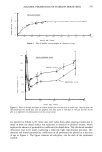
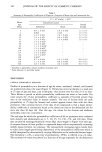
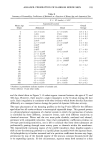
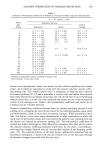
j. Soc. Cosmet. Chem., 35, 273-281 (August 1984) Quantitation of dimethicone in lotions using Fourier transform infrared spectral subtraction MARIE SABO, JOHN GROSS, and IRA E. ROSENBERG, Clairol Incorporated, 2 Blachley Road, Stamford, CT 06922. Received December 27, 1983. Synopsis A procedure for the quantitation of dimethicone in cream and lotion formulations has been developed. The procedure involves a solvent extraction and separation prior to analysis via Fourier transform infrared spectroscopy (FTIR). The samples are quantitated by comparison to a USP reference standard. The results show a slight positive bias due to matrix interferences however, a possible means of eliminating the bias is presented. The method is precise sample analyses gave a relative standard deviation of 1.78%. INTRODUCTION The quantitation of active ingredients in cosmetic and hair care products frequently proves to be quite challenging to analytical chemists. Often the active ingredients are present in low concentrations and the formulations have complex compositions. A typical lotion formulation might contain ingredients such as water, glycerin, stearic acid, mineral oil, acetylated lanolin alcohol, triethanolamine, cetyl alcohol, and car- bomer 934, and be preserved with DMDM hydantoin or methyl and propylparaben. The availability of high sensitivity instruments combined with computer-assisted data handling and raw data storage capabilities has, however, simplified the challenges. A case in point involves the quantitation of dimethicone present at the level of ca. 1% w/w in cream and lotion prototype formulations. Dimethicone (polydimethylsiloxane), a skin protecting agent (1), known for its water- repellant and anti-foaming properties, is the active ingredient in these products. It may be present in the formulations in the amount of 1 to 30% by weight. A literature search found few references (2-6) with quantitation procedures and, unfortunately, none of them directly yielded satisfactory results for these formulations. A modification of the United States Pharmacopeia (USPXX/NFXV) procedure was developed and val- idated. The method involves a solvent extraction and separation prior to analysis via Fourier transform infrared spectroscopy (FTIR). EXPERIMENTAL REAGENTS AND SOLUTIONS A dimethicone standard stock solution was prepared by diluting a 500-rag ampoule of 273

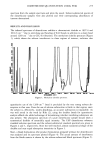
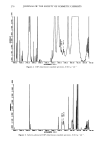
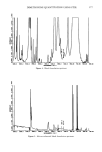
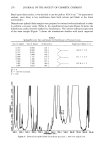
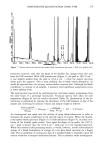
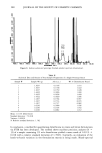
274 JOURNAL OF THE SOCIETY OF COSMETIC CHEMISTS USP reference standard polydimethysiloxane (F-3, U.S.P.C., Inc.) to a final volume of 50.00 ml with methylene chloride (#9315-3, J. T. Baker Chemical Company). A 0.001-g/ml dimethicone working standard was then prepared by volumetrically di- luting a 1.00-ml aliquot of the stock solution to 10.00 ml with methylene chloride. A 40% v/v hydrochloric acid solution needed for the solvent extraction step was pre- pared from concentrated hydrochloric acid (#2062, Mallinckrodt, Inc.) and distilled water (Purified Water, U.S.P., Electrified Water Company). APPARATUS Instrumental analysis was performed on a Nicolet 5MX Fourier transform infrared spectrometer with 4-cm-1 resolution (Nicolet Instrument Corp.) attached to an X-Y recorder (Model 7010B, Hewlett-Packard) and interfaced to a diskette storage drive (Model SA 800/801, Shugart). The sample cell used was a demountable liquid cell with 0.5 mm-Teflon spacers (Harrick Scientific Corp.) and sodium chloride transmis- sion windows (13 x 2mm, #7000-301, Barnes Analytical Division, Spectra-Tech, Inc.). The sample cell was filled using a glass syringe (#2140, Becton-Dickinson). SAMPLE PREPARATION 1. Extraction. Accurately weigh ca. 1.5 g of sample into a 50-ml graduated cylinder with ground glass stopper. Add about 20 ml of 40% v/v HC1 solution and pipette in 15.00 ml of methylene chloride. Shake vigorously, manually, for one minute and allow to separate into layers. 2. Separation. Pipette a 10.00-ml aliquot of the bottom, organic phase into a 10-ml disposable syringe (#5604, Becton-Dickinson) which is attached to an Acrodisc filter (0.45 •tm pore size, #4404, Gelman Sciences) which is, in turn, attached to a Silica SEP-PAK cartridge (#51900, Waters Associates, Inc.). Pass the aliquot and a 1.0-ml methylene chloride wash through the system, collecting the effluent in a 25-ml Erlen- meyer flask. 3. Final Solution. Reduce the volume of the collected fraction almost to dryness on a warm hot plate. Care should be taken to assure that the solution does not froth over. Take up the residue in methylene chloride and dilute, volumetrically, to 10.00 ml. ANALYSIS The empty liquid cell was scanned into the background file. (When plotted, all files are automatically ratioed against the background file.) The solvent, standard, and sample solutions were scanned into the remaining files. Ten scans were taken in each case, signal-averaged, and the absorbance spectra plotted on the X-Y recorder. In addition to plotting the full spectra, absorbance values at the peaks of interest were read directly from the digital display on the 5MX. A particularly useful feature of digital data handling in FTIR is the capability of performing spectral subtractions for example, the solvent portion may be eliminated from a solution spectrum. A difference factor, indicating the fraction of solvent in the solution, is entered, and the microprocessor then subtracts that proportion of the solvent
Purchased for the exclusive use of nofirst nolast (unknown)
From: SCC Media Library & Resource Center (library.scconline.org)