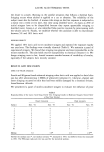
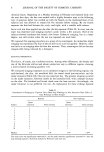
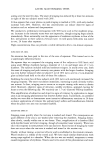
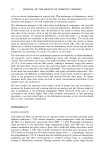
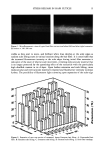
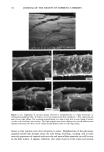
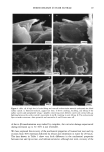
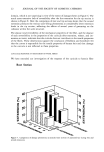
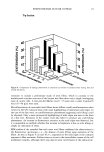
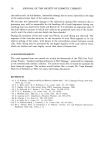
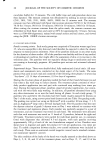
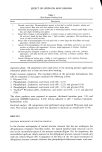
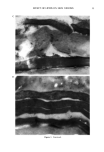
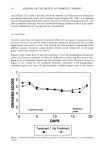
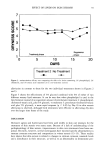
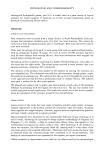
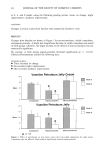
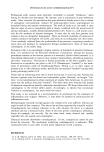
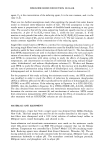
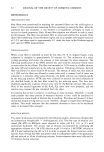
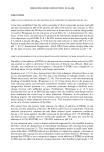
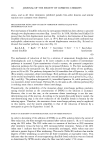
STRESS RELEASE IN HAIR CUTICLE 15 Figure 1. Microfluorometric views of typical hair fiber root sections before (left) and after (right) extension. Excitation at 340-380 nm. visible as they start to move, and brilliant white lines develop at the scale edges as random scale lifting starts in various locations along the hair fiber. It is conceivable that the increased fluorescence intensity at the scale edges during initial fiber extension is indicative of the onset of relative scale movement, revealing endocuticular material that is no longer protected by the quenching effect of the exocuticle with the particularly high disulfide content in its A-layer. Upon further extension and scale lifting, more endocuticular and intercuticular material is exposed and fluorescence intensity increases further. The possibility of fluorescent light scattering upon separation of the scale edge 50 40 -•, lO o Figure 2. Extension of near root section of untreated, brown European hair fibers. A: Unextended hair fiber. B: Random scale lifting. C: Common scale lifting. D: Extreme scale lifting. E: Hair fiber breakage.

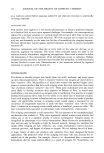
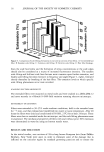
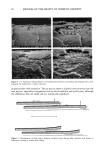
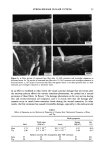
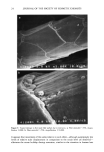
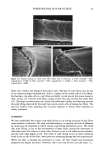
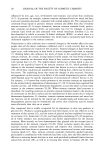
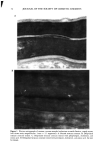
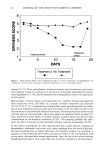
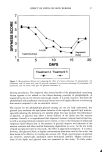
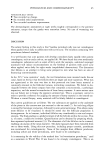
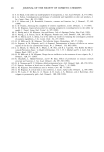
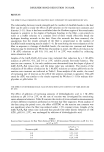
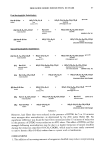
16 JOURNAL OF THE SOCIETY OF COSMETIC CHEMISTS 4O o.. , 30 lo Figure 3. Comparison of scale lifting phenomena in root and tip sections of hair fibers. A: Unextended hair fiber. B: Random scale lifting. C: Common scale lifting. D: Extreme scale lifting. E: Hair fiber breakage. from the scale face below and the formation of stress concentrations at the scale edges should also be considered as a source of increased fluorescence intensity. The random scale lifting and brilliant scale lines become more common upon further extension, and finally scale lifting becomes extensive in frequency and angle (Figure 1, right), followed shortly thereafter by breaking of the hair fiber. The extension levels at which specific scale lifting phenomena occur were recorded. SCANNING ELECTRON MICROSCOPY The extended fibers were mounted on metal stubs and were studied in a JEOL-JSM-12 and more recently in a Hitachi S-4500 field emission scanning electron microscope. REVERSIBILITY OF EXTENSION Fibers were extended to 30-35% under ambient conditions, held in the extended state for -5 rain, and then released and transferred into water at room temperature. After 20 hours the fibers were dried and conditioned (65% RH, 2 IøC) for at least 24 hours. These fibers were then re-extended under the microscope, and the scale lifting phenomena were re-examined. The mechanical properties of fibers with and without prior 30% extension were determined in water by using an Instron tensile tester. RESULTS AND DISCUSSION In the initial studies, root sections of 18-in-long brown European hair (from DeMeo Brothers, New York) were used, in order to eliminate some of the damage that is inflicted on the cuticular region by standard grooming practices and to ensure the
Purchased for the exclusive use of nofirst nolast (unknown)
From: SCC Media Library & Resource Center (library.scconline.org)