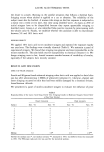
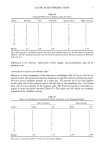
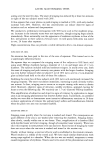
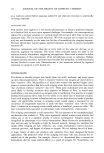
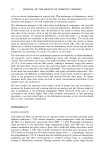
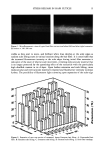
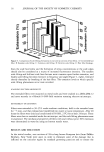
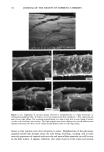
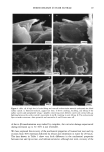
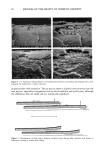
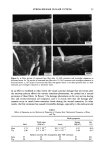
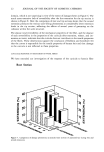
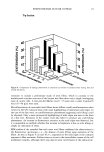
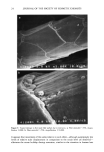
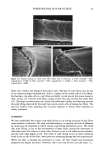
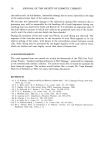
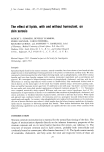
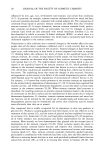
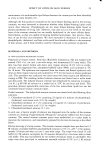
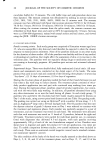
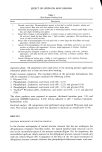
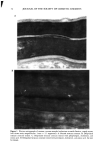
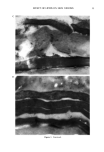
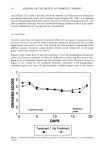
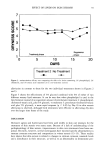
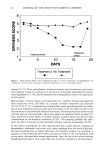
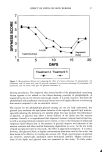
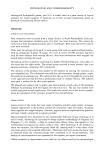
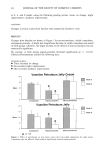
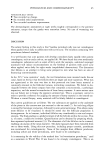
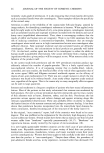
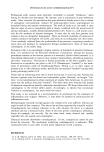
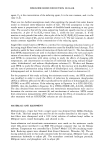
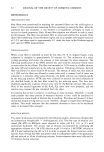
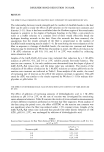
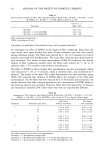
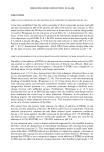
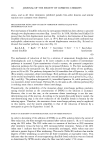
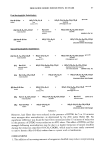
STRESS RELEASE IN HAIR CUTICLE 21 3000X 3000X • 2400X 3000X Figure 6. a: Root section of untreated hair fiber after 32-36% extension and overnight relaxation in deionized water. b: Tip section of untreated hair fiber after 32-36% extension and overnight relaxation in deionized water. c, d: Cuticles of untreated hair fiber that appear frozen in the lifted position after 32-36% extension and overnight relaxation in deionized water. In an effort to establish to what extent the visual cuticular damage that still exists after the recovery process affects the various extension phenomena, we carried out a second extension of these fibers. In Figure 7 the damage phenomena in the root section during first and second extension are compared, and it is clearly seen that the damage phe- nomena occur at much lower extension levels during the second extension. In other words, the first extension has caused irreversible damage, especially in the endocuticular Table I Effect of Extension on the Mechanical Properties of Human Hair: Mechanical Properties of Root and Tip Break properties Yield stress Energy Mod. (GN/m 2) Stress (MJ/m 2) Ext. (%) Root Tip Root Tip 3.73 9.8 x 10 -2 20.2 x 10 -2 3.01 3.90 9.7 x 10 -2 19.3 x 10 -2 2.84 Relative recovery(%)ofproperties a•er 30% extension 95 92 95 97 90 90 95 94 46.6 45.2 104 102

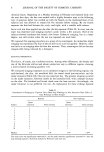
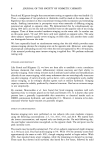
22 JOURNAL OF THE SOCIETY OF COSMETIC CHEMISTS domain, which is not surprising in view of the extent of damage shown in Figure 4. The much more extensive lack of reversibility after the first extension for the tip section is shown in Figure 8. Here the comparison of root and tip sections shows that the second extension produces the various scale-lifting phenomena at considerably lower extension levels in the tip section, reflecting the effects of several years of grooming on the cohesion within the scale structure. The almost total reversibility of the mechanical properties of the fiber, and the absence of such reversibility in the properties of the cuticula after extension, release, and im- mersion in water, indicates that the cuticula does not contribute to the tensile properties of the fibers. These observations support the conclusion of Robbins and Crawford (10) that the cortex is responsible for the tensile properties of human hair and that damage to the cuticula is not reflected in these properties. CUTICULAR RESPONSE TO EXTENSION OF WOOL FIBERS We have extended our investigation of the response of the cuticula to keratin fiber Root Section 40 30 2o lO Figure 7. Comparison of damage phenomena in extended root sections of untreated hair during first and second extensions.
Purchased for the exclusive use of nofirst nolast (unknown)
From: SCC Media Library & Resource Center (library.scconline.org)