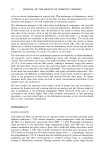
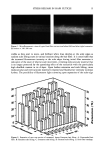
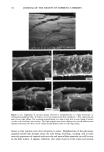
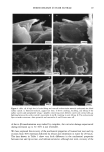
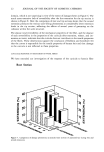
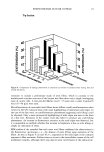
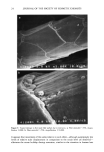
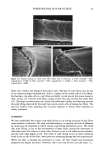
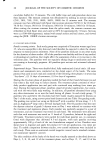
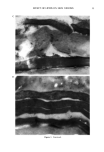
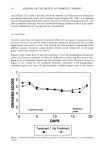
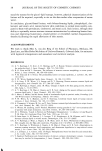
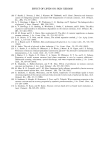
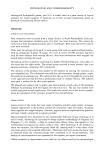
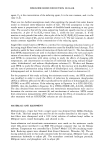
EFFECT OF LIPIDS ON SKIN XEROSIS 33 D Figure I. Continued.

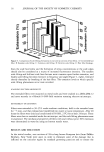
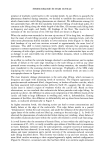
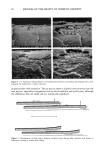
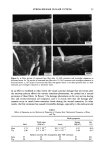
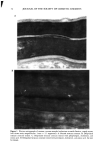
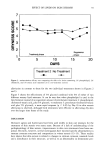
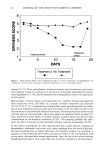
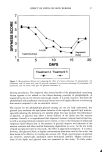
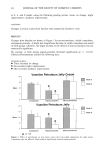
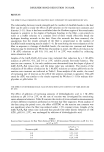
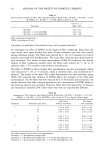
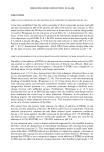
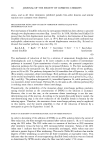
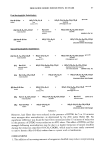
34 JOURNAL OF THE SOCIETY OF COSMETIC CHEMISTS ment (Figure 1C) is able to partially reform the lameliar lipid-like structure whereas the petrolatum-cholesterol-stearic acid treatment cannot (Figure 1D). Thus, it is apparent that the phospholipid-based lipid system, because of its bilayer-forming properties, may offer a potential advantage over the non-bilayer-forming petrolatum-based lipid system if such combinations are incorporated into moisturizers. IN VIVO STUDIES It is first noted that the respective treatment effects for the negative control (no treat- ment) as well as for the positive control (standard commercial moisturizer) did not differ significantly from study to study. This allowed for valid statistical comparisons of the different product treatments using absolute dryness scores irrespective of the study group a particular treatment was used in. Figures 2 and 3 show that 1% glycerol (treatment 1) and 4% phospholipid-cholesterol- stearic acid mixture (treatment 2) alone are ineffective in alleviating skin xerosis com- pared to the no-treatment control over this particular time course. However, as seen in Figure 4, the results for the combined treatment (treatment 3:4% phospholipid- cholesterol-stearic acid, plus 1% glycerol) show a marked improvement in skin xerosis 7 "'6 ill Treatment phase Regression phase 0 5 10 15 20 DAYS Treatment 1 No Treatment Figure 2. Moisturization efficacy test comparing the effect of 1% glycerol (treatment 1) to a no-treatment control.
Purchased for the exclusive use of nofirst nolast (unknown)
From: SCC Media Library & Resource Center (library.scconline.org)