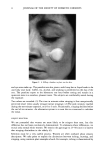
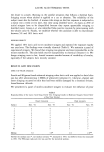
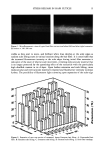
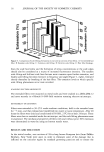
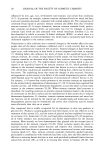
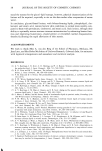
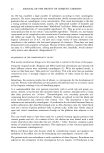
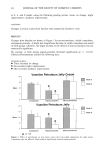
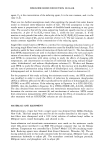
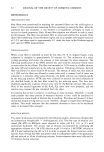
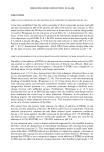
6 JOURNAL OF THE SOCIETY OF COSMETIC CHEMISTS chemical injury. Beginning on a Monday morning in February and repeated daily over the next four days, the face was washed with a highly detersive soap in the following way: A generous lather was worked up with the fingers on the moistened faces of ten subjects and was allowed to remain for five minutes before rinsing. By the fourth exposure the skin had become dry, scaly, and tight, with a variable mild redness. Lactic acid was then applied one day after the last exposure (Table II). In every case the onset was shortened and stinging reached a peak within a few minutes. Half of the subjects showed erythema that lasted a few hours. Enhanced stinging, but to a lesser degree, was still evident when the test was repeated one week later. We repeated this soaping procedure on a group of six nonstingers. An immediate slight stinging was experienced by four of the six after lactic acid was applied. However, there was little or no stinging after the first few minutes. Thus, nonstingers did not become stingers after being irritated by a detergent. REGIONAL DIFFERENCES The face is, of course, not a uniform territory. Among other differences, the density and size of the follicular orifices and sebum production vary in different regions, showing a mid-to-lateral decreasing gradient (12). We evaluated stinging responses on ten moderate stingers in the following regions: the mid-forehead, the chin, the nasolabial fold, the lateral cheek (pre-auricular), and the malar eminence (Table III). One site was tested per day. The greatest stinging occurred on the malar eminence, followed closely by the nasolabial fold, with a sharper decrease on the chin. The forehead and lateral cheek were the least reactive. Accordingly, the malar eminence is our preferred test site. An explanation for these striking regional Table II Exacerbation of Stinging by Vigorous Twice-Daily Soap Washings on Four Successive Days: Effect of Soap Washings on Mild Stingers Bas eli ne Post - wash i ngs Onset Onset Subject (minutes) Peak intensity (minutes) Peak intensity 1 2 1 1 2 2 2 1 1 2 3 3 1 1 2 4 4 1 2 3 5 2 2 1 3 6 2 2 1 3 7 5 1 2 3 8 3 1 1 2 9 4 1 2 2 10 3 1 1 2 Median 3.0 1.0* 1.0* 2.0'* The onset time was significantly shortened *, and the peak intensity significantly increased **, after the soap washing regimen. Statistical analysis by Wilcoxon rank sum test.

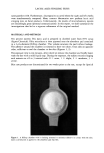
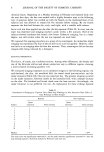
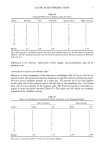
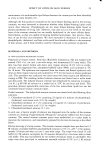
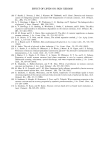
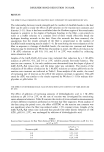
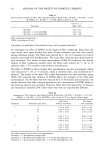
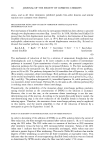
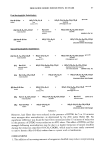
LACTIC ACID STINGING TESTS 7 Table III Regional Differences in Stinging (peak intensity) Subject Forehead Chin Nasolabial Lateral cheek Malar eminence 1 1 2 2 0 2 2 0 2 3 1 3 3 1 2 2 0 3 4 0 2 3 1 3 5 1 2 2 1 2 6 1 3 2 0 1 7 0 2 2 0 2 8 0 3 3 0 3 9 1 2 2 1 3 10 0 2 2 0 2 Median 0.5 2.0' 2.0' 0 2.5' The malar eminence*, nasolabial region*, and chin* show a modest rank order, but this was not statistically different. All were significantly greater than the forehead and lateral cheek. Statistical analysis by Wilcoxon rank sum test. differences is not obvious. Innervation, blood supply, and permeability may all be playing a role. CONCOMITANT TESTING ON OPPOSITE SIDES Mayne et al. noted asymmetry of the reactions to swabbings with 5% lactic acid (10) on opposite sides. We examined disparate responses on opposite sides by performing cham- ber tests on ten moderate stingers on a single day. Ten percent lactic acid was applied to the right side of five subjects and to the left side in the remaining five. Two hours later, the test was repeated on the opposite sides. We found exceptional concordance in regard to onset and peak intensity (Table IV). The right and left cheeks are evidently symmetrical by chamber testing. Table IV Lactic Acid Stinging on Contralateral Cheeks: Symmetry of the Stinging Response Onset (minutes) Peak intensity Subject Right Left Right Left 1 2 4 2 2 2 3 2 3 2 3 1 1 2 3 4 4 1 1 1 5 2 1 2 2 6 1 1 3 3 7 3 4 1 1 8 2 1 2 2 9 5 3 1 1 10 1 3 2 1 Median 2.0* 1.5* 2.0'* 2.0** The onset * and peak intensity ** were not statistically different.
Purchased for the exclusive use of nofirst nolast (unknown)
From: SCC Media Library & Resource Center (library.scconline.org)