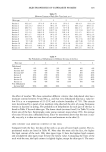
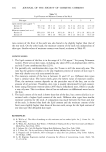
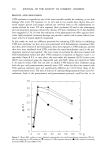
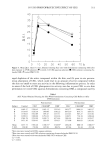
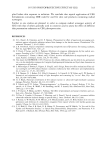
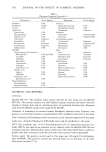
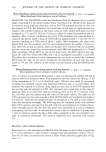
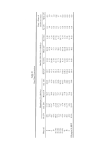
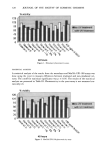
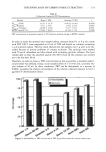
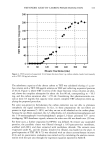
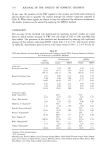
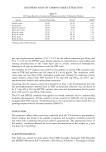
IN VIVO PHOTOPROTECTIVE EFFECT OF CEG 311 4O 55 50 ß 25 15 10 0 I 0 20 30 40 50 60 70 h Figure 3. Mean AE.I. values vs time, obtained treating skin sites with formulations containing CEG after skin exposure to UVB radiation: (•') control (O) CEG aqueous solution (O) CEG solution containing Ar- Iasolve DMI (V) water:DMI 50:50. rapid depletion of the active compound within the skin, and (b) poor in vivo percuta- neous absorption of CEG, which could lead to an amount of active compound within the skin too small to exert any activity in the following inflammation process. In order to assess if the lack of CEG photoprotective activity was due to poor CEG in vivo skin permeation we tested CEG aqueous formulations containing DMI, a compound used by Table I AUC Values Obtained Treating the Skin With Formulations Containing CEG Before or After UVB Irradiation Posttreatment Pretreatment Subject Control CEG a CEGDMI b DMI c CEG a CEGDMI b DMF A 1482.17 1789.42 1665.15 1765.42 1263.77 1000.93 1402.37 B 1539.05 1526.39 960.96 1530.22 1004.39 854.71 1605.41 C 1378.03 1502.89 905.47 1327.51 1223.43 905.27 1133.01 D 1299.01 1368.66 1250.23 1224.36 1338.51 726.18 1208.46 E 1584.78 1702.00 1409.71 1671.63 1500.93 944.33 1678.57 F 1451.36 1599.41 939.56 1594.31 1374.68 899.83 1303.61 Mean 1455.73 1581.46 1188.51 d 1518.91 d 1284.28 888.54 e 1388.57 e ñ S.D. 104.80 150.06 307.83 206.54 167.64 93.44 217.38 aSkin sites were treated with CEG aqueous solution. b Skin sites were treated with CEG solutions consisting of water:Arlasolve DMI 50:50. •Skin sites were treated with water:Arlasolve DMI 50:50 without CEG. dp 0.03. ep 0.002.

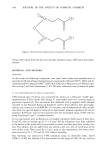
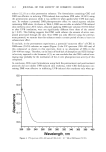
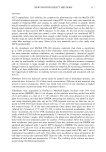
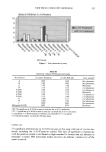
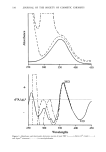
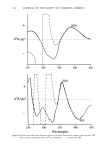
312 JOURNAL OF THE SOCIETY OF COSMETIC CHEMISTS others (12,13) as a skin penetration enhancer. The formulation containing CEG and DMI was effective in reducing UVB-induced skin erythema (PIE value 38.96%) using the pretreatment protocol, while it was ineffective when applied after UVB skin expo- sure. To evaluate a potential DMI photoprotective effect we tested aqueous solution containing DMI alone. As shown in Table I, DMI was not able to inhibit UVB-induced skin erythema since AUC values, obtained applying DMI:water solution (50:50) before or after UVB irradiation, were not significantly different from those of the control (p 0.05). This finding suggests that DMI could enhance the amount of active com- pound penetrated through the skin. Since DMI was only effective using the pretreat- ment protocol, we surmise that this enhancer needs a certain period of time to exert its enhancement effect. To exclude, in the pretreatment experiments, a potential "sunscreen effect" of CEG in DMI:water (50:50) solution we report (Figure 4) the UV spectrum (200-400 nm) of this compound: as shown in this spectrum, there is no absorption of CEG in the 290-400-nm range. Therefore, on the basis of both lack of absorption and CEG biologi- cal activity reported in the literature (4,5), we can conclude that the CEG's radical scav- enging may probably be the mechanism of the i, vitro photoprotection activity of this compound. In conclusion, CEG water formulations using both the pretreatment and posttreatment protocols did not inhibit UVB-induced skin erythema, while CEG formulations con- taining DMI were effective in inhibiting UVB-induced skin erythema only when ap- 0.5 0.4 (D 0.3 o I:: .1:30. 2 O 0.0 ,, 200 220 240 ' I ' I ' I ' I ' I ' I ' I 260 280 300 320 340 360 380 400 Wavelength, nm Figure 4. UV spectrum (200-400 nm) of CEG (3.01 ß 10 • M) in DMI:water (50:50).
Purchased for the exclusive use of nofirst nolast (unknown)
From: SCC Media Library & Resource Center (library.scconline.org)