j. Soc. Cosmet. Chem., 47, 325-336 (September/October 1996) Tretinoin assay in cosmetics and pharmaceuticals by carbon phase extraction G. RAGNO, M. VERONICO, R. MADDALENA, and C. VETUSCHI, Pharmaco Chemistry Department of University, Via E. Orabona 4, 70126 Bari, Italy. Accepted for publication September 30, 1996. Presented at IV CRSAAE Bologna, Italy, October 1991. Synopsis A tretinoin assay, useful to verify its absence in cosmetics, where the drug is forbidden, was proposed. The method was based on a carbon phase extraction that allows one to obtain the analyte free from interfering matrix components and in an enriched concentration in such a way as to attain a higher sensitivity. When the analyte was present, a quantitation was performed by UV-derivative spectrophotometry. In the presence of substances with a high absorptivity, like sun filters, besides the carbon extraction step, a further separa- tion by HPTLC was required. The drug absence was validated over 0.1 mg/100g. Since the TRT amount in pharmaceuticals for topical use is 10 to 100 mg/100g, this revelation limit assures a sufficient warranty. A simplified procedure, by direct derivative spectrophotometry, may be applied for tretinoin determination in pharmaceuticals. INTRODUCTION Tretinoin (TRT), all-trans retinoic acid, is used for the treatment of severe cystic acne (1-2) and other skin diseases (3), for its positive action on cell proliferation and kera- tinization of the skin, as well as for decreasing sebum secretion and inflammation (4). Research with retinoids and clinical observations in humans sometimes gives apparently contradictory results: while stimulating the proliferation of normal epidermal cells, retinoids may check the growth of psoriatic cells and neoplasms, but the side effects of these compounds are fairly unpleasant (3). Sun exposure during treatment must be stringently avoided. Teratogenicity for isotretinoin is well documented (5,6), and it is suspected as a potential effect of tretinoin. For these reasons, the use of tretinoin in pregnancy is forbidden. On 27 July 1976 the European Community promulgated Law 76/768, actuated in Italy with Law 11 October 1986 no. 713, which forbids the use of TRT and several other chemicals in the cosmetic field. Furthermore, in Italy the Ministry of Health, with Cir- cular 18 October 1990 no. 27, has committed the public laboratories to check for the absence of TRT in cosmetics. Analytical methods for TRT have been developed by using HPLC on biological samples (7) and on anti-aging cosmetics (8,9) the U.S. Pharmacopeia 23rd Rev. (10) reports a 325

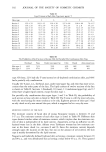
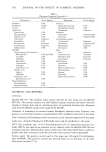
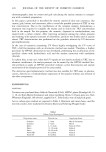
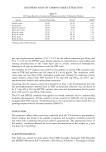
326 JOURNAL OF THE SOCIETY OF COSMETIC CHEMISTS chromatographic assay on creams and gels calculating the analyte amount in compari- son with a standard preparation. In this paper a procedure is described for routine control of skin-care cosmetics, like creams, gels, lotions, and ointments, able to reveal the possible presence of TRT in very low concentration. Due to the interferences of the complex cosmetic formulations, a treatment was required to simplify the matrix and to enrich the TRT concentration level in the sample. For this purpose, the cosmetic, dispersed in tetrahydrofuran, was treated with a carbon column. After removing excipients among the carbon granules and washing with repeated amounts of chloroform, pyridine was finally used as analyte eluent. TRT determination was performed on the pyridinic solution by UV-derivative spectrophotometry. In the case of cosmetics containing UV filters highly overlapping the UV curve of TRT, a full fractionation with an alternative method was needed. Therefore, a further procedure by HPTLC densitometry was developed, performing the acidification of the pyridinic eluate with hydrochloric acid and the analyte extraction with methylene chloride. It is plain that, in any case, when the UV signals are not clearly ascribed to TRT, due to whatever interference, the analyte presence can be assured by the HPTLC method. Sev- eral attempts to apply an HPTLC procedure without a prior fractionation and analyte enrichment of the samples proved to be unsuccessful. The derivative spectrophotometric method was also suitable for TRT assay in pharma- ceutics, directly on a tetrahydrofuran suspension of the samples without any removal of the other components. EXPERIMENTAL MATERIALS Tretinoin was purchased from Aldrich Chemicals (USA) HPTLC plates (Kieselgel 60, 10 ) 10 cm) from Merck (Germany) and nylon membrane filters, 0.45-1•m-pore size, from Whatman (England). All solvents, supplied by C. Erba (Italy), were of analytical grade. Active carbon types studied are reported in Table I. Ointment and cream bases, used for recovery studies, were marketed by Resriva (Italy) and Schering-Plough (Italy). Table I Carbon Types Investigated Proprietary name Particle size Supplying firms Granular 1.5 mm Merck (Germany) Granular 2.5 mm Merck Darco 4-12 mesh Aldrich (USA) Darco 12-20 mesh Aldrich Darco 20-40 mesh Aldrich Norit RB1 0.6 pellets Aldrich Norit R0 0.8 pellets Aldrich
Purchased for the exclusive use of nofirst nolast (unknown)
From: SCC Media Library & Resource Center (library.scconline.org)