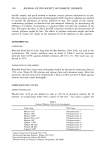
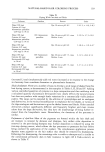
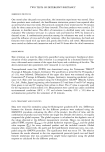
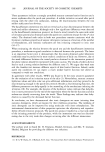
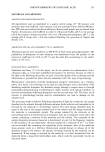
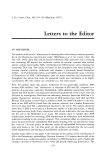
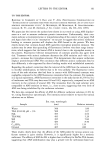
NATURAL-BASED HAIR COLORING PROCESS 137 low/brown shade range, although in some instances brighter red and red/brown colors were produced. Hydroxybenzothiazines. Several hydroxy-l,4-benzothiazines were prepared by standard procedures (5). Hair was dyed either by soaking in a mixture of the benzothiazine and oxidant or, more preferably, by soaking in the benzothiazine and then, in a separate step, treating the hair with an oxidizing agent. Sodium periodate at neutral pH was the most effective oxidant, although several other oxidants were also useful. Yellow-blonde to medium brown shades were produced, depending on the particular benzothiazine, oxi- dant, and oxidizing conditions selected. In the examples in Table II, the solvent was water, and white hair (L 67, a -0.6, b 18.5) was used. Thio-substituted dopa and catechol derivatives. The thio-substituted dihydroxybenzenes were prepared by a number of different standard techniques (6) that allowed us to introduce various thio groups onto 1,2- and 1,4-dihydroxybenzenes, including 2-aminoethanethio- and cysteinyl groups. All compounds were oxidized on hair to give color, either by applying the benzene derivative and oxidant together or sequentially. More color was produced in the sequential application, and the most effective oxidants were sodium periodate and sodium iodate, although several other oxidants, including ferricyanide and persulfate, were also suitable. Generally, intense brown colors were produced, many of which reflected a marked red or yellow tone. The examples in Table III were dyed onto white hair (L 70, a -0.5, b 18.7). Table II Hair Dyeing With Hydroxybenzothiazines Benzothiazine Oxidant Process Color 8-Hydroxy- 1,4-dihydro- (20 mg in 5 ml/ bicarbonate to pH 7) 8-Hydroxy- 1,4-dihydro- (20 mg in 5 ml/ bicarbonate to pH 7) 6-Hydroxyl-1,4-dihydro- (20 mg), sodium iodate (36 mg), in 5 ml 6-Hydroxy-l,4-dihydro- (20 mg), sodium iodate (36 mg), in 5ml 2-Carboxy-6-hydroxy- 1,4-dihydro- (20 mg), sodium iodate (36 mg) in 5 ml methanol/water 6-Hydroxy- 1,4-dihydro- (50 mg) in 5 ml methanoi/water 6-Hydroxy-l,4-dihydro- (50 mg) in 5 ml methanol/water 2% Sodium periodate 2% Sodium iodate at pH 4.2 2% Sodium periodate 1% Sodium periodate 1% Sodium periodate 10 min dye/rinse 2 min oxidant Golden blonde L 40, a 5.5, b 15.1 10 min dye/rinse Ash blonde 2 min oxidant L 42.5, a 2.3, b 10.7 pH 5 for 10 min 10 min dye/rinse 2 min oxidant 10 min at pH 7.2 Violet brown L 24, a 4.7, b 1.3 Dark violet gray L 20.7, a 3.5, b 0.0 Orange brown L 41.5, a 7, b 14.8 Dye 20 min at Dark brown pH 10, rinse L 20, a 1.4, b 2.8 5 min oxidant Gray hair, dye Medium brown 20 min at L 25.3, a 1.1, b 3.9 pH 10, rinse 5 min oxidant

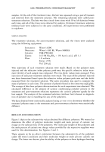
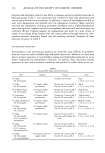
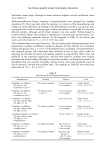
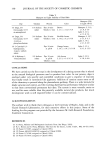
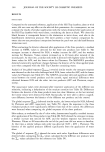
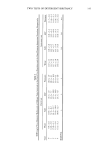
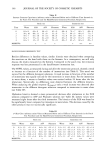
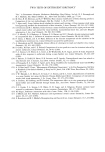
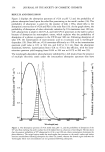
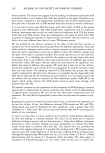
138 JOURNAL OF THE SOCIETY OF COSMETIC CHEMISTS Table III Dyeing With Thio-Substituted Catechols Thiocatechol Oxidant Process Color 4-S cysteaminylcatechol (20 mg), sodium iodate (18 mg) in 5 ml 4-S cysteaminylcatechol (20 mg), ferricyanide (59 mg) in 5 ml 4-S cysteaminylcatechol (10 mg), dopa (9 mg), ferricyanide (59 mg) in 5 ml 4-S cysteaminylcatechol (10 mg), dopa (9 mg), ferricyanide (59 mg) in 5 ml 4-(aminoethanethio)- catechol -0.3% 4-(aminoethanethio)- catechol -0.4%, m-aminophenol -O.2% 1% Sodium periodate 1% Sodium periodate 1% Sodium periodate 10 min at pH 4.5 10 min at pH 7.6 20 min at pH 7.8 Dye 20 min. at pH 7.8, rinse Oxidize 2 min Dye 10 min. at pH 7.5, rinse Oxidize 5 rnin Dye 10 min at pH 7.9, rinse Oxidize 5 min Reddish brown L 35.1, a 8.7, b 6.1 Auburn L 24.8, a 8.7.b 4.9 Red brown L 27.5, a 8.6, b 6.3 Warm red brown L 23.3, a 5.6, b 6.5 Brown L 29.1, a 3.6, b 7.0 Chestnut brown L 22.4, a 4.3, b 7.3 Catechols and thioIs. The potentially most useful application of the pheomelanin route involves hair dyeing with a combination of dopa or other catechols, and thiols such as cysteine, since this follows the natural pathway closely. Not surprisingly, because this process requires a significant number of chemical steps, it is difficult to carry it out in a controlled manner. However, analogous to the results obtained from our studies in eumelanogenesis, we have found that oxidation with a controlled amount of potassium ferricyanide under specific pH buffered conditions gives relatively intense red/brown colors on hair. In addition, significantly stronger color is produced when a second oxidative treatment is applied. This second oxidant is preferably sodium periodate, which readily converts any unoxidized intermediates into pigments. Using these com- bined processes, relatively intense, dark reddish brown colors are obtained on hair over a 20-30 minute dyeing time. The shades are markedly different (warmer and redder) from those obtained in the absence of thiol, when only eumelanogenesis can occur. Therefore, a significant variation in shade is readily obtained by changing either the thiol content or the concentration of oxidant to tion and pheomelanin formation. A higher chemistry along the pheomelanin pathway lower ratio allows for some of the dopa pathway to produce cooler gray to black processes on white hair (L 62.6, a 0.2, b 1 alter the balance between eumelanin forma- thiol:dihydroxybenzene ratio results in more to produce reddish brown shades, whereas a or other catechol to follow the eumelanin shades. Table IV gives examples of these 8.3). In all cases, adding the thiol, or increasing the amount of thiol, reduces color intensity
Purchased for the exclusive use of nofirst nolast (unknown)
From: SCC Media Library & Resource Center (library.scconline.org)