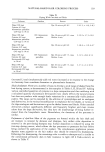
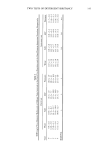
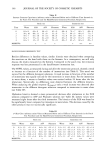
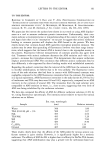
TWO TESTS OF DETERGENT IRRITANCY 147 Table IV Global Response to the Different Products as Calculated for the Patch Test Procedure and the Hand/Forearm Immersion Procedure, Respectively ETEWL (g/m2/h) EHyd (a.u.) Ea* (a.u.) Product Patch Immersion Patch Immersion Patch Immersion Water 59 -+ 9 66 + 11 318 _+ 32 357 + 25 33 -+ 6 34 + 6 N28 194 + 53* 71 + 19 265 _+ 36* 329 + 20* 50 _+ 6* 33 ñ 6 ASV 123 + 34* 71 _+ 18 292 + 33* 335 +- 20 42 _+ 7* 33 ñ 6 Plantaren 99 +- 22* 70 + 12 277 _+ 25* 348 + 24 41 +_ 5* 34 + 7 (*) indicates that values differ significantly from testing with water alone. (a.u.) = arbitrary units. The global response (Y'Hyd) showed similar trends, with a significant difference only for immersion in the N28 solution compared with immersion in water alone (see Table IV). These lower capacitance values point to the dehydration side effect of the N28 solution. Concerning the a* color value, we noticed a trend toward an increase only after the different immersions (see Table III). Here again we found a slight increase after im- mersion in the tank containing water without detergent. In contradiction with the other skin parameters, Plantaren was found to be the detergent causing the greatest color changes. Analysis of the global response (5',a.) did not reveal any significant differences (see Table IV). COMPARISON BETWEEN THE TWO PROTOCOLS Regression of the global parameters obtained after the patch test and the immersion test delivered a correlation coefficient ofr = 0.839 for the (ZTEWL), r = 0.776 for (Y'Hyd), and r = 0.400 for (5',a.), respectively. DISCUSSION Reactions in the patch test were more pronounced compared to the reactions in the hand/forearm immersion test. The long contact time during the patch procedure, in an occlusive way, seems to affect skin integrity more severely than repetitive short immer- sions. Prolonged occlusion of the skin surface results in decreased barrier properties due to an accumulation of water in the stratum corneum (1) and due to increased tempera- ture under the patch (1,14). During prolonged exposure to the detergent solutions, the intercellular lipids may be perturbed (15). As a result, the irritant substances can easily penetrate towards the deeper skin layers, where they can elicit an irritation. As suggested by several authors, irritant reactions are mainly caused by surfactant-protein interaction in the deeper skin layers (15). Apparently these penetration-promoting conditions are not present in the hand/forearm immersion test, resulting in a weaker response after the three immersions. When considering the different products tested, regardless of the protocol used, it becomes clear that N28 had more irritation potential than the two other substances. The irritant character of N28 was clearly demonstrated in the patch test protocol by the strongly increased TEWL values, the decreased hydradon values, and the high a* values.

148 JOURNAL OF THE SOCIETY OF COSMETIC CHEMISTS These parameters indicate a strongly perturbed stratum corneum barrier function and a severe erythema after the patch test procedure. A milder irritation occurred after patch testing with the other two surfactants, making the discrimination between the two milder surfactants less obvious. The hand/forearm immersion test did not reveal such a clear discrimination between the harsh and milder substances. Although only a few significant differences were detected in the hand/forearm immersion protocol, we found a trend towards the same rank order of irritation potential as obtained under the patch test conditions (except for the a* color value). The obtained rank order in both test procedures remains consistent with the literature: mildness properties of anionic detergents increase as a function of the number of ethoxylations, and nonionic surfactants are less irritating compared to ionic ones (16-17). When estimating the relation between the patch test and the hand/forearm immersion procedure, a moderate-to-good correlation is detected between the protocols. The latter is an important factor since it demonstrates that the results obtained under laboratory conditions may be predictive for more realistic conditions of daily use. However, due to the weak differences between the tested products obtained in the immersion protocol, the above relation should be interpreted with some caution. The results of others did not lead to such a strong relation between the different tests (7). We argue that wash tests and the chamber test measure different aspects of skin barrier function. Indeed, under patch test conditions we can expect a much weaker barrier function (see above) as compared to wash test conditions. In agreement with other results, TEWL was found to be the most sensitive parameter for the evaluation of an irritation status of the skin (3). Nevertheless, stratum corneum hydration values and skin color can give additional information, and they proved to be discriminating enough in the patch test protocol. Besides a discriminating function, the different parameters can help equally in the unraveling of the mechanisms inducing the irritation (18). For example, the kinetics of the hydration values indicate that dehydra- tion is more pronounced at the end of the experiment when the barrier function and skin redness are already recovering from the insult. These findings may indicate that dehy- dration is caused by the decreased barrier function. In conclusion, we have demonstrated that ionic detergents are more irritating than nonionic detergents, which are known for their mildness properties. The mildness of ionic detergents can be improved by using molecules with more ethoxylations. The instrumental determination of skin properties optimizes the objectivity and reproduc- ibility of both irritation protocols. The patch test protocol resulted in a clear rank order of the irritating potential of the products, while the immersion test was less discrimi- nating due to the very weak skin changes occurring after the different immersions. ACKNOWLEDGMENTS The authors wish to thank Dr. H. Tesmann, Henkel, Germany, and Mrs. V. Lismont, Henkel, Belgium for providing the different test solutions. REFERENCES (1) D. A. W. Bucks, H. I. Maibach, R. H. Guy, "Occlusion Does Not Uniformly Enhance Penetration In
Purchased for the exclusive use of nofirst nolast (unknown)
From: SCC Media Library & Resource Center (library.scconline.org)