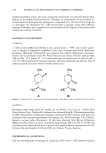
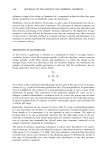
290 JOURNAL OF THE SOCIETY OF COSMETIC CHEMISTS application thickness of 2 mg/cm 2. Our aims were to determine whether the technique was a reliable way of measuring high SPF (25) products and to evaluate the difference between SPFs measured in vivo using a xenon arc solar simulator and those expected in natural sunlight. MATERIALS AND METHODS ISOLATION OF EPIDERMIS Skin was taken from the underside of the female breast during the operation of breast reduction. It was obtained by a process known as de-epidermalization, the principle of which is to remove the epidermis and epidermal appendages while leaving the deepest layers of the dermis in situ. The skin (approximately 10 x 4 cm) was received within one day of surgical operation, and these strips were cut into squares of approximately 4 cm x 4 cm. The samples of skin were placed in a water bath at 60øC for 45 seconds (6). On removal from the water bath, the epidermis was gently separated from the dermis by careful peeling. Epidermal sheets were stored in physiological saline at 4øC until re- quired, which was normally within five days. Sheets of epidermis can be stored at 4øC for several weeks without loss of barrier function (6). SUNSCREEN PRODUCTS Five physical sunscreen products were used, each containing titanium dioxide as the sole active ingredient at concentrations of 4.4%, 6.9%, 7.8%, 8.6%, and 12.0%, respec- tively. The first four products were commercially available and had quoted SPFs of 8, 15, 25, and 35. The product with the highest concentration was not yet available commer- cially but was expected to have an in vivo SPF of 35 or higher. These sunscreens are identified as P8, P15, P25, P35, and P35+, the numbers denoting nominal SPF. Five organic chemical sunscreens were used and these are identified as C5, C15, C20, C30, and C50, the numbers again denoting quoted SPF. The active ingredients contained within these sunscreens were as follows: C5: Butyl methoxydibenzoylmethane and methylbenzylidene camphor. C15: Butyl methoxydibenzoylmethane, methylbenzylidene camphor, and octyl salicyl- ate. C25: Butyl methoxydibenzoylmethane, methylbenzylidene camphor, octyl methoxycin- namate, and titanium dioxide. C30: Butyl methoxydibenzoylmethane, methylbenzylidene camphor, octyl salicylate, and titanium dioxide. C50: Octocrylene, octyl methoxycinnamate, octyl salicylate, and oxybenzone. EXPERIMENTAL TECHNIQUE A piece of epidermis (2 x 2 cm) was placed over a circular aperture of diameter 1.5 cm cut into an aluminium holder. The holder was positioned so that the circular aperture was directly over the teflon input optics of an Opttonic model 742 spectroradiometer controlled by a Hewlett Packard HP85 microcomputer. Radiation from a 75 W xenon arc lamp (filtered by a Schott UG5 filter) was directed onto the epidermis via a light

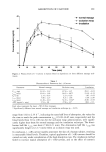
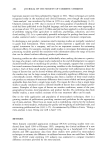
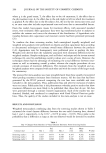
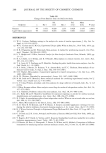
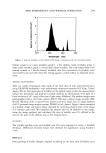
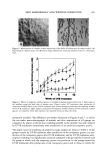
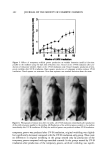
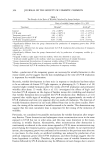
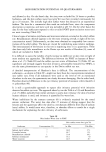
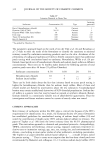
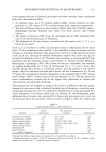
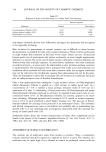
HIGH-SPF SUNSCREENS 291 guide, and the photocurrent was recorded from 290 to 400 nm in steps of 5 nm. A micropipette was then used to dispense an amount of sunscreen equivalent to 2 mg/cm 2 onto the epidermis. The sunscreen was "spotted" at several positions on the epidermis, and a light, circular rubbing motion with a gloved finger was used to give as uniform a layer as possible. The sunscreen was allowed to dry for 20 minutes, and the photo- current was again measured in 5-nm steps between 290 and 400 nm. For each wave- length, the ratio of the photocurrent recorded before and after application of the sun- screen was calculated this gave the monochromatic protection factors, PF0•), which were used in the following expression (5) to give the SPF: 400 Z EOQ½0Q 290 SPF - 400 [ 1 ] 290 where E0•) is the spectral irradiance of sunlight expected for a clear sky at noon in midsummer for a latitude of 40øN (solar altitude 70ø), and ½0•) is the effectiveness of radiation of wavelength )•nm in producing delayed erythema in human skin (7). For the physical sunscreens containing 4.4, 6.9, 7.8, and 8.6% TiO2, measurements were made on four samples of epidermis from one subject (epidermis A) and a single epider- mal sample from each of six other subjects (epidermis B, C, D, E, F, and G). In the case of the sunscreen containing 12% TiO2, measurements were not made on epidermal sample A. For the organic chemical sunscreens, measurements were made on a single epidermal sample from each of six subjects (epidermis H, I, J, K, L, and M). RESULTS AND DISCUSSION Figure 1 shows absorption spectra normalized to equal area for the five physical sun- screens. It can be seen that the spectra have similar shapes, the small differences between spectra probably being due to different size distributions of the TiO2 particles within the sunscreens (8,9). Figure 2 shows the corresponding absorption spectra for the five organic chemical sunscreens. It can be seen that the spectra for C5, C! 5, C25, and C30 are similar, all four products having the active ingredients methylbenzylidene camphor and butyl methoxydibenzoylmethane in common. However, the spectrum for C50 shows that this sunscreen has relatively little absorption in the long UV-A region. Table I summarizes the SPFs measured on each of the five physical sunscreens. For the products P8, P15, P25, and P35, the variance in SPFs measured on four samples of epidermis from a single volunteer (A) was compared with that obtained from SPFs measured on epidermis from the six other volunteers (B-G). In every case there was no significant difference (p 0.05 Stairnov test). We conclude from this analysis that the variability in the measured SPFs is primarily associated with the experimental technique (most probably the application of sunscreen to the epidermis), rather than to variability in epidermal architecture between subjects. The mean SPFs for a 2-mg/cm 2 application thickness of the physical sunscreens are given in the final column of Table I and, with the exception of product P35, are in close
Purchased for the exclusive use of nofirst nolast (unknown)
From: SCC Media Library & Resource Center (library.scconline.org)