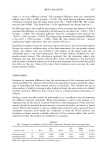
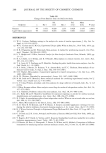
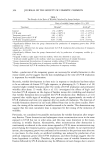
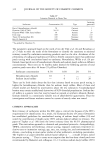
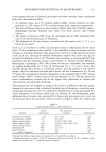
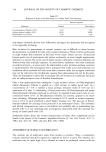
294 JOURNAL OF THE SOCIETY OF COSMETIC CHEMISTS Table II SPFs Obtained From Each Organic Chemical Sunscreen Quoted Sunscreen SPF H I J K L M Mean + SD C5 5 6.2 6.0 6.8 6.6 6.8 5.9 6.4 + 0.4 C15 15 16.1 19.0 17.9 18.2 14.7 17.6 17.3 + 1.6 C25 25 19.6 22.2 22.1 25.7 26.8 29.2 24.3 _+ 3.6 C30 30 20.7 27.8 39.7 27.4 28.1 22.0 27.6 _+ 6.7 C50 50 22.6 31.1 20.9 24.2 28.5 27.0 25.7 + 3.8 H-M represent measurements on epidermis from six subjects. compensated for by the relatively low levels of UV-A from the solar simulator, and the sunscreen will therefore appear to have a higher SPF than would be obtained in natural sunlight. In order to evaluate the importance of the above effect, we recalculated our SPFs using the COLIPA xenon-arc solar simulator spectrum (1) in Equation 1. The results are shown in Table Ill, and it can be seen that for most of the sunscreens there is little difference between the calculated SPFs obtained using a natural solar spectrum and a xenon-arc solar simulator spectrum. This is not surprising since the majority of the sunscreens studied provided broad-spectrum protection. However, for product C50, which offers relatively little UV-A protection, the SPF calculated using the solar simulator spectrum is significantly higher than that calculated using the solar spectrum. We infer from these data that the use of solar simulators for i, vivo measurements of products with a high ratio of UV-B to UV-A absorption will overestimate the protection provided against natural sunlight. In conclusion, i. vitro determination of SPF using excised human epidermis is a quick and reliable alternative to i. vivo measurement for sunscreens expected to have high photoprotection, particularly since it yields SPFs more representative of natural sunlight for products that do not provide broad-spectrum protection. Table III Comparison of SPFs Calculated Assuming a Natural Solar Spectrum (clear sky at noon in midsummer at a latitude of 40øN) and the COLIPA Standard Xenon-Arc Solar Simulator Spectrum Sunscreen SPF calculated assuming natural solar spectrum SPF calculated assuming xenon- arc solar simulator spectrum P8 9.3 10.0 P15 13.4 14.0 P25 22.7 24.9 P35 23.2 25.6 P35+ 35.6 43.5 C5 6.4 6.6 C15 17.3 19.0 C25 24.3 27.3 C30 27.6 32.0 C50 25.7 35.9

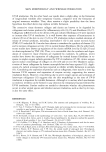
HIGH-SPF SUNSCREENS 295 ACKNOWLEDGMENTS This study was funded by the Department of Health. The views expressed are those of the authors and not necessarily those of the Department of Health. REFERENCES (1) COLIPA Sun Protection Factor Method, European Cosmetic Toiletry and Perfumery Association (COLIPA), Brussels, Belgium, October 1994. (2) Department of Health and Human Services, FDA, USA, Sunscreen drug products for over the counter use: Tentative final monograph: proposed rule. Federal Register, 58(90), 28194-28302 (1993). (3) J. Ferguson, "European Guidelines (COLIPA) for Evaluation of Sun Protection Factors," in Sunscreens: Development, Evaluation, and Regulatory Aspects, 2nd ed., N.J. Lowe, N. A. Shaath, and M. A. Pathak, Eds. (Marcel Dekker, New York, 1997), pp. 513-525. (4) B. L. Diffey, "Indices of Protection From In Vitro Assay of Sunscreens," in Sunscreens: Development, Evaluation, and Regulatory Aspects, 2nd ed., N.J. Lowe, N. A. Shaath, and M. A. Pathak, Eds. (Marcel Dekker, New York, 1997), pp. 589-600. (5) B. L. Diffey and J. Robson, A new substrate to measure sunscreen protection factors throughout the ultraviolet spectrum, J. Soc. Cosmet. Chem., 40, 127-133 (1989). (6) H. Schaefer and T. E. Redelmeier, Skin Barrier: Principles of Percutaneous Absorption (Karger, Basel, 1996), p. 133. (7) A. F. McKinlay and B. L. Diffey, "A Reference Action Spectrum for Ultraviolet-Induced Erythema in Human Skin," in Human Exposure to Ultraviolet Radiation: Risks and Regulations, W. F. Passchief and B. F. M. Bosnjakovic, Eds. (Elsevier, Amsterdam, 1987), pp. 83-87. (8) J. L. Robb, L. A. Simpson, and D. F. Tunstall, Scattering and absorption of UV radiation by sunscreens containing fine particles and pigmentary titanium dioxide. D.C.I. Mag., 32-40 (March 1994). (9) M. W. Anderson, J.P. Hewitt, and S. R. Spruce, "Broad-Spectrum Physical Sunscreens: Titanium Dioxide and Zinc Oxide," in Sunscreens: Development, Evaluation, and Regulatory Aspects, 2nd ed., N.J. Lowe, N. A. Shaath, and M. A. Pathak, Eds. (Marcel Dekker, New York, 1997), pp. 353-397. (10) M.A. Pathak, "Photoprotection Against Harmful Effects of Solar UVB and UVA Radiation: An Update," in Sunscreens: Development, Evaluation, and Regulatory Aspects, 2nd ed., N.J. Lowe, N.A. Shaath, and M. A. Pathak, Eds. (Marcel Dekker, New York, 1997), pp. 59-79. (11) R. M. Sayre and P. P. Agin, A method for the determination of UVA protection for normal skin. J. Am. Acad. Dermatol., 23, 429-440 (1990).
Purchased for the exclusive use of nofirst nolast (unknown)
From: SCC Media Library & Resource Center (library.scconline.org)