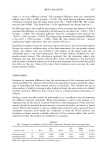
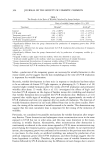
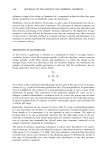
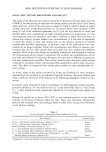
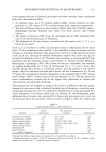
SKIN IRRITATION POTENTIAL OF QUATERNARIES 313 as the standard irritant to eliminate intersubject and other variations. Some conclusions from these investigations follow: 1. At moderate doses, up to 5% sodium dodecyl sulfate, irritant responses are more prevalent at 7.0øC than at 16.5øC (outside average daily maximum temperature). 2. The skin of Chinese subjects is more readily irritated than that of British subjects. Surprisingly, German volunteers were found to be more sensitive than Chinese subjects. 3. The pattern of irritancy of Skin Type VI individuals did not differ materially from that of the total British group of volunteers. 4. The likelihood of eliciting irritancy increased with the contact time (1, 2, 3, or 4 hours) of the patch. York et al. (14) wished to confirm the European Union's classifications (R-34 causes burns, R-38 is irritating to skin, and NC is not classified) without an animal test and through use of human volunteers. This research led to the now widely adopted four-hour closed patch test, although the method development started only a few years ago [as reviewed by Basketter et aL (13)]. The patch test procedure is conventional (Hill Top Chambers), and the customary scoring is used (Fregert, S., Manual of Contact Dermatitis, Munksgaard, Copenhagen, 1981). Since severe reactions are undesirable, test materials are applied progressively for 15 and 30 minutes and for 1, 2, 3, and 4 hours. Any reaction during these periods is considered positive, and the panelist is not exposed further. After the maximum four-hour patch period, the site is examined at 24, 48, and 72 hours. The interpretation requires comparison to the standard irritant (20% sodium lauryl sulfate). Table V presents some of the data obtained (13,15). The data show only minor interlaboratory variation and do not suggest that quaternaries at cosmetic-use concentrations are particularly irritating. This program was not designed to compare the irritancy of different surfactant groups. Instead, the plan was to find a relatively harmless way of designing a predictive non- animal skin irritation test. The test itself meets reproducibility criteria and should be a useful alternative to the Draize rabbit skin test. During the test development, some additional data of interest were reported (12). Atopics and non-atopics were tested via the four-hour patch test procedure, with the results recorded in Table ¾I. Atopics and Table V Irritancy Ratings Based on 4-Hour Patch Test Tested No. of positive Chemical concentration reactions a Classification b Benzalkonium chloride 7.5% 4/27 15/29 R38 Cocotrimonium chloride 35% 8/32 12/57 NC Sodium dodecyl sulfate 1% 21/100 15/100 16/31 NC Sodium dodecyl sulfate 10% 79/100 53/100 42/64 29/31 R38 Sodium dodecyl sulfate 20% 354/530 R38 Polysorbate 80 98% 1/25 1/29 NC Dodecyl betaine 20% 30/32 R38 C•2_•5 pareth-5 phosphate 1/30 NC a Results from different laboratories are included: No. of reactors/No. of subjects. b Classification based on Annex I of the EC Dangerous Substances Directive: R-38 = irritancy to skin (significant irritation) NC = nonclassified (minor irritation).

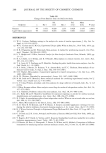
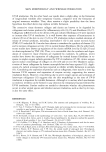
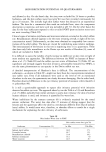
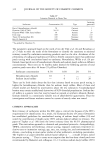
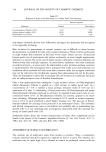
314 JOURNAL OF THE SOCIETY OF COSMETIC CHEMISTS Table VI Response of Atopics and Non-Atopics to 4-Hour Patch Test Procedure Substance Positive response Atopics Non-atopics Cocotrimonium chloride (35%) Sodium dodecyl sulfate (20%) Hydrochloric acid (10%) 3/29 5/29 16/30 10/28 5/29 5/29 non-atopics evidently did not react differently, and again the quaternary did not appear to be especially irritating. Skin irritation by quaternaries in normal cosmetic use is difficult to assess because documentation is available for only a few isolated substances. There is little justification to judge human skin irritation on the basis of the classic Draize eye test. Animal and human patch tests of quaternaries rely almost exclusively on acute (single) applications, whereas it is known that in the case of dilute anionic surfactants, irritation responses are observed only after multiple exposure. As noted above, erythema--the most commonly recorded end point--is a late event. Its relationship to skin irritation (scaling, tautness) is undocumented. The assumption that a substance that under acute and strenuous test conditions elicits eythema will also cause skin irritation under less stringent conditions may not be valid since the mechanisms causing these phenomena may not be the same. Thus, the formulator is rarely able to prejudge the non-irritancy of a surfactant and must rely on safety/irritation tests of finished formulations. Only a few quaternaries have undergone a rigid irritancy review: (a) Dihydrogenated tallow dimonium chloride is graded as a mild irritant in rabbit patch tests. At a concentration of 7.5% it reached a mean primary irritation index of 0.26 out of a maximum of 8, after 15 alternating 24-hour patch tests. (b) Benzethonium and meth- ylbenzethonium chlorides produced no irritancy in repeated human patch tests at con- centrations below 0.5%. (c) Benzalkonium chloride, by contrast, appears to be much more irritating. Although repeated patch testing at 0.1% caused no irritant responses, tests at 0.5% or more produced a much higher response rate. The past use of benzal- konium chloride for creating of test protocols is an unfortunate choice. This substance and related compounds are toxic to microbiota and probably also to mammalian epi- dermal cells. It is not surprising that investigators consistently find this material irri- tating in closed patch tests (16). Additional details about the irritant characteristics of these three compounds can be found in the reports of the Cosmetic Ingredient Review [J. Am. Co//. Toxicol. 1(2), 71, 1982 ibid. 4(5), 65, 1985 and ibid. 8(4), 589, 1989]. ASSESSMENT OF SURFACTANT IRRITANCY The cosmetic use of surfactants varies from product to product. Thus, a compound's irritancy potential should be expected to depend on how it is used. The irritancy of a surfactant may be quite high if it is allowed to remain in prolonged contact with the
Purchased for the exclusive use of nofirst nolast (unknown)
From: SCC Media Library & Resource Center (library.scconline.org)