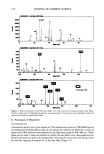
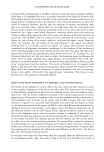
170 JOURNAL OF COSMETIC SCIENCE oil, which is principally a laurie acid triglyceride, the molecular weight is likely to be well below 1000 Da and, therefore, diffusion into the hair is a distinct possibility. What has been lacking is a study involving diffusion of compounds as a function of molecular weight, and a reliable method of identifying them in the fiber, especially at low con- centrations. Recently, mineral oils have been promoted for use as hair dressings. Although the external effect of these oils is essentially one of lubricating the hair surface, their penetrability into the cortex of hair is likely to be different because of the differences in the polarity of the two materials, namely coconut and mineral oils. This study attempts to demonstrate the penetration of coconut and mineral oils by mapping their presence in the hair fiber cross section. The technique used for this work is time-of-flight secondary ion mass spectrometry, TOF-SIMS for short (Figure 1). The TOF-SIMS method makes use of the secondary ion mass spectra, which are obtained when the sample surface is bombarded with a positively charged gallium ion beam. The positive/negative ion mass spectra are obtained by the time-of-flight method. First, characteristic positive/negative ions (peaks) are isolated in the mass spectra of the pure materials, namely neat coconut and mineral oils (reference spectra) used for treatment. The observed characteristic positive/negative ions, which are unique for the pure com- pounds, are then traced/mapped in cross sections of untreated and oil-treated hair fibers. EXPERIMENTAL MATERIALS Pure coconut oil (Parachute brand from Marico Industries Ltd., Mumbai, India) and mineral oils (viscosity - 1 P) were used for this study. The hair sample was black Indian hair obtained from individuals who did not use coconut or mineral oils as hair dressings. TOF-SIMS .... The Basic Principle Ga + Gun (Vac•O I yIon | Fli•t Tube, l=2m Hold Ex•action Plate V•a.-q = Eun.::•l• mv z accl. V: 3180 V ' Tim•f•ight = 'llv Detector Figure 1. Schematic representation of the basic principle of TOF-SIMS.

PENETRABILITY OF OILS IN HAIR 171 HAIR TREATMENTS The oils were used at a level of 0.2 ml/2.5-3 g tresses. The drops of oil were placed on hair swatches and were spread onto the hair fibers with a fine-tooth comb. The samples were stored overnight, and then the oil remaining on the surface was washed with a 20% solution of sodium laureth sulfate and the swatches were rinsed thoroughly, air-dried, and stored at room temperature. Control samples were treated in a similar way, except for treatment with the oils. ANALYTICAL TECHNIQUE: CONCEPT AND BASIC PRINCIPAL The gallium gun emits a pulsed primary ion beam (accelerating voltage of 25 kV). The primary ions impact/bombard the sample surface and ionize atomic species or small fragments of low- and high-molecular-weight molecules. These ionized species, referred to as secondary ions, are highly mobile and volatile, and become easily extracted by an extraction plate and propelled at high speed into a 2-m-long flight tube. A detector at the end of the flight tube detects and records the secondary ions as they arrive at the end of the tube. The velocity (kinetic energy) of the secondary ions depends on their mass: Ekin. = 1/2 mv 2 The smaller the ionized species, the greater their velocity: Velocity = (length of the tube)/(time-of-fiight in the tube) Typical primary ion doses used in this work were on the order of 10 •2 ions/cm 2 for the analysis. This assures that the data is collected within the static limit, i.e., less than 1% of a monolayer was sputtered. Thus, all molecular fragments are indicative of species existing on the surfaces (along the length and in the cross section of the fiber) under investigation prior to analysis. Under these conditions, the sampling depth of TOF SIMS is only -1 monolayer for molecular fragment ions and 1-3 monolayers for atomic species. Since the sampling depth of TOF SIMS is only approximately one molecular layer, only the low-molecular-weight, highly mobile, surface-active components are detected. The higher-molecular-weight compounds are more difficult, if not impossible, to ionize with the 69Ga+ liquid metal ion gun. Therefore, one has to look at the low-molecular- weight fragments of the high-molecular-weight compounds. Detecting the fragments, in turn, is indicative of the presence of high-molecular-weight compounds. Positive and negative mass spectra are plotted as the number of secondary ions detected (y-axis, counts) versus the mass-to-charge ratio of the ions (x-axis, m/z). Instrumental conditions. The work was done at a local surface analytical laboratory, under contract. The specific analytical conditions and instrumentation used for this work are listed below in detail: Instrumentation Primary ion beam Primary beam voltage Primary ion current (DC) Nominal analysis region Charge neutralization Post acceleration Masses blanked Energy filter/Contrast diaphragm Physical Electronics, PHI TFS-2000 69GA+ liquid metal ion beam 25 kV 600 pA (80 pm) 2 yes 8000 V None no/no
Purchased for the exclusive use of nofirst nolast (unknown)
From: SCC Media Library & Resource Center (library.scconline.org)